
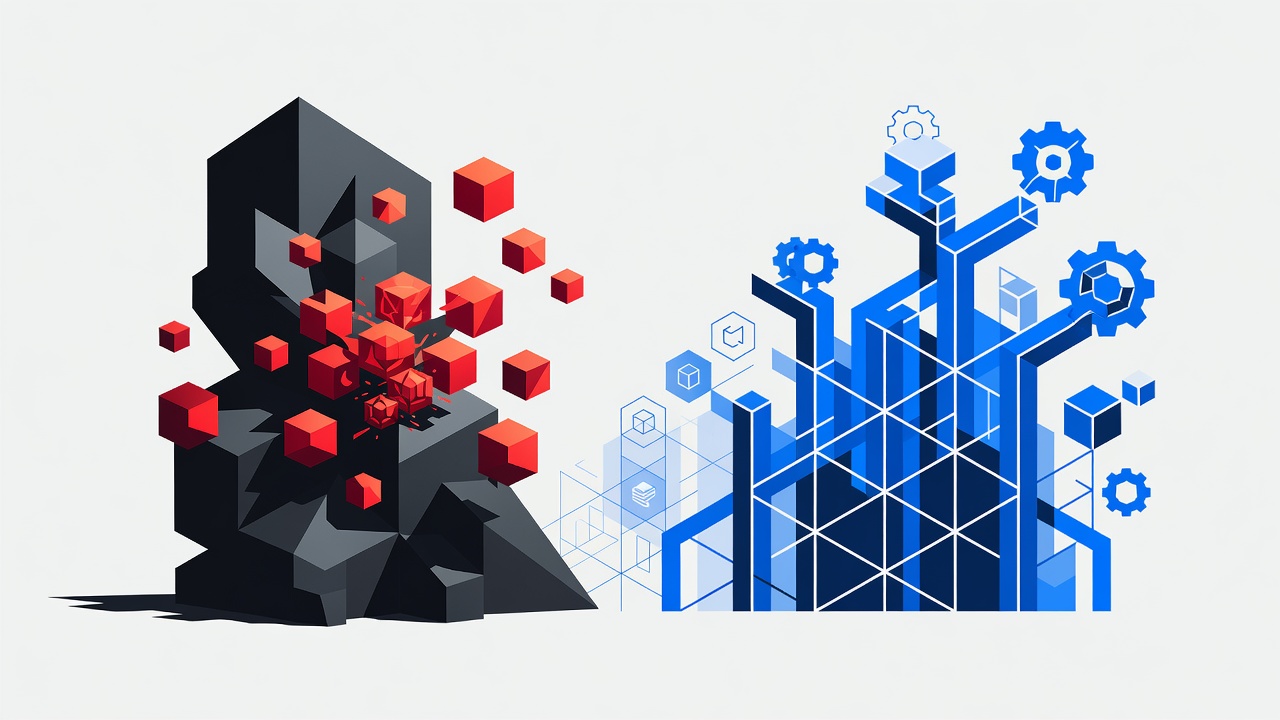
Arthur Mensch didn’t mince words. In a recent LinkedIn post, the cofounder and CEO of Mistral AI told enterprise leaders to wake up. Closed AI models, he argued, force data retention. They create immense leverage for providers. And that leverage often turns into direct competition with the very customers paying the bills.
But, the warning comes with a twist. It lands squarely in favor of Mistral’s own offerings. The French startup sells Studio, a control plane for building and governing AI applications. It also offers Forge, a platform for custom model training launched earlier this year. Enterprises can deploy Mistral models on their own infrastructure or use hosted versions that promise no data retention. The pitch feels convenient. Yet the risks Mensch highlights ring true for many executives watching their data flow into American cloud giants.
The Next Web broke down the post on July 5, 2026. Mensch made clear that connecting models to internal company context sounds smart. Do it with closed systems, however, and providers gain visibility. They learn from your data. They spot patterns. Then they target your successful use cases. One example stuck out. Anthropic reportedly cut off access for Windsurf, a coding startup, while building a rival product. Such moves raise eyebrows. They fuel distrust.
Court records add fuel. A U.S. judge once ordered OpenAI to preserve ChatGPT logs in its legal battle with The New York Times. Enterprise customers with zero-retention agreements were initially excluded. The order was later lifted. Still, the episode showed how data trails can become legal liabilities or competitive intelligence. Brookings Institution researchers have flagged similar patterns. AI companies don’t just serve customers. In some cases they compete with them.
Mensch’s prescription is direct. Enterprises must adopt open models. They need open data systems. And they must build their own training flywheels. Only then can frontier AI truly accelerate growth. “Frontier AI only accelerates your growth if it is in your hands,” he wrote. Short. Direct. Hard to dismiss.
His message resonates beyond one post. Earlier this year Mensch told French lawmakers Europe has two years to build independent AI infrastructure. Otherwise it risks becoming a “vassal state” to U.S. tech giants. Business Insider covered the May 2026 hearing. Chips, energy, and computing power will decide the outcome, Mensch said. The clock is ticking.
Similar themes surfaced in India. At the AI Impact Summit in February 2026, Mensch urged the country to back open-source AI. Concentration of power in few hands threatens autonomy, he warned. More than half of enterprise software could shift to AI, he told CNBC. That shift creates both opportunity and risk. Nations and companies must own their infrastructure, talent, and data. Otherwise external providers can flip the off switch.
Mistral itself walks a careful line. It releases open-weight models under permissive Apache 2.0 licenses. Yet its flagship frontier models remain API-only. Critics point out that even open models rarely include training data. True openness remains elusive. Still, the company’s strategy targets European wariness of U.S. providers. Customers include Airbus, BMW, and EDF. Partnerships stretch to BT, HSBC, and BAE Systems. A collaboration with Palantir emphasizes AI sovereignty.
Recent developments show momentum. Mistral joined NVIDIA’s Nemotron Coalition to co-develop open frontier models. It launched Mistral Code, an enterprise coding assistant built on the open-source Continue project. The beta offers role-based access controls, audit logging, and observability that large organizations demand. These moves address exactly the governance gaps Mensch criticizes in closed systems.
Yet challenges persist. Public data for training has grown scarce. The Wall Street Journal reported in September 2025 that Mistral now looks to legacy companies’ proprietary data to keep improving models. That dependency flips the script. Enterprises hold the valuable raw material. They can demand control in return.
Analysts see a split market emerging. Developers who want flexibility choose open-weight models they can fine-tune and self-host. Regulated industries prize data sovereignty. They run models entirely within their firewalls. Compliance teams sleep better. Costs can drop too. No surprise that finance, defense, and healthcare players show interest.
But open models bring their own headaches. Hallucinations remain common. Mistral Large 3 scored low on some factual accuracy tests. Alignment issues surface. Enterprises must layer retrieval systems, tool constraints, and human oversight. The technology alone solves nothing. Strategy matters more.
Mensch has long dismissed extreme risk warnings as distraction tactics. Le Monde quoted him in February 2026. Focus should stay on economic concentration and loss of control, he believes. Power in too few hands threatens innovation, privacy, and even democracy. Decentralized approaches offer a counterweight.
His views echo at global forums. At the World Economic Forum and NVIDIA GTC, Mensch repeated the call for open, decentralized AI. Concentration of power represents the biggest risk today, he has said. Governments and businesses must retain the on-off switch. Business continuity depends on it.
European governments appear to listen. France and the EU push digital sovereignty. Mistral’s rise fits that narrative. Its €20 billion valuation reflects investor belief that the message will land. Yet commercial traction must follow. Open models win mindshare. Enterprise contracts deliver revenue. Mistral needs both to challenge deeper-pocketed rivals.
Executives face a choice. Stick with closed providers and accept the leverage they gain. Or invest in open systems, internal data pipelines, and continuous training. The second path demands work. It requires new skills. It means replatforming parts of IT infrastructure. Results, however, stay inside the company. Competitive edge doesn’t leak to vendors.
Data from recent deployments supports the caution. Companies using closed models sometimes discover their prompts and outputs feed model improvement. Privacy policies differ. Zero-retention promises help. They don’t erase all concerns. Legal cases keep coming. Trust erodes.
Mensch’s argument isn’t purely altruistic. It serves Mistral’s business model. That doesn’t make it wrong. Many technology leaders blend self-interest with genuine insight. The test lies in outcomes. If enterprises heed the call and build their own AI flywheels, the industry shifts. Power disperses. Innovation spreads. If they don’t, a handful of providers tighten their grip.
The coming months will tell. More companies test hybrid approaches. Some fine-tune open models on private data. Others keep frontier tasks with hosted APIs under strict contracts. Governance platforms like Mistral Studio gain attention. They promise visibility without surrendering control.
One thing seems clear. The era of naive adoption is over. Enterprises now weigh leverage, sovereignty, and long-term dependency alongside raw performance. Mensch has forced that conversation into the open. Whether his solutions win remains to be seen. The warning, at least, is hard to ignore.


 WebProNews is an iEntry Publication