
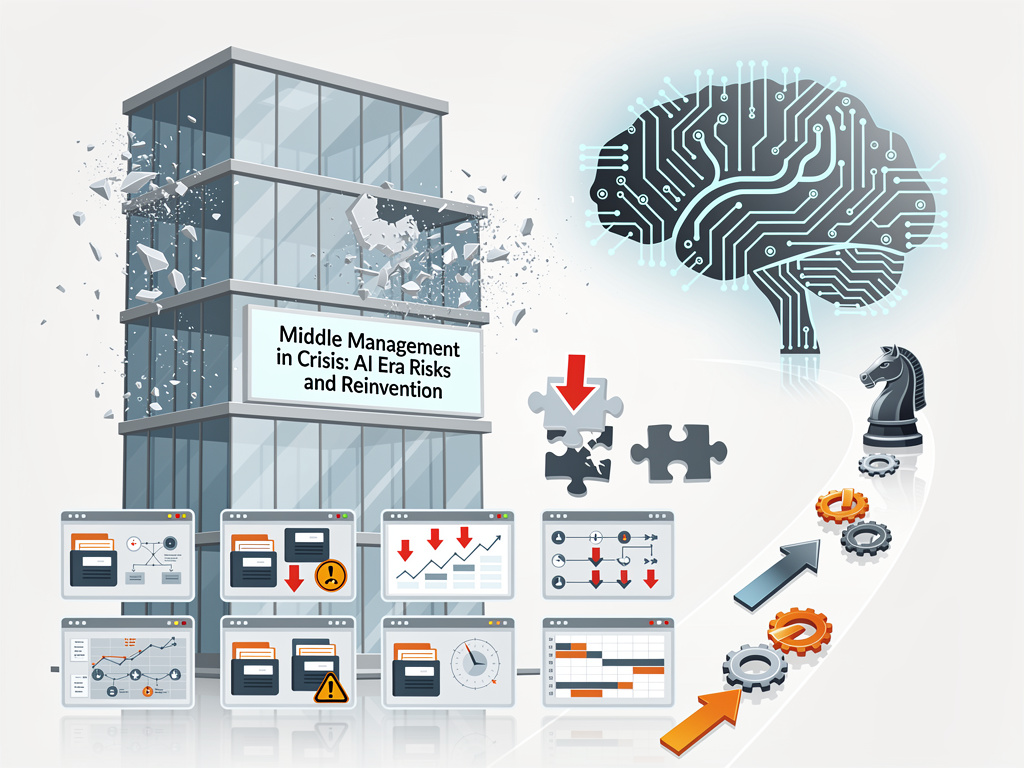
In the relentless wave of corporate cost-cutting through 2025, middle managers have emerged as prime targets, their ranks thinning amid layoffs at tech giants and beyond. Yet, as artificial intelligence reshapes workplaces, leadership experts argue these very roles—long derided as bureaucratic layers—are increasingly essential for translating strategy into execution. A recent CNBC analysis quotes Ron Carucci, a partner at management consultancy Navalent, who insists their function is “more important than ever,” even as companies like Meta, Amazon, and Verizon slash positions.
The paradox stems from aggressive delayering efforts. Firms have culled middle management to flatten hierarchies, boost efficiency, and redirect funds toward AI investments. Forbes reports over 120 companies announced such moves by mid-year, with AI and self-led teams displacing traditional supervisors. This shift leaves surviving managers overburdened, managing larger teams while executives underestimate the human glue they provide.
Posts on X echo the tension: users note middle managers’ vulnerability, with one observing they’ve been a “target for layoffs in tech” as companies prioritize engineers. But experts like Ethan Mollick highlight their role in balancing strategy, employee needs, and constraints—a “hard job” irreplaceable by algorithms alone.
Layoff Surge Reshapes Hierarchies
Tech’s turmoil sets the pace. Business Insider’s 2025 layoff tracker lists cuts at American Airlines, Meta, Intel, and more, driven by cost pressures and tech shifts. Middle managers, often seen as non-revenue generators, bore the brunt. A July CNBC piece details their job hunt struggles: hundreds of applications, interview no-shows, and HR ghosting amid a contracting pool.
By December, the pattern persisted. InformationWeek’s tracker, updated December 22, charts ongoing tech reductions post-COVID hiring sprees. Intellizence’s list flags mass layoffs and freezes at major firms, underscoring middle management’s exposure.
X sentiment amplifies the plight, with recruiters warning of persistent cuts prioritizing individual contributors over layers between C-suites and frontlines.
AI’s Double-Edged Demand for Humans
Enter AI, automating routine tasks but amplifying the need for skilled oversight. Carucci, in the CNBC interview, warns executives risk underestimating managers’ role in fostering trust and adaptability amid rapid change. “Middle managers are the ones who make or break execution,” he states, crucial for AI integration where humans must guide ethical deployment and team morale.
Forbes details how self-led teams and AI tools replace supervisors, yet surviving managers must evolve into “prompt engineers” aligning systems with strategy. X posts foresee middle managers shifting from people oversight to logic management, prompting agents and architecting AI flows.
This evolution demands new skills: data fluency, coaching, and strategic translation. Without them, firms face execution gaps, as Mollick’s research thread on X affirms—good middle managers turn vision into action.
Job Market Realities for the Displaced
Laid-off managers face a brutal rebound. CNBC’s July report paints a grim picture: a “shrinking pool of opportunities” with growing competition from peers. Many endure ghosting, reflecting broader white-collar woes in a selective hiring climate.
Broader trackers confirm the scope. Business Insider notes layoffs amid technological upheaval, while X users decry the irony—roles deemed expendable yet foundational.
Survival tips emerge from experts: become indispensable by contributing beyond duties, arriving early, aiding colleagues, and boosting bosses’ visibility, as one X post advises.
Expert Warnings on Organizational Risk
Carucci cautions that excessive cuts erode company resilience. In AI’s age, managers bridge technical innovation and human elements, preventing burnout and misalignment. Navalent’s work with Fortune 500 firms shows delayering often backfires without retraining.
Forbes predicts ongoing vulnerability unless leaders adapt, emphasizing relevance through AI literacy. X discussions reinforce: pandemic-exposed low value in some, but vital translation persists.
Leadership must recalibrate, investing in upskilling to harness managers’ potential rather than discarding it.
Strategic Imperative for Retention
Companies thriving post-layoffs, per reports, empower remaining managers with tools and autonomy. This counters the morale dip from overload, as CNBC notes shrinking jobs heighten stakes.
X threads like Mollick’s cite studies proving middle management’s outsized impact on outcomes. Firms ignoring this face higher turnover and stalled innovation.
Ultimately, 2025’s lesson: in pursuing leanness, preserve the sinew binding strategy to results. Middle managers, though cut, remain the linchpin executives can’t afford to lose.


 WebProNews is an iEntry Publication