
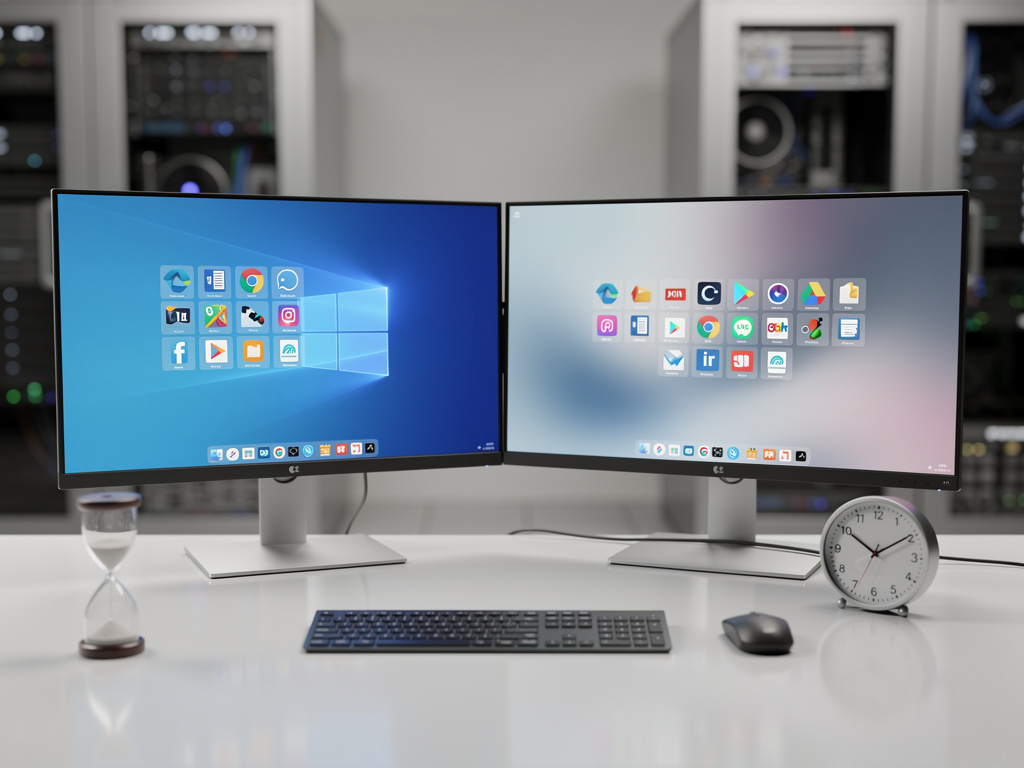
For years, a vocal contingent of Windows users has refused to make the leap to Windows 11, clinging to their preferred operating system with a tenacity that has clearly caught Microsoft’s attention. Now, with Windows 10’s end-of-support deadline looming in October 2025, the Redmond giant appears to be making a calculated move to win over the holdouts — by potentially restoring one of the most requested features that users lost in the transition from Windows 10 to its successor.
According to reporting by TechRadar, Microsoft is testing the ability to ungroup taskbar icons and show labels in Windows 11 — a feature that was standard in Windows 10 but was stripped away when the newer operating system launched in 2021. The change, spotted in recent Windows 11 Insider Preview builds, signals that Microsoft is finally listening to the persistent drumbeat of criticism that has surrounded its taskbar redesign since day one.
The Taskbar Controversy That Wouldn’t Die
When Microsoft unveiled Windows 11, it brought a sweeping visual overhaul that centered the Start menu and taskbar icons, introduced rounded corners, and generally aimed for a cleaner, more modern aesthetic. But in pursuit of that minimalist design philosophy, the company made a decision that would haunt it for years: it removed the ability to ungroup taskbar buttons and display text labels alongside application icons.
In Windows 10, users could configure their taskbar to show individual window buttons with descriptive labels — so instead of a single Excel icon representing three open spreadsheets, users would see three separate taskbar entries, each labeled with the document name. For power users, multitaskers, and accessibility-focused individuals, this wasn’t a minor convenience; it was a fundamental part of their workflow. The forced grouping in Windows 11 meant that users had to hover over icons and then select from thumbnail previews, adding friction to what had been a seamless process.
A Feature Request That Became a Movement
The backlash was immediate and sustained. Microsoft’s Feedback Hub was flooded with requests to restore the ungrouping functionality. Third-party tools like StartAllBack and ExplorerPatcher emerged specifically to patch this perceived deficiency, effectively hacking the Windows 11 taskbar to behave more like its predecessor. The existence and popularity of these tools served as a constant, embarrassing reminder that Microsoft had misjudged what its users actually wanted.
The issue became emblematic of a broader complaint about Windows 11: that Microsoft was prioritizing form over function, making design choices that looked good in marketing materials but degraded the actual user experience. As TechRadar noted, this feature has been among the most consistently requested changes from the Windows 10 user base, many of whom cited it as a reason for not upgrading. According to recent market share data, Windows 10 still commands a significant portion of desktop operating system usage worldwide, with estimates suggesting it remains on hundreds of millions of PCs — a stubborn installed base that Microsoft desperately needs to migrate before support ends.
What the Insider Builds Reveal
The evidence that Microsoft is finally acting comes from Windows 11 Insider Preview builds, where the company tests features before rolling them out to the general public. Recent builds have included options that allow users to configure taskbar button behavior in ways that closely mirror the Windows 10 experience. Users in the Insider program have reported being able to set their taskbar to “never combine” buttons and to display labels — essentially restoring the exact functionality that was removed nearly four years ago.
This isn’t the first time Microsoft has walked back a controversial Windows 11 design decision. The company previously restored the ability to drag and drop files onto taskbar icons, another feature that was inexplicably removed at launch and whose absence drew widespread criticism. That restoration came in a 2022 update, and it set a precedent for Microsoft acknowledging and correcting its missteps. The taskbar label and ungrouping feature, however, represents a more significant concession because of how central it has been to the anti-Windows 11 narrative.
The October 2025 Deadline Adds Urgency
Microsoft’s willingness to bend on this issue cannot be separated from the ticking clock of Windows 10’s end of life. On October 14, 2025, Microsoft will cease providing free security updates for Windows 10, leaving machines that haven’t upgraded potentially vulnerable to exploits. The company has offered an Extended Security Updates (ESU) program that will allow users to pay for continued patches, but this is widely seen as a stopgap rather than a long-term solution.
The stakes are enormous. Enterprise customers with thousands of Windows 10 machines face significant migration costs and compatibility concerns. Individual users, particularly those with older hardware that doesn’t meet Windows 11’s stringent system requirements — including the controversial TPM 2.0 mandate — face the prospect of either buying new PCs or running an unsupported operating system. Microsoft has every incentive to make Windows 11 as palatable as possible to ease this transition, and restoring beloved features is one of the most straightforward ways to reduce resistance.
More Than Just a Taskbar: A Pattern of Reconciliation
The taskbar ungrouping feature is part of a broader pattern of Microsoft gradually restoring functionality and flexibility that Windows 11 initially lacked. Over the past two years, the company has brought back numerous features and options through cumulative updates and annual feature releases. The Windows 11 23H2 and 24H2 updates, for instance, introduced a range of quality-of-life improvements that addressed longstanding complaints about the Start menu, File Explorer, and system settings.
Microsoft has also been investing heavily in new capabilities designed to make Windows 11 a more compelling upgrade on its own merits, rather than simply relying on the end-of-support stick. The integration of Copilot AI features, improvements to Snap Layouts for window management, native support for additional archive formats, and a redesigned Settings app all represent genuine advancements over Windows 10. But for many users, these additions haven’t been enough to offset the perceived regressions — and the taskbar has consistently been at the top of the grievance list.
The Power User Problem Microsoft Can’t Ignore
What makes the taskbar ungrouping issue particularly significant is that it disproportionately affects power users and IT professionals — precisely the people who influence purchasing and deployment decisions in enterprise environments. A casual user who keeps two or three applications open at a time may barely notice the difference between grouped and ungrouped taskbar buttons. But a developer with a dozen Visual Studio windows, a financial analyst juggling multiple Excel workbooks, or a system administrator monitoring several remote desktop sessions will feel the pain acutely.
These are also the users most likely to be vocal in online forums, most likely to recommend or discourage operating system upgrades to colleagues and family members, and most likely to deploy workarounds that create support headaches for IT departments. By addressing their concerns, Microsoft isn’t just fixing a feature — it’s neutralizing a source of negative word-of-mouth that has contributed to Windows 11’s slower-than-hoped adoption curve.
What This Means for the Road Ahead
If Microsoft does roll out taskbar ungrouping and labels to the general release of Windows 11 — and the Insider testing strongly suggests it will — it would remove one of the last major objections that Windows 10 loyalists have cited for refusing to upgrade. Combined with the approaching end-of-support deadline and the natural hardware refresh cycle that is pushing users toward TPM 2.0-compatible machines, the conditions for a significant wave of Windows 11 adoption in 2025 are falling into place.
But the episode also carries a lesson for Microsoft that extends beyond any single feature. The company’s initial approach to Windows 11 — imposing a rigid design vision with limited user customization — generated years of friction that didn’t need to exist. Operating system design is ultimately about serving users, not the other way around. The fact that it took nearly four years and relentless community pressure to restore a basic taskbar option suggests that Microsoft’s internal feedback loops still need work. As the company looks ahead to future Windows releases and continues to integrate AI capabilities into the operating system, the taskbar saga should serve as a cautionary tale about the cost of ignoring what users are telling you they need.
For now, though, Windows 10 holdouts have reason to feel cautiously optimistic. Microsoft appears to have gotten the message — even if it took longer than anyone would have liked.


 WebProNews is an iEntry Publication