
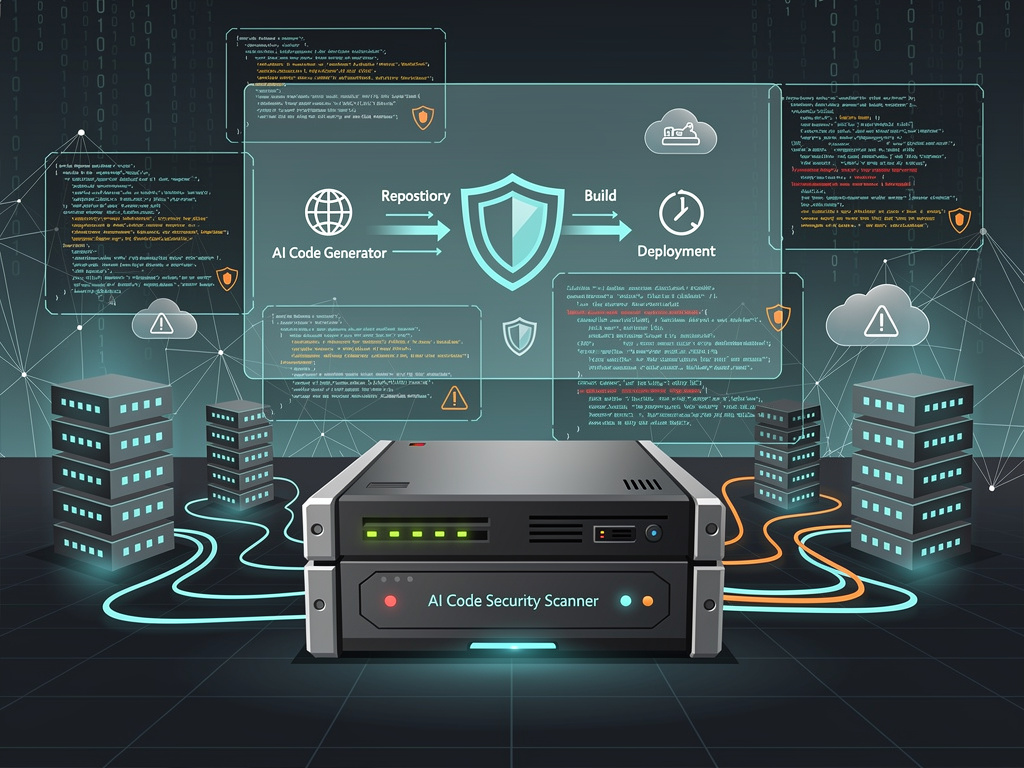
Microsoft has unveiled a groundbreaking security tool designed to detect vulnerabilities introduced by artificial intelligence code generators, marking a significant escalation in the technology industry’s efforts to secure software development pipelines against risks posed by increasingly autonomous coding assistants. The scanner represents the first major initiative by a leading technology company to systematically address security flaws that emerge when developers rely on AI tools like GitHub Copilot, ChatGPT, and other large language models to write production code.
According to The Hacker News, the new detection system operates by analyzing code patterns characteristic of AI-generated content and cross-referencing them against known vulnerability databases. The tool specifically targets security weaknesses that human developers might overlook when accepting AI-suggested code snippets, including improper input validation, insecure authentication mechanisms, and hardcoded credentials that AI models frequently reproduce from their training data.
The development comes as enterprises worldwide grapple with the security implications of widespread AI adoption in software development. Industry estimates suggest that more than 40 percent of professional developers now use AI coding assistants regularly, with that figure expected to surpass 75 percent by 2025. This rapid adoption has created what security researchers describe as a “blind spot” in traditional application security testing, where conventional static analysis tools fail to identify vulnerabilities that stem from AI models’ tendency to replicate insecure coding patterns found in their training datasets.
The Hidden Risks of Training Data Contamination
Microsoft’s scanner addresses a fundamental problem in AI-assisted development: large language models learn from vast repositories of existing code, much of which contains security vulnerabilities. When developers prompt these models for code suggestions, the AI systems may inadvertently reproduce insecure patterns they encountered during training. Research has shown that AI code generators produce vulnerable code in approximately 30 to 40 percent of security-critical scenarios, including authentication routines, cryptographic implementations, and SQL query construction.
The technology giant’s approach involves multi-layered analysis that examines both syntactic and semantic characteristics of code snippets. The scanner employs machine learning classifiers trained to distinguish between human-written and AI-generated code based on stylistic markers, comment patterns, variable naming conventions, and structural regularities that betray algorithmic origins. Once AI-generated segments are identified, the system applies enhanced scrutiny using specialized vulnerability detection rules calibrated to catch common AI coding mistakes.
Enterprise Adoption Drives Urgency for Solutions
The timing of Microsoft’s announcement reflects mounting pressure from enterprise customers who have embraced AI coding tools but lack visibility into the security implications. Financial services firms, healthcare providers, and government contractors face particularly acute concerns, as regulatory frameworks increasingly hold organizations accountable for vulnerabilities in their software supply chains regardless of whether human or artificial intelligence wrote the problematic code.
Security teams at major corporations report that traditional code review processes struggle to keep pace with the volume of AI-generated code entering production systems. Development velocity has increased dramatically as programmers leverage AI assistants to write boilerplate code, implement standard algorithms, and generate test cases. However, this acceleration has created bottlenecks in security review workflows, where manual inspection remains the primary method for identifying subtle vulnerabilities that automated tools miss.
Technical Architecture and Detection Methodology
Microsoft’s scanner integrates with existing continuous integration and continuous deployment pipelines, positioning itself as a checkpoint before code merges into main branches or deploys to production environments. The system maintains a continuously updated database of vulnerability patterns associated with popular AI coding assistants, including both general-purpose language models and specialized programming tools. This database draws from multiple sources: disclosed security incidents, academic research on AI code generation weaknesses, and Microsoft’s own security research team’s findings.
The detection methodology employs a three-stage process. First, the scanner performs probabilistic classification to identify code segments likely generated by AI systems, using features such as token distribution patterns, syntactic complexity metrics, and structural coherence measures. Second, identified segments undergo targeted static analysis using rules specifically designed to catch AI-specific vulnerabilities, including those related to incomplete context understanding, outdated security practices, and over-reliance on deprecated libraries. Third, the system generates detailed reports that not only flag potential vulnerabilities but also provide remediation guidance tailored to the specific AI tool likely responsible for the code generation.
Industry Response and Competitive Dynamics
The announcement has prompted responses from other major technology vendors and security firms. GitHub, which Microsoft acquired in 2018, has indicated that similar detection capabilities may be integrated directly into GitHub Advanced Security offerings. The move positions Microsoft to capture market share in the rapidly growing application security testing sector, where vendors increasingly compete on their ability to address emerging threats from AI-augmented development workflows.
Security researchers have generally welcomed Microsoft’s initiative while noting that comprehensive solutions will require industry-wide collaboration. The challenge extends beyond simply detecting AI-generated vulnerabilities to establishing best practices for secure AI-assisted development, including guidelines for when developers should accept AI suggestions, how to validate AI-generated security-critical code, and what level of human review different types of AI contributions require.
Implications for Software Development Practices
Microsoft’s scanner may fundamentally alter how organizations approach AI adoption in development environments. Rather than blanket approvals or prohibitions of AI coding tools, enterprises can now implement risk-based policies that allow AI assistance while maintaining security oversight. This nuanced approach addresses a significant barrier to AI adoption: security teams’ concerns about introducing unvetted code into production systems without practical means to assess AI-specific risks.
The tool also raises questions about liability and accountability in AI-assisted development. As organizations gain better visibility into which code segments originated from AI systems and what vulnerabilities those segments contain, they face decisions about disclosure obligations, vendor relationships with AI tool providers, and potential legal exposure from security incidents traced to AI-generated code. Legal experts suggest that the ability to detect and remediate AI-introduced vulnerabilities may become a standard of care in software development, particularly for organizations in regulated industries.
Limitations and Future Development Directions
Despite its capabilities, Microsoft’s scanner faces inherent limitations. The system’s effectiveness depends on maintaining current knowledge of AI coding tools’ behavioral patterns, which evolve as model providers update their systems and training data. Additionally, sophisticated developers can potentially obscure AI-generated code’s telltale characteristics through refactoring, making detection more challenging. The scanner also cannot address vulnerabilities in AI-generated architecture decisions or design patterns, focusing instead on implementation-level code security.
Microsoft has indicated that future versions will incorporate feedback loops where detected vulnerabilities inform improvements to AI coding assistants themselves. This approach could create a virtuous cycle where security scanning not only identifies problems but also helps train safer AI models. The company is also exploring integration with its Security Copilot product, which could provide automated remediation suggestions for detected AI-generated vulnerabilities, further streamlining the security review process.
Broader Implications for AI Safety and Governance
The scanner’s development reflects growing recognition that AI safety extends beyond preventing harmful outputs in consumer-facing applications to ensuring that AI systems used in professional workflows meet industry-specific safety and security standards. Software development represents a particularly critical domain, as vulnerabilities in widely deployed applications can affect millions of users and create systemic risks in digital infrastructure.
Regulatory bodies have taken note of AI-related security concerns in software development. The European Union’s proposed AI Act includes provisions addressing AI systems used in safety-critical applications, while the U.S. Cybersecurity and Infrastructure Security Agency has published guidance on securing AI development pipelines. Microsoft’s scanner provides a concrete tool that organizations can deploy to demonstrate compliance with emerging regulatory expectations around AI governance in software development contexts.
As AI coding assistants become more sophisticated and autonomous, the security challenges they pose will likely intensify. Models capable of generating entire applications or microservices from natural language specifications could introduce vulnerabilities at architectural levels that current detection tools cannot address. Microsoft’s scanner represents an important first step in what will likely become an ongoing arms race between increasingly capable AI development tools and the security technologies needed to ensure their safe deployment in enterprise environments. The success of this initiative may well determine whether AI-assisted development fulfills its promise of dramatically increased productivity or becomes a cautionary tale about the unintended consequences of automation in security-critical domains.


 WebProNews is an iEntry Publication