
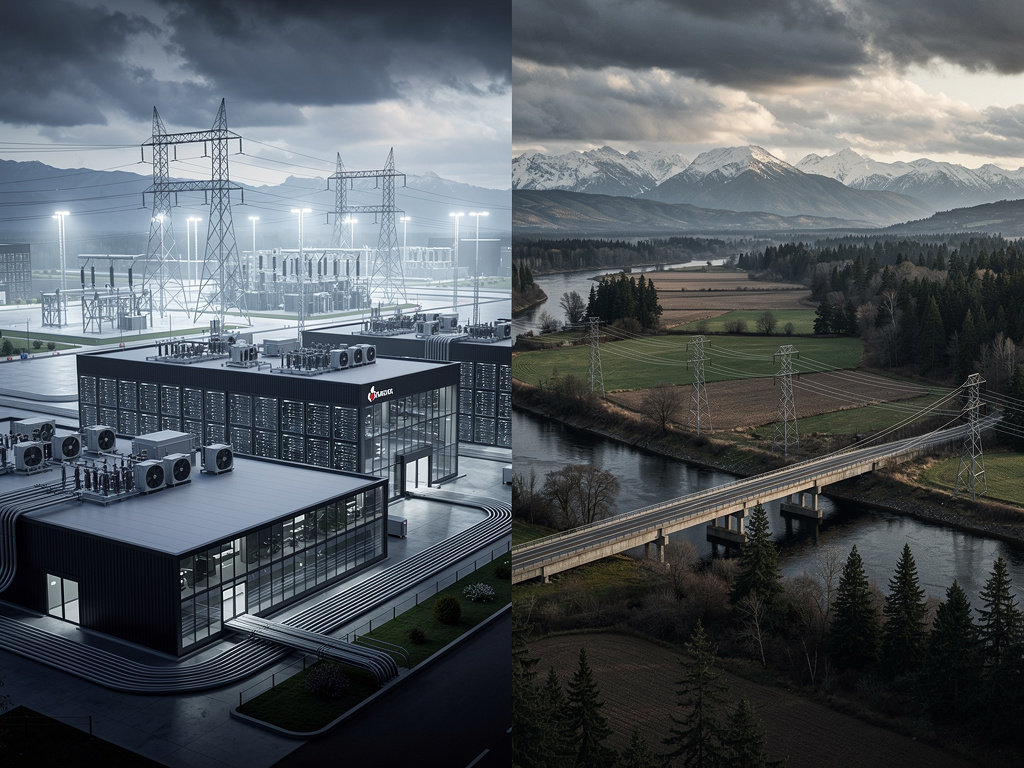
As Washington state’s legislative session barrels toward its final days, a high-stakes battle over data center regulation has erupted between one of the world’s most powerful technology companies and the lawmakers trying to impose new environmental and community safeguards on an industry that has reshaped the state’s rural landscape.
Microsoft is pressing for sweeping changes to a bipartisan bill that would establish new requirements for data center developers in Washington, including mandates around water use, noise, energy consumption, and community engagement. The legislation, which has already passed the state Senate and is nearing a final vote in the House, represents one of the most significant attempts by any U.S. state to regulate the booming data center sector — an industry fueled by surging demand for artificial intelligence computing power.
A Bill Born From Community Frustration
The legislation, Senate Bill 5515, emerged from growing discontent among residents in central Washington communities like Quincy and Moses Lake, where data center campuses operated by Microsoft, Google, and others have proliferated over the past decade. As GeekWire reported, these communities have raised persistent concerns about the strain that massive computing facilities place on local water supplies, electrical grids, and quality of life. Noise from industrial cooling systems, the consumption of millions of gallons of water for temperature regulation, and the aesthetic impact of sprawling campuses have all become flashpoints.
The bill, sponsored by a bipartisan group of legislators, would require data center operators to disclose water and energy usage, conduct environmental impact assessments, meet noise standards, and engage with local communities before breaking ground on new facilities. It would also establish a framework for local governments to impose additional requirements tailored to their specific concerns. The measure passed the Washington State Senate with broad support and has advanced through House committees, positioning it for a floor vote before the session ends.
Microsoft’s Eleventh-Hour Objections
Microsoft, which operates some of the largest data center campuses in central Washington and has invested billions of dollars in the region, has mounted an aggressive campaign to alter the bill’s provisions before final passage. According to GeekWire, the company submitted detailed testimony urging lawmakers to soften several of the bill’s key requirements, arguing that overly prescriptive regulations could drive data center investment to other states and undermine Washington’s competitiveness in the technology sector.
Among Microsoft’s specific objections: the company has pushed back against provisions that would require operators to publicly disclose granular water usage data, contending that such disclosures could expose proprietary operational information and create competitive disadvantages. Microsoft has also raised concerns about noise standards it views as potentially unworkable for facilities that must operate around the clock, and about community engagement mandates that the company argues could create unpredictable delays in project timelines.
The Water Question Looms Large
Water consumption has become perhaps the most contentious issue in the debate. Data centers use enormous quantities of water — often drawn from local aquifers or municipal supplies — to cool the thousands of servers that power cloud computing and AI workloads. In arid regions of central Washington, where agriculture already competes for limited water resources, the addition of industrial-scale data center operations has heightened anxiety about long-term supply.
Microsoft has publicly committed to becoming “water positive” by 2030, meaning it aims to replenish more water than it consumes globally. But critics and local officials have pointed out that global commitments do not necessarily translate into relief for specific communities bearing the brunt of water withdrawals. The bill’s sponsors have argued that transparency around water use is a baseline requirement for responsible corporate citizenship, and that communities deserve access to information about how their shared resources are being consumed. As reported by GeekWire, some lawmakers have expressed frustration with what they see as Microsoft’s attempt to weaken accountability measures at the last minute.
The Economic Leverage of Big Tech
Microsoft’s lobbying effort underscores a broader dynamic playing out across the United States: as data center construction accelerates to meet AI-driven demand, technology companies wield enormous economic influence over the communities and states competing to host their facilities. Data centers bring jobs, tax revenue, and infrastructure investment, but they also impose costs that are often borne disproportionately by local residents. The tension between economic development and community protection is at the heart of Washington’s legislative fight.
Washington has historically been one of the most attractive states for data center development, thanks to abundant and relatively cheap hydroelectric power, a favorable climate for cooling, and proximity to major technology companies headquartered in the Puget Sound region. The state has also offered generous tax incentives to lure data center operators. But as the industry has scaled up dramatically — driven in large part by the explosive growth of AI model training and inference workloads — the calculus has shifted for many local officials and residents who feel the costs are beginning to outweigh the benefits.
Industry Allies and Opposition Lines
Microsoft is not alone in its concerns. Other major data center operators and industry trade groups have also weighed in on the legislation, though the specifics of their positions vary. Some companies have expressed general support for transparency and community engagement while objecting to particular provisions they view as overly burdensome or poorly tailored to operational realities. The data center industry has grown accustomed to a relatively light regulatory touch in most U.S. jurisdictions, and Washington’s bill represents a notable departure from that norm.
On the other side, the bill has drawn support from environmental groups, community organizations, and local government officials who argue that the rapid pace of data center construction has outstripped existing regulatory frameworks. Proponents contend that the bill strikes a reasonable balance between supporting economic development and protecting the interests of communities that host these facilities. They point to examples in other states and countries where data center growth has proceeded with stronger regulatory oversight without driving operators away.
National Implications of Washington’s Approach
The outcome of Washington’s legislative battle could have significant implications beyond the state’s borders. As data center construction booms across the country — from Virginia’s Loudoun County to the deserts of Arizona and Texas — other states are watching closely to see whether Washington’s regulatory model succeeds or falters. A strong, enforceable framework could serve as a template for other jurisdictions grappling with similar tensions. Conversely, if Microsoft and its allies succeed in substantially weakening the bill, it could embolden industry efforts to resist regulation elsewhere.
The federal government has also begun paying closer attention to data center impacts. The Department of Energy has initiated studies on the energy consumption of AI-related computing infrastructure, and several members of Congress have introduced legislation aimed at improving transparency around the environmental footprint of large-scale data operations. Washington’s bill, if enacted, would place the state at the forefront of a regulatory movement that is still in its early stages nationally.
What Happens Next in Olympia
With the legislative session’s end approaching, the bill’s sponsors face a critical decision: whether to accept Microsoft’s proposed amendments in order to secure passage, or to hold firm on the bill’s original provisions and risk losing the company’s tacit cooperation in implementation. According to GeekWire, negotiations between lawmakers and industry representatives were continuing as of the most recent reports, with both sides expressing cautious optimism that a compromise could be reached.
The stakes are high for all parties. For Microsoft, the bill could set a precedent that shapes its operations and investment decisions not only in Washington but across its global data center portfolio. For the communities of central Washington, the legislation represents a long-sought opportunity to gain a meaningful voice in decisions that affect their water, air, and way of life. And for Washington’s lawmakers, the vote will test whether the state can assert regulatory authority over one of the most powerful industries in the world without sacrificing the economic benefits that come with it.
Whatever the final outcome, the debate over SB 5515 has already accomplished something significant: it has forced a public reckoning with the true costs of the AI infrastructure boom, and it has demonstrated that even in a state deeply intertwined with the technology industry, there are limits to how much communities are willing to absorb in the name of progress.


 WebProNews is an iEntry Publication