
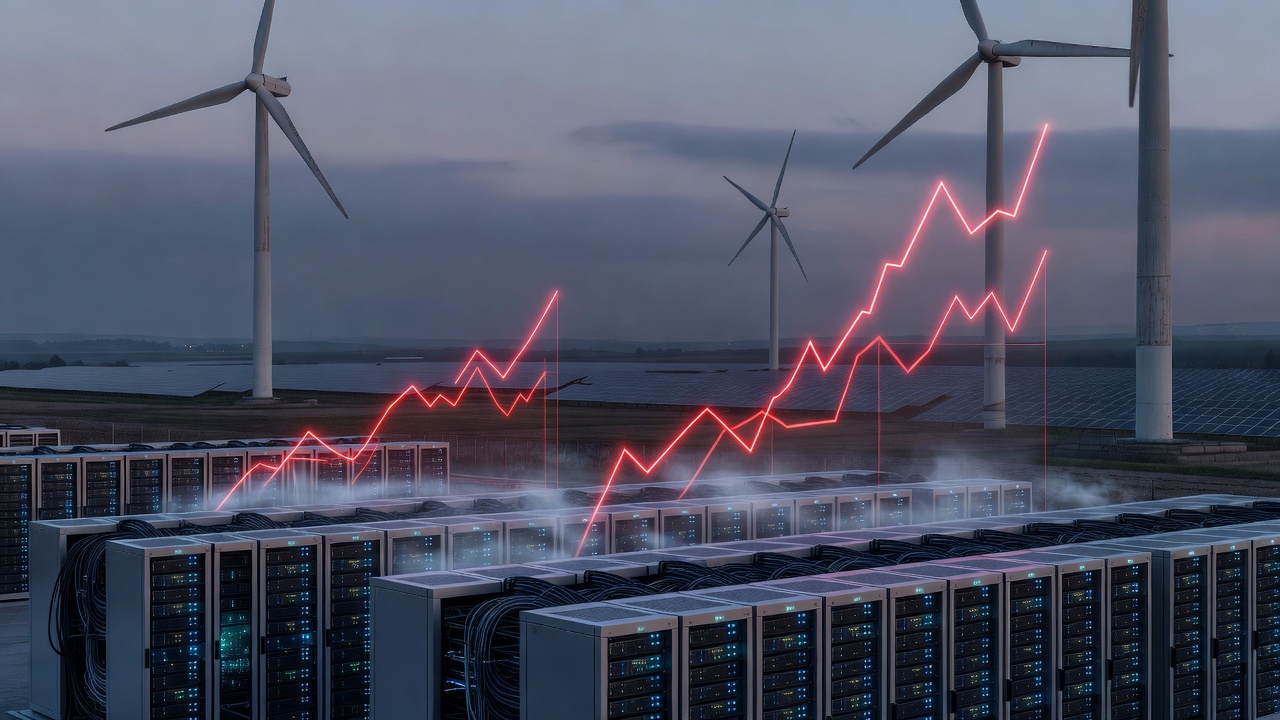
Microsoft’s carbon emissions rose by 25 percent between 2020 and 2023 according to the company’s own sustainability report, a sharp increase that highlights the environmental costs of its aggressive expansion into artificial intelligence and cloud computing. The Wired article examining these figures shows how data centers and advanced computing infrastructure now drive a substantial portion of the technology giant’s overall emissions profile.
The jump comes at a time when many large technology firms have committed to ambitious climate targets. Microsoft has long positioned itself as a leader in corporate sustainability, promising to become carbon negative by 2030. That pledge, announced in 2020, included removing more carbon from the atmosphere than the company emits each year by the end of the decade. Yet the latest data reveals that total emissions climbed from roughly 12 million metric tons of carbon dioxide equivalent in 2020 to more than 15 million metric tons in 2023. Scope 3 emissions, which cover indirect sources such as supply chains and customer use of products, accounted for most of the increase.
Much of the growth traces directly to the construction and operation of data centers needed to support Azure, Microsoft’s cloud platform, and the rapid scaling of AI services. Training and running large language models requires enormous amounts of electricity, often generated from fossil fuels in regions where renewable sources remain limited. A single training run for a model the size of GPT-4 can consume energy equivalent to hundreds of households over several years. As Microsoft integrates these models into its products and offers them to customers through Azure OpenAI Service, the associated energy demand continues to climb.
Data center construction itself carries a heavy carbon footprint. Building new facilities involves concrete production, steel manufacturing, and transportation of materials, all of which generate significant emissions. Once operational, these centers require constant cooling and backup power systems that frequently rely on diesel generators. Even when companies purchase renewable energy certificates to offset consumption, the physical infrastructure often depends on local grids that still burn coal or natural gas during peak periods.
Microsoft is not alone in facing this challenge. The entire technology sector has experienced similar pressures as demand for cloud services and AI accelerates. Google reported a 13 percent rise in emissions between 2019 and 2022, while Meta has also seen increases tied to data center expansion. What distinguishes Microsoft’s situation is the scale of its ambitions and the public nature of its carbon negative commitment. The company has invested billions in renewable energy projects, signed power purchase agreements for solar and wind farms, and explored advanced cooling techniques to reduce energy needs.
Despite these efforts, the pace of AI development has outstripped the growth of clean energy infrastructure. Electricity demand from data centers could double or triple in some regions over the next decade according to projections from the International Energy Agency. In the United States, data centers already account for about 4 percent of total electricity consumption, and that share is expected to rise sharply. Microsoft has acknowledged the tension between its climate goals and business expansion, noting in its sustainability report that absolute emissions may continue to increase in the short term while the company works to decouple growth from carbon output.
One area receiving increased attention involves the efficiency of AI hardware and software. New generations of processors designed specifically for machine learning tasks can deliver better performance per watt than traditional graphics processing units. Microsoft has developed its own Maia AI accelerator chips to optimize workloads within Azure data centers. Software optimizations, including model compression, quantization, and more efficient training algorithms, can also reduce energy requirements without sacrificing capabilities. The company reports progress in these areas, though the gains have not yet offset the overall expansion of computing capacity.
Supply chain emissions present another complex problem. Manufacturing servers, networking equipment, and specialized AI hardware involves rare earth minerals, semiconductor fabrication, and global shipping networks that generate substantial carbon dioxide. Microsoft has begun requiring suppliers to report emissions data and set their own reduction targets, but tracing the full lifecycle impact remains difficult. The Wired article points out that Scope 3 categories often represent more than 90 percent of a technology company’s reported emissions, making them the most significant yet hardest to control.
Water usage adds another dimension to the environmental impact. Data centers require large volumes of water for cooling, particularly in evaporative systems common in warmer climates. Microsoft’s data centers consumed more than 1.5 billion gallons of water in 2022, with some facilities located in areas already experiencing water stress. As the company builds new sites to meet AI demand, competition for water resources could intensify in certain regions. Alternative cooling technologies, such as immersion cooling or closed-loop systems, offer potential solutions but come with higher upfront costs and technical challenges.
Microsoft has responded to criticism by accelerating investments in carbon removal technologies. The company has committed more than $1 billion to a Climate Innovation Fund that supports direct air capture, enhanced rock weathering, and other approaches designed to pull carbon dioxide from the atmosphere. In 2023, Microsoft announced purchases of carbon removal credits totaling hundreds of thousands of tons, though critics argue these offsets should not substitute for actual emission reductions at the source.
The company’s nuclear power initiatives represent another strategy to secure clean baseload electricity for data centers. Microsoft has signed agreements to restart a Three Mile Island reactor unit and explore small modular reactor technologies that could be deployed near computing facilities. These moves could provide carbon-free power around the clock, unlike solar and wind which depend on weather conditions. However, nuclear projects face regulatory hurdles, public opposition, and long development timelines that may not align with the immediate needs of AI expansion.
Employee and investor pressure has grown as the emissions numbers became public. Some shareholders have filed resolutions asking for more detailed reporting on how AI growth factors into climate strategy. Environmental groups have questioned whether Microsoft’s carbon negative target remains realistic given current trajectories. The company maintains that its approach combines immediate emission reductions where possible with longer-term investments in technology that will eventually bend the curve downward.
Looking ahead, Microsoft faces decisions about the pace of AI deployment and the infrastructure required to support it. Slower rollout of new models could reduce near-term emissions growth but might cede competitive ground to rivals. Faster expansion risks further increases in carbon output and potential backlash from customers and regulators who increasingly factor environmental performance into procurement decisions. European Union regulations already require detailed emissions reporting, and similar rules are under consideration in other major markets.
The situation also raises broader questions about the environmental sustainability of artificial intelligence as a whole. While AI systems can help optimize energy use in buildings, improve renewable energy forecasting, and accelerate development of battery technologies, these benefits must be weighed against the direct impacts of the computing resources they require. Finding the right balance will likely involve industry-wide collaboration, government policy support for clean energy infrastructure, and continued innovation in both hardware efficiency and carbon removal methods.
Microsoft’s experience illustrates the tension between technological progress and environmental responsibility in the current era of rapid AI advancement. The 25 percent emissions increase serves as a reminder that good intentions and substantial investments do not automatically translate into reduced carbon footprints when underlying business activities expand dramatically. As the company works to reconcile its climate commitments with commercial demands, its strategies will be closely watched by other technology firms facing similar pressures.
Progress will depend on multiple factors working together. Continued improvements in chip efficiency, wider availability of carbon-free electricity, better measurement and reporting of indirect emissions, and successful scaling of carbon removal technologies could eventually allow Microsoft to meet its targets. Until those pieces fall into place, however, the company will likely continue reporting rising emissions even as it touts advances in renewable procurement and efficiency gains. The coming years will test whether corporate sustainability pledges can withstand the real-world demands of exponential computing growth.


 WebProNews is an iEntry Publication