
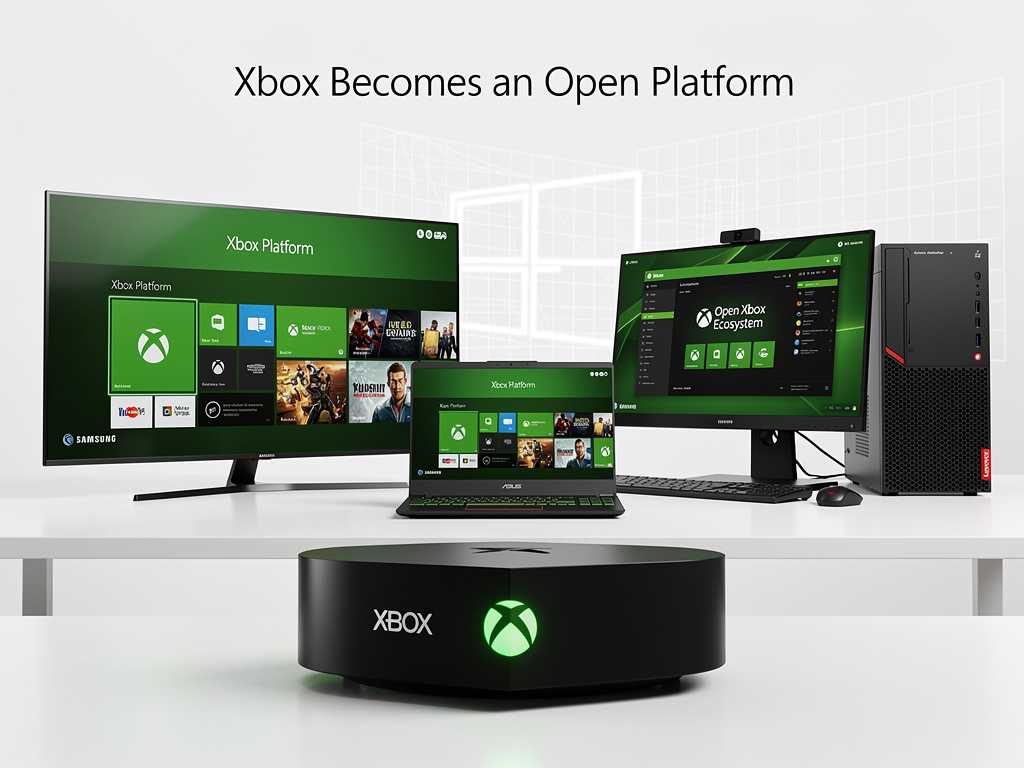
For more than two decades, Xbox has been synonymous with a single piece of hardware — a console designed, manufactured, and sold by Microsoft. That era is drawing to a close. In a sweeping strategic pivot that could reshape the gaming industry for years to come, Microsoft is preparing to license the Xbox brand and platform to third-party hardware manufacturers, effectively transforming Xbox from a console into an ecosystem. The implications are enormous — for gamers, for competitors, and for the very definition of what a gaming console is.
The news, first reported and analyzed in detail by Digital Trends, signals that Microsoft is no longer content to compete head-to-head with Sony and Nintendo in the traditional console wars. Instead, the company appears to be borrowing a page from its own Windows playbook: build the software platform, and let others build the hardware. It is a strategy that made Microsoft the dominant force in personal computing in the 1990s and 2000s, and the company is betting it can work again in gaming.
From Console Maker to Platform Licensor
The shift has been building for some time. Microsoft’s Xbox division, led by Phil Spencer and now operating under the broader umbrella of Microsoft Gaming following the $69 billion acquisition of Activision Blizzard, has been steadily de-emphasizing hardware exclusivity. The company has already begun releasing formerly Xbox-exclusive titles on PlayStation and Nintendo platforms. It has invested billions in Xbox Game Pass, its subscription service, and in cloud gaming through Xbox Cloud Gaming (formerly Project xCloud). The logical next step — letting other companies build Xbox-compatible hardware — is radical, but it follows a clear trajectory.
According to reporting from Digital Trends, Microsoft has been in discussions with major electronics manufacturers about producing Xbox-branded or Xbox-powered devices. The names floated in industry circles include Samsung, ASUS, and Lenovo — companies with deep expertise in consumer electronics and PC hardware but no current presence in the dedicated gaming console market. These devices could range from traditional console form factors to handheld gaming devices, TV-integrated hardware, and hybrid PC-console machines.
The Windows Playbook, Rewritten for Gaming
The parallels to Microsoft’s Windows strategy are hard to ignore. In the PC market, Microsoft never needed to manufacture the majority of computers running its operating system. Instead, it licensed Windows to Dell, HP, Lenovo, and dozens of other manufacturers, creating a vast ecosystem of hardware at every price point. The result was market dominance that lasted decades. Microsoft is now attempting to replicate this model in gaming, positioning the Xbox operating system and Game Pass as the connective tissue across a diverse range of hardware.
Phil Spencer has hinted at this direction in multiple public statements over the past two years. In a 2024 podcast appearance, Spencer said that Microsoft’s goal was to reach gamers “wherever they want to play,” and that the company was “not going to be constrained by the traditional console model.” Those comments, once interpreted as references to cloud gaming and mobile, now appear to have been foreshadowing a much more ambitious hardware strategy. Microsoft’s willingness to let go of hardware exclusivity — long considered the lifeblood of the console business — represents a fundamental philosophical shift.
What This Means for the Console Market
The potential consequences for the broader gaming industry are significant. Sony and Nintendo have built their businesses around tightly integrated hardware-software ecosystems. Sony’s PlayStation 5 and Nintendo’s Switch 2 are designed as closed platforms where the hardware manufacturer controls every aspect of the experience, from the controller to the storefront. Microsoft’s approach would blow that model wide open, creating a world where consumers could choose from multiple manufacturers offering different takes on the Xbox experience — much like choosing between a Samsung Galaxy phone and a Google Pixel, both running Android.
This could put competitive pressure on Sony in particular. If Xbox-powered devices are available at multiple price points from manufacturers with established retail relationships and supply chain expertise, Microsoft could dramatically expand the addressable market for its gaming platform. A $200 Xbox-powered streaming device from Lenovo, a $500 high-performance console from ASUS, and a premium Xbox handheld from Samsung could collectively reach segments of the market that a single Microsoft-manufactured console never could. The strategy trades margin on hardware — which Microsoft has historically sold at or near cost — for reach and scale on software and subscriptions.
The Handheld Factor and the Rise of Portable Gaming
One of the most intriguing aspects of this strategy is its potential application to handheld gaming. The success of the Nintendo Switch, the Steam Deck from Valve, and handheld PCs from ASUS (the ROG Ally) and Lenovo (the Legion Go) has demonstrated massive consumer demand for portable gaming devices. Microsoft has no handheld offering today, but licensing the Xbox platform to manufacturers already producing handheld PCs could give the company an instant presence in this fast-growing category.
Digital Trends noted that a third-party Xbox handheld is among the most likely early products to emerge from this licensing strategy. Such a device could run the Xbox operating system, offer full access to Game Pass, and play Xbox games natively or via cloud streaming — all without Microsoft needing to design, manufacture, or distribute the hardware itself. For manufacturers like ASUS and Lenovo, which already produce Windows-based gaming handhelds, the transition to producing an Xbox-branded device would be relatively straightforward from an engineering perspective.
Risks and Challenges of an Open Ecosystem
The strategy is not without risks. One of the key advantages of the traditional console model is quality control. When Sony ships a PlayStation 5, it knows exactly what hardware every developer is targeting, and it can guarantee a consistent experience for every consumer. An open Xbox ecosystem would introduce hardware fragmentation — the same challenge that has long plagued the Android smartphone market and the PC gaming market. If one manufacturer’s Xbox device runs games poorly or has reliability issues, it could tarnish the Xbox brand as a whole.
Microsoft would need to establish rigorous certification standards for third-party Xbox hardware, much as Google does with its Android compatibility requirements. The company would also need to manage relationships with multiple hardware partners while potentially continuing to produce its own first-party Xbox consoles — a delicate balancing act that could create channel conflict. If Microsoft’s own console is seen as the “premium” option, third-party manufacturers might struggle to differentiate their products. Conversely, if third-party devices offer better value or features, Microsoft’s own hardware sales could cannibalize.
The Activision Blizzard Factor and Content as King
Underpinning this entire strategy is Microsoft’s massive investment in game content. The acquisition of Activision Blizzard, completed in October 2023, gave Microsoft ownership of franchises including Call of Duty, World of Warcraft, Candy Crush, and Overwatch. Combined with studios acquired through the 2021 Bethesda purchase — including the makers of The Elder Scrolls, Fallout, and Doom — Microsoft now controls one of the largest portfolios of gaming intellectual property in the world.
This content library is the engine that makes the licensing strategy viable. Third-party manufacturers will be willing to build Xbox hardware only if there is a compelling software ecosystem to attract consumers. With Game Pass offering access to hundreds of titles, including day-one releases from Microsoft’s own studios, the value proposition for consumers is clear. Microsoft is essentially using its content investments to subsidize platform adoption, a strategy that mirrors how Amazon used its content library to drive adoption of Fire TV and Kindle devices.
A New Chapter for Xbox — and the Industry
The gaming industry has seen dramatic shifts before — from cartridges to discs, from physical retail to digital distribution, from premium purchases to free-to-play models. Microsoft’s move to license the Xbox platform to third-party manufacturers could represent the next great disruption. It challenges the fundamental assumption that has governed the console business since the days of Atari: that a gaming platform must be tied to a single piece of proprietary hardware.
Whether this gambit succeeds will depend on execution. Microsoft must maintain software quality, manage hardware partner relationships, and continue to invest in the content that makes the Xbox ecosystem attractive. It must also convince consumers that an Xbox device made by Samsung or ASUS is just as legitimate as one made by Microsoft itself. These are not trivial challenges. But if Microsoft can pull it off, the company that once struggled to compete with PlayStation on hardware sales could end up rendering the traditional console war obsolete entirely. The next Xbox you buy might not be made by Microsoft — and that might be exactly the point.


 WebProNews is an iEntry Publication