
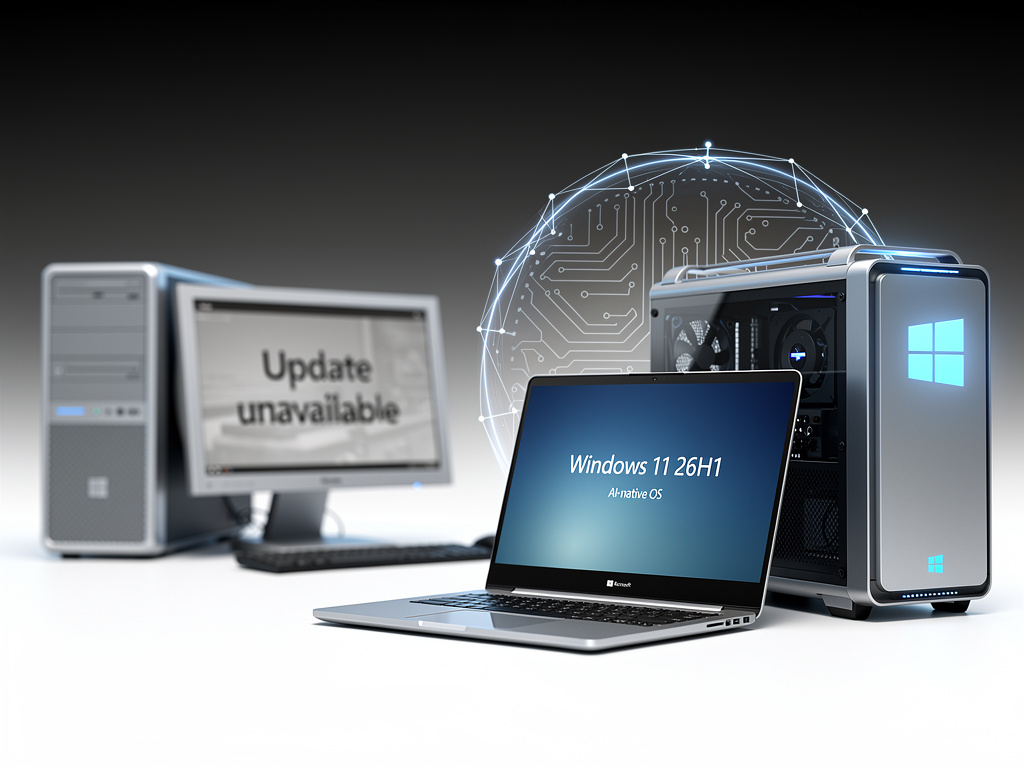
In a move that has sent ripples through the enterprise IT world and consumer tech circles alike, Microsoft has confirmed that its next major Windows update — Windows 11 26H1 — will not be delivered as a traditional update to existing PCs. Instead, the company is building an entirely new version of Windows from the ground up, one that will ship exclusively on new hardware. It is the most significant architectural shift in the Windows operating system in over a decade, and it signals Microsoft’s aggressive pivot toward artificial intelligence as the defining feature of modern computing.
The confirmation, which surfaced through official Microsoft documentation and was first widely reported by TechRadar, makes clear that Windows 11 26H1 is not simply another annual feature update. It is a fundamentally different operating system build, engineered from the ground up with AI capabilities woven into its core architecture. Current Windows 11 users will instead receive a separate update — reportedly called Windows 11 25H2 — that delivers some new features and security improvements but does not represent the same generational leap.
A Clean Break From the Cumulative Update Model
For years, Microsoft has delivered Windows updates as cumulative packages layered on top of existing installations. This approach, while convenient for users who simply click “Update” in their settings, has accumulated significant technical debt. Each new feature release has had to maintain backward compatibility with an ever-growing matrix of hardware configurations, driver stacks, and legacy software hooks. The result has been an operating system that, despite Microsoft’s best efforts, carries the weight of decades of architectural decisions.
Windows 11 26H1 breaks from this pattern entirely. According to reporting from TechRadar, Microsoft is treating this release as a fresh foundation — a new OS image that will come pre-installed on new devices rather than being pushed as an over-the-air update. This approach allows Microsoft’s engineering teams to optimize the operating system for modern hardware without being constrained by the need to support older configurations. It is, in essence, a reset button for the Windows platform.
The AI Imperative Driving the Overhaul
The driving force behind this architectural overhaul is artificial intelligence — specifically, the integration of on-device AI capabilities that require dedicated hardware such as Neural Processing Units (NPUs). Microsoft has been steadily building its Copilot AI ecosystem, embedding intelligent assistants and AI-powered features across its product line. But the company has been constrained by the reality that most existing Windows PCs lack the specialized silicon needed to run advanced AI workloads locally.
By tying Windows 11 26H1 to new hardware, Microsoft ensures that every device running the new OS will have the necessary AI acceleration built in. This is not merely a marketing play. On-device AI processing offers tangible benefits in terms of speed, privacy, and reliability. Tasks like real-time language translation, intelligent photo editing, advanced voice recognition, and context-aware system optimization all perform dramatically better when handled by local NPUs rather than being routed through cloud servers. Microsoft appears to be betting that the future of Windows is inseparable from the future of AI hardware.
What This Means for Current Windows 11 Users
The natural concern for the hundreds of millions of people currently running Windows 11 is whether they are being left behind. Microsoft has sought to address this anxiety by confirming that existing devices will continue to receive updates, security patches, and some new features through the Windows 11 25H2 update track. In practical terms, current PCs will not suddenly become obsolete or unsupported.
However, there is no sugarcoating the reality that the most advanced features and capabilities coming to Windows will be exclusive to the new platform. This creates a two-tier ecosystem: devices running the legacy-compatible version of Windows 11, and new devices running the AI-native 26H1 build. For enterprise IT departments, this bifurcation introduces new complexity in terms of fleet management, software compatibility testing, and hardware refresh planning. For consumers, it means that the most compelling reasons to upgrade Windows will increasingly be tied to buying new hardware rather than simply downloading an update.
Industry Reaction: Relief Mixed With Strategic Concern
Reaction across the technology industry has been notably mixed. Hardware manufacturers — particularly those in the PC OEM space like Dell, HP, Lenovo, and Microsoft’s own Surface division — stand to benefit enormously. A new version of Windows that requires new hardware is, in effect, a powerful demand driver for PC sales at a time when the broader market has been struggling with post-pandemic demand normalization. Chip makers like Qualcomm, Intel, and AMD, all of whom have been investing heavily in NPU-equipped processors, also stand to gain as the software ecosystem finally catches up to their silicon capabilities.
On the other hand, enterprise customers and managed service providers have expressed concern about the pace of change. Large organizations typically operate on hardware refresh cycles of three to five years, and the introduction of a fundamentally new Windows build complicates long-term planning. The question of application compatibility — always the thorniest issue in any Windows transition — looms large. Will legacy line-of-business applications run smoothly on the new 26H1 architecture? Microsoft has not yet provided detailed compatibility guidance, and until it does, many IT leaders will remain cautious.
The Ghost of Windows 10 End-of-Life
This announcement does not exist in a vacuum. It arrives against the backdrop of Windows 10’s impending end-of-life, currently scheduled for October 14, 2025. Hundreds of millions of PCs worldwide still run Windows 10, and a significant portion of those machines do not meet the hardware requirements for even the current version of Windows 11 — requirements that were themselves controversial when introduced in 2021, particularly the mandate for TPM 2.0 chips.
The Windows 10 end-of-life situation has created a massive installed base of users facing difficult choices: upgrade their hardware to run Windows 11, pay for Microsoft’s Extended Security Updates program, switch to an alternative operating system like Linux, or simply continue running an unsupported OS and accept the security risks. Now, with 26H1 introducing yet another hardware threshold, the pressure on users and organizations to invest in new devices intensifies further. Critics argue that Microsoft is effectively using software transitions to force hardware purchases, a charge the company has historically denied by pointing to the genuine security and performance benefits of modern hardware requirements.
A Precedent-Setting Approach to OS Development
What makes Windows 11 26H1 particularly noteworthy from a technology strategy perspective is that it represents a philosophical shift in how Microsoft thinks about operating system development. For the past two decades, the company has prioritized backward compatibility above almost all other considerations. This commitment was a cornerstone of Windows’ dominance in the enterprise — businesses could trust that their investments in software and workflows would be preserved across OS generations.
The 26H1 approach suggests that Microsoft is willing to relax this commitment in pursuit of a more modern, AI-optimized platform. This is not entirely unprecedented — the transition from Windows 7 to Windows 8 involved significant architectural changes, and the move to 64-bit computing required its own form of hardware gatekeeping. But the scale and ambition of the 26H1 shift, combined with the explicit acknowledgment that it will not be available as an update to existing machines, marks a new chapter in Windows development philosophy.
The Bigger Picture: Microsoft’s Platform Strategy in the AI Era
Zooming out, Windows 11 26H1 is best understood as one component of Microsoft’s broader strategy to position itself as the dominant platform company in the age of artificial intelligence. The company’s massive investment in OpenAI, the rapid expansion of Copilot across Microsoft 365, Azure, and Windows, and its push to establish AI-ready hardware standards through initiatives like the Copilot+ PC program all point in the same direction: Microsoft wants AI to be synonymous with Windows.
Building a new version of Windows from the ground up — free from the constraints of legacy compatibility — gives Microsoft the architectural freedom to deeply integrate AI at every level of the operating system, from the kernel to the user interface. If the gambit pays off, Windows 11 26H1 could become the foundation for a new era of personal computing, one where the operating system doesn’t just run applications but actively anticipates user needs, automates routine tasks, and serves as an intelligent intermediary between humans and their digital lives.
For now, the technology world watches and waits. Microsoft has set the stage for what could be the most consequential Windows release since Windows 10 debuted in 2015. Whether it delivers on that promise — and whether users and enterprises are willing to pay the price of admission in the form of new hardware — will be one of the defining questions of the tech industry in 2025 and beyond.


 WebProNews is an iEntry Publication