
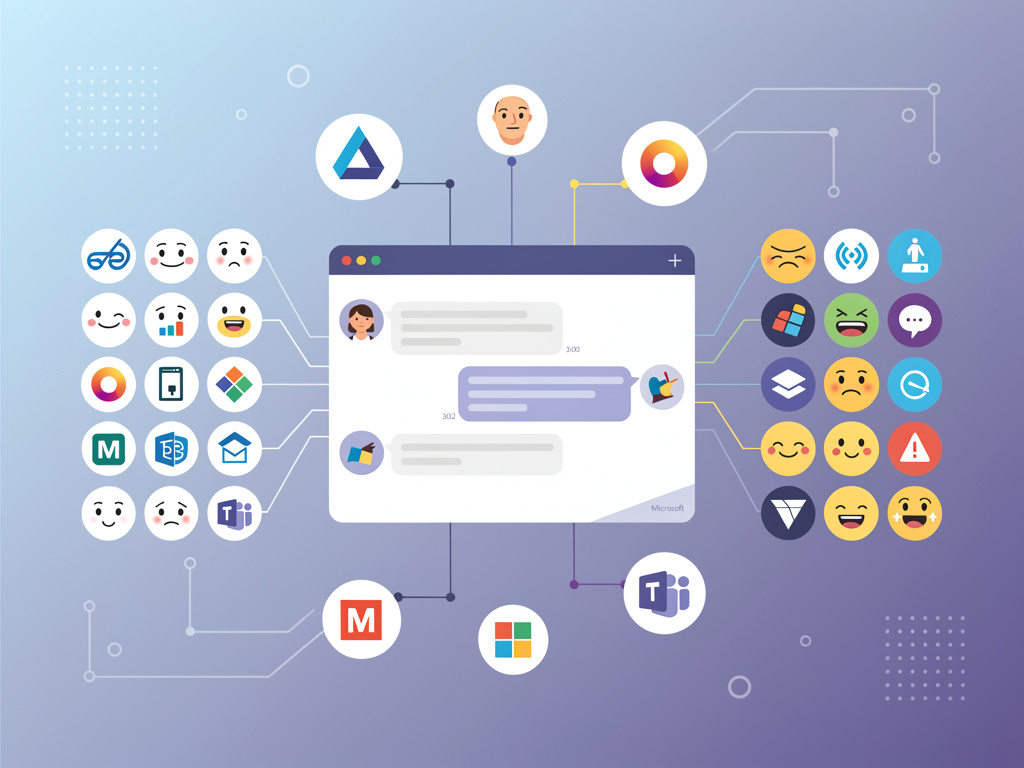
Microsoft’s latest feature rollout for Teams represents a calculated bet on corporate branding that could either strengthen organizational culture or unleash a wave of workplace communication chaos. The tech giant’s decision to allow companies to create custom branded reactions within its collaboration platform marks a significant departure from the standardized emoji sets that have dominated digital workplace communication for years. According to TechRadar, the feature enables organizations to inject their corporate identity directly into the daily communication flow of their employees, a move that raises questions about the balance between brand consistency and authentic workplace expression.
The feature arrives at a pivotal moment for Microsoft, as the company continues to battle Slack, Zoom, and other competitors for dominance in the increasingly crowded enterprise collaboration market. Teams has grown to more than 320 million monthly active users, making it one of the most widely deployed workplace communication platforms globally. This massive user base provides Microsoft with unprecedented leverage to introduce features that reshape how millions of professionals communicate daily. The branded reactions capability represents more than a cosmetic update; it’s a strategic play to deepen enterprise customer lock-in by making the platform more customizable and theoretically more aligned with corporate culture initiatives.
Corporate branding experts have long sought ways to extend brand identity beyond external marketing materials into the internal employee experience. Custom reactions in Teams offer organizations the ability to create emoji-style responses that incorporate company logos, mascots, product imagery, or custom designs that reflect organizational values. For multinational corporations spending millions annually on brand consistency programs, this feature provides a new touchpoint for reinforcing corporate identity. However, the implementation raises concerns about whether employees will embrace or resist what some workplace culture observers are already characterizing as “forced fun” or “corporate cringe.”
The Technical Architecture Behind Custom Reactions
Microsoft’s implementation of branded reactions leverages the company’s existing Azure infrastructure and Teams extensibility framework. Organizations can upload custom images through the Teams admin center, where IT administrators can create, manage, and deploy reaction sets across their entire workforce. The technical specifications allow for multiple custom reactions per organization, with images optimized for various display sizes and resolutions to ensure consistency across desktop, mobile, and web versions of Teams. The feature integrates with Microsoft’s existing governance tools, enabling administrators to control which reactions are available to specific teams, departments, or user groups.
The rollout follows Microsoft’s established pattern of testing features with select enterprise customers before broader deployment. Early adopters include organizations across financial services, healthcare, and technology sectors, though Microsoft has not publicly disclosed specific customer names. The phased approach allows the company to gather feedback on technical performance, user adoption patterns, and potential misuse scenarios before making the feature generally available. This cautious strategy reflects lessons learned from previous Teams feature launches that encountered unexpected challenges when deployed at scale across diverse organizational contexts.
Workplace Culture Implications and Employee Response
The introduction of branded reactions intersects with broader debates about authenticity and corporate culture in hybrid work environments. Organizational psychologists have documented the importance of informal communication channels in building workplace relationships and maintaining team cohesion, particularly as remote and hybrid work arrangements become permanent fixtures. Reactions and emoji serve as crucial tools for conveying tone, emotion, and social cues in text-based communication where traditional nonverbal signals are absent. The question facing organizations is whether branded reactions will enhance or diminish these informal communication dynamics.
Early anecdotal evidence from workplace communication platforms suggests mixed employee reactions to corporate-mandated emoji sets. Some employees appreciate the novelty and view custom reactions as a playful element that makes workplace communication more engaging. Others express concern that branded reactions represent another form of corporate surveillance and control over personal expression, even in professional contexts. The tension reflects a fundamental challenge in modern workplace design: how to foster authentic human connection while maintaining professional boundaries and corporate standards.
Competitive Dynamics in Enterprise Collaboration
Microsoft’s move puts pressure on competitors to respond with similar customization capabilities or risk appearing less flexible to enterprise customers. Slack, which has long positioned itself as the more culturally progressive and employee-friendly alternative to Teams, faces particular pressure to match or exceed Microsoft’s customization offerings. The company already offers custom emoji functionality, but the integration with broader organizational branding initiatives remains less developed than what Microsoft now provides. Zoom, meanwhile, has focused its customization efforts on meeting experiences rather than asynchronous communication features, potentially leaving an opening for Microsoft to differentiate Teams in the reactions and emoji space.
The competitive implications extend beyond feature parity to questions of platform philosophy and market positioning. Microsoft’s approach reflects its traditional strength in serving IT administrators and corporate decision-makers, with features designed to appeal to executives concerned with brand consistency and organizational culture. Slack’s historical focus on bottom-up adoption and employee satisfaction creates a different set of priorities, where customization serves individual teams rather than corporate mandates. These philosophical differences shape product roadmaps and determine which customer segments each platform serves most effectively.
Governance Challenges and Potential Pitfalls
The implementation of branded reactions introduces new governance challenges for IT administrators and human resources departments. Organizations must develop policies governing which images are appropriate for custom reactions, how approval processes will work, and what consequences apply to misuse. The potential for inappropriate or offensive custom reactions poses reputational risks, particularly in organizations with distributed approval authority or inadequate content moderation processes. Legal and compliance teams must consider whether custom reactions could create liability in harassment cases or other workplace disputes where communication tone and intent become relevant evidence.
Microsoft has built content moderation tools into the admin interface, including the ability to review, approve, and remove custom reactions. However, the effectiveness of these controls depends on organizational implementation and ongoing monitoring. Large enterprises with thousands of employees and complex organizational structures face particular challenges in maintaining consistent standards across geographic regions, business units, and cultural contexts. The feature’s success will partly depend on whether Microsoft provides sufficient guidance and best practices to help organizations navigate these governance challenges without creating bureaucratic overhead that undermines the feature’s intended benefits.
Market Adoption Projections and Enterprise Strategy
Industry analysts project varied adoption rates for branded reactions, with uptake likely concentrated among organizations already heavily invested in corporate branding initiatives and internal communications programs. Marketing-driven companies, consumer brands with strong visual identities, and organizations undergoing cultural transformation initiatives represent prime candidates for early adoption. More conservative industries, including financial services and healthcare, may approach the feature cautiously due to compliance concerns and risk-averse cultures that discourage deviation from established communication norms.
The feature’s long-term success depends on whether Microsoft can demonstrate measurable benefits to organizational culture and employee engagement. Early metrics will likely focus on usage rates, employee feedback scores, and qualitative assessments of communication effectiveness. However, proving causation between custom reactions and improved business outcomes presents methodological challenges. Organizations investing in branded reactions will need to justify the administrative overhead and potential risks against tangible returns in employee satisfaction, brand alignment, or communication efficiency.
Future Development Trajectory and Platform Evolution
Microsoft’s introduction of branded reactions likely represents the opening move in a broader strategy to make Teams more customizable and brand-aligned at the enterprise level. Future iterations could include custom notification sounds, branded interface themes, or integration with corporate mascots and brand characters in more sophisticated ways. The company’s investments in artificial intelligence and machine learning could enable automated suggestions for when to use specific branded reactions, or analytics showing how custom reactions correlate with team productivity and engagement metrics.
The feature also signals Microsoft’s recognition that workplace communication platforms must evolve beyond purely functional tools to become cultural artifacts that reflect and shape organizational identity. As remote and hybrid work arrangements persist, digital platforms increasingly serve as the primary space where corporate culture manifests and evolves. Custom reactions represent one mechanism for organizations to assert cultural norms and values in digital spaces, though whether employees will accept or resist these efforts remains an open question that will shape the feature’s ultimate impact on workplace communication practices.


 WebProNews is an iEntry Publication