
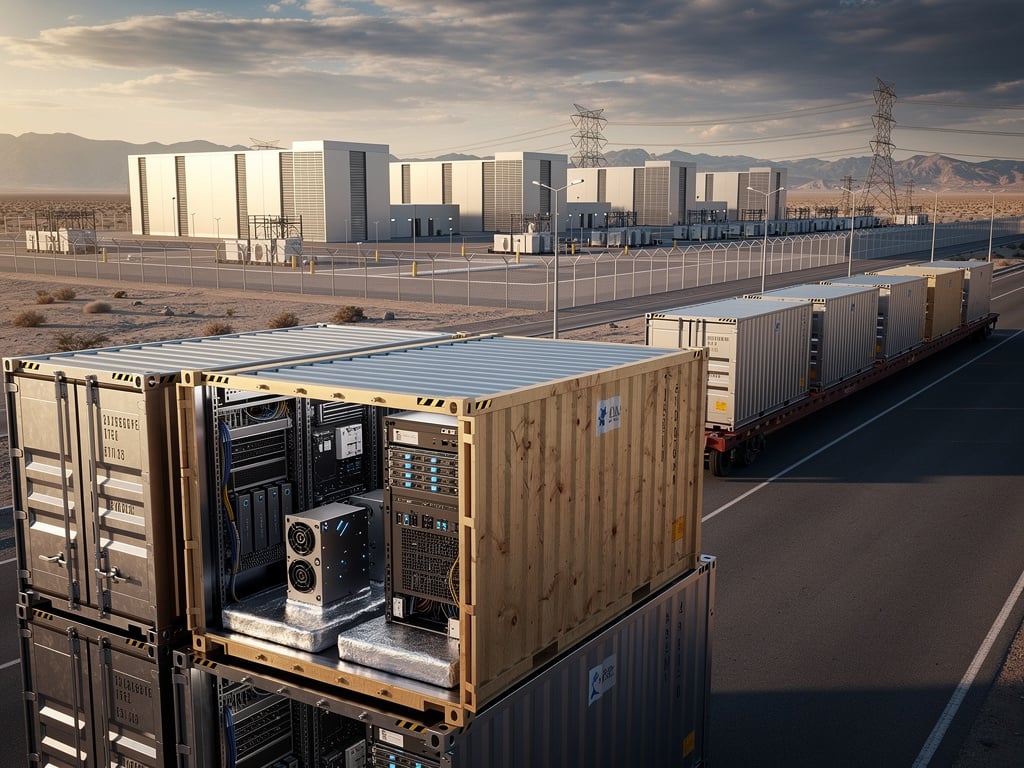
Microsoft has formally asked Nevada officials for protection against potential tariffs on imported goods as the company accelerates construction of massive data centers across the state. The request, filed with the Nevada Governor’s Office of Economic Development, seeks to shield the technology giant from added costs that could arise from shifting federal trade policies. According to a report by Yahoo Finance, the move reflects broader concerns among major technology firms about how new import duties might affect their ambitious expansion plans in artificial intelligence infrastructure.
The petition arrives at a time when data center development has become central to technology strategy. Microsoft plans to invest billions in Nevada facilities that will power its Azure cloud services and support the enormous computational demands of advanced AI models. These centers require vast quantities of specialized equipment, much of which comes from overseas suppliers. Servers, cooling systems, networking hardware, and power infrastructure often originate in countries subject to existing or proposed tariffs. Without exemptions, the company argues, these extra expenses could slow project timelines and raise operational costs that ultimately pass to customers.
Nevada has positioned itself as an attractive destination for technology investment through a combination of tax incentives, access to renewable energy, and business-friendly regulations. The state offers significant property tax abatements and sales tax exemptions for qualifying projects that meet job creation and investment thresholds. Microsoft’s request for tariff protection builds on these existing arrangements by seeking additional assurances against trade policy changes that might occur after contracts are signed. State officials have shown willingness to accommodate large-scale employers, viewing data centers as sources of high-paying construction jobs and long-term economic activity.
Data centers now consume electricity at scales once associated with entire cities. A single hyperscale facility can draw as much power as 50,000 households, and AI training workloads have driven demand even higher. Microsoft has committed to carbon-negative operations by 2030, which means many of its new centers will rely on contracts for solar, wind, and geothermal power. Nevada’s abundant renewable resources make it an appealing location, but the equipment needed to convert and distribute that power frequently involves imported components. Transformers, inverters, battery storage systems, and high-voltage switchgear often carry price tags that would increase under broader tariff regimes.
The company’s filing highlights the complexity of global supply chains in the technology sector. Even when final assembly occurs domestically, critical parts come from specialized manufacturers in Asia and Europe. Semiconductor fabrication equipment, fiber optic cables, and precision cooling components represent areas where domestic alternatives remain limited or more expensive. Microsoft maintains that sudden tariff increases could disrupt carefully negotiated contracts and force renegotiation with suppliers already operating under tight margins. The company has reportedly asked for a multi-year shield that would apply to equipment brought in specifically for its Nevada projects.
Trade policy has become increasingly unpredictable in recent years. Previous administrations imposed tariffs on steel, aluminum, solar panels, and various Chinese goods. The current environment suggests potential for additional measures targeting strategic sectors. Technology leaders worry that data center equipment could face collateral damage from policies aimed at other industries. Microsoft has joined other firms in advocating for targeted exemptions that recognize the national importance of computing infrastructure. AI capabilities now influence everything from scientific research to military applications, making uninterrupted development a matter of strategic concern.
State economic development offices increasingly find themselves managing these complex requests. Nevada’s team has negotiated similar arrangements with other technology and manufacturing companies. The process typically involves detailed disclosure of project timelines, investment amounts, job projections, and supply chain analysis. Microsoft has indicated plans to create hundreds of permanent positions while generating thousands of construction roles during the build-out phase. The company also promises substantial community investments including workforce training programs and educational partnerships with local institutions.
Critics of such arrangements argue that tariff protections represent a form of corporate welfare that distorts free market principles. They contend that companies with market values in the trillions should absorb these costs rather than seeking government intervention. Others point out that widespread exemptions could undermine the intended effects of tariffs, which often aim to encourage domestic manufacturing. The counterargument holds that data centers differ from traditional factories because their primary output consists of digital services rather than physical products. The equipment they import enables economic activity across countless sectors.
Energy availability has emerged as perhaps the most significant constraint on data center growth nationwide. Many regions face transmission bottlenecks and generation shortages that limit new connections. Nevada has managed to avoid some of these problems through proactive grid planning and access to geothermal resources that provide consistent baseload power. The state also benefits from vast open spaces that allow for large solar installations with fewer land-use conflicts than more densely populated areas. These advantages help explain why Microsoft and other firms have concentrated investments there.
The tariff shield request forms part of a larger pattern of engagement between technology companies and government entities at both state and federal levels. Microsoft maintains active government relations teams that monitor policy developments and advocate for favorable conditions. The company has similarly sought regulatory clarity around AI development, energy policy, and tax treatment of digital infrastructure. These efforts reflect the reality that technology infrastructure now carries implications that extend far beyond commercial interests.
Construction activity in Nevada has already begun at multiple sites. Heavy equipment operators work alongside engineers to prepare foundations that will support buildings designed to last for decades. The facilities incorporate advanced security features, redundant power systems, and sophisticated environmental controls. Once operational, they will house hundreds of thousands of servers working in coordinated clusters. The scale of these projects requires precise coordination between numerous contractors, suppliers, and regulatory bodies.
Financial analysts have mixed views on the potential impact of tariffs on technology companies. Some argue that increased costs would be relatively minor compared to overall capital expenditure budgets that run into tens of billions annually. Others warn that cumulative effects across multiple projects could meaningfully affect profitability and force price adjustments in cloud services. Microsoft has historically passed infrastructure costs to customers through subscription fees, meaning businesses and consumers could ultimately bear the burden of higher equipment prices.
The company’s relationship with Nevada dates back several years. Earlier investments included smaller facilities and partnerships with local utilities on energy projects. The current expansion represents a significant escalation in commitment. Industry observers expect Microsoft to continue adding capacity as demand for AI capabilities grows. Similar patterns appear in other states where the company operates, though the specifics of incentive packages vary according to local conditions and competitive pressures.
State officials face the challenge of balancing immediate economic benefits against long-term fiscal implications. Tax abatements and tariff protections reduce potential revenue that might otherwise support public services. However, successful projects generate indirect economic activity through supplier networks, employee spending, and increased tax collections from related businesses. Nevada has generally favored an approach that prioritizes job creation and investment over short-term revenue maximization.
International trade dynamics add another layer of complexity. Many equipment manufacturers have already begun shifting production in response to previous tariff actions. Some have established plants in countries with favorable trade agreements or invested in American facilities. These adjustments take time and capital, meaning abrupt policy changes can still create disruptions. Microsoft appears to be seeking stability that would allow its suppliers to make rational long-term decisions without fear of sudden cost increases.
The broader context includes growing competition among states for technology investment. Virginia, Texas, Ohio, and others have also attracted major data center projects through aggressive incentive programs. Companies evaluate factors including power costs, water availability, fiber connectivity, tax structures, and political stability. Nevada’s strategy emphasizes renewable energy and streamlined permitting processes that can accelerate deployment compared to states with more bureaucratic hurdles.
Microsoft’s AI infrastructure requirements continue to expand rapidly. The company has invested in OpenAI and integrated advanced models across its product lineup. Each new generation of AI systems demands more computational resources, driving the need for additional data centers. Industry projections suggest that power consumption by data centers could double or triple within the next decade. This growth trajectory places pressure on technology firms to secure favorable conditions wherever they build.
Equipment suppliers watch these developments closely. Companies that manufacture servers, storage systems, and networking gear have seen demand surge but also face their own supply chain challenges. Many rely on components from multiple countries, creating complex tariff exposure that varies by product category. A comprehensive shield for Microsoft projects would provide predictability for these vendors as well.
As negotiations continue, both Microsoft and Nevada officials maintain discretion about specific details. The company has avoided public statements that might complicate discussions, while state representatives emphasize their commitment to supporting responsible economic development. The outcome could influence how other technology firms approach similar requests in different jurisdictions. Success for Microsoft might encourage broader adoption of tariff protection mechanisms as standard elements of large-scale infrastructure deals.
The situation illustrates how global trade policy, energy strategy, and technology development have become tightly interconnected. Decisions made in state capitols and corporate boardrooms now carry implications that cross national boundaries and industrial sectors. As artificial intelligence assumes greater importance in economic and security matters, the physical infrastructure supporting it receives increased scrutiny from policymakers at all levels. Microsoft’s request for tariff protection in Nevada represents one piece of this larger puzzle, highlighting the practical challenges of building digital capabilities in an environment of policy uncertainty. The resolution of this particular matter will likely shape approaches to similar issues for years to come.


 WebProNews is an iEntry Publication