
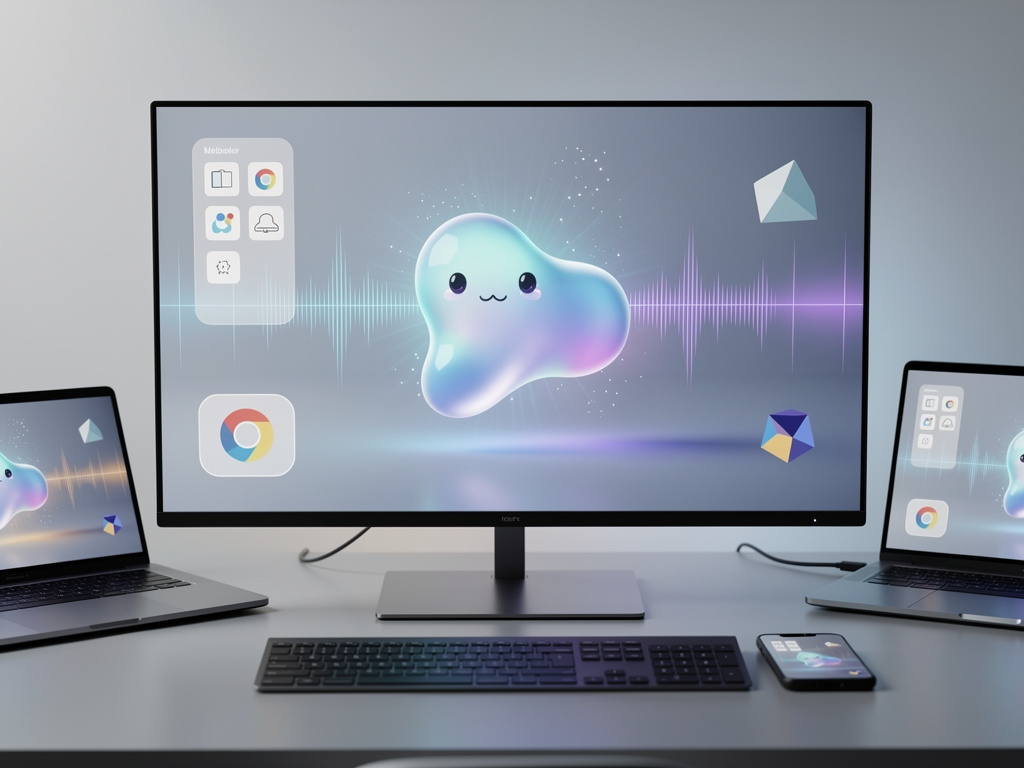
In the ever-evolving realm of artificial intelligence, Microsoft has introduced a feature that blends whimsy with functionality, potentially redefining user engagement with its Copilot tool. Dubbed Mico, this AI “pet” appears as a colorful, amorphous blob that reacts to user interactions in real time, adding a layer of personality to what was previously a straightforward AI assistant. Announced recently, Mico represents Microsoft’s latest attempt to humanize AI, drawing mixed reactions from users and experts alike.
At its core, Mico is designed to be a visual companion within the Copilot interface. It manifests as a floating, shape-shifting entity that changes colors and forms based on the conversation’s tone—bouncing excitedly for positive exchanges or deflating during more serious discussions. According to details from MakeUseOf, this feature builds on Copilot’s voice capabilities, essentially providing a visual counterpart that users can interact with directly.
The rollout of Mico comes amid broader updates to Microsoft Copilot, as highlighted in the Microsoft Community Hub‘s November and December 2025 edition. These updates emphasize enhanced personalization, with Mico serving as a quirky embodiment of that push. Insiders note that it’s accessible now in the Copilot app, inviting users to experiment with its responsive behaviors.
The Origins and Design Philosophy Behind Mico
Microsoft’s foray into AI companions isn’t entirely new, but Mico stands out for its deliberate nod to nostalgia. Developers have infused it with elements reminiscent of past icons, such as a subtle Clippy cameo that appears under certain conditions, evoking the infamous Office assistant from the 1990s. This easter egg, as shared in posts on X, has delighted some users who appreciate the playful reference to Microsoft’s history.
From a technical standpoint, Mico leverages advanced machine learning to interpret user inputs beyond mere text. It analyzes voice inflections, query contexts, and even emotional cues to modulate its appearance and reactions. The Microsoft Copilot Blog describes this as part of a “human-centered AI” approach, aiming to make interactions feel more organic and less robotic.
Critics, however, question whether this gimmick addresses genuine user needs. In the Microsoft AI news usage report for 2025, data shows that while Copilot adoption is growing, features like Mico might appeal more to casual users than enterprise professionals. Industry observers suggest it’s a strategic move to differentiate Copilot from competitors like Google’s Gemini, which focus on raw efficiency over entertainment.
User Reactions: Delight, Skepticism, and Everything In Between
Early adopters have flooded social platforms with their experiences, painting a picture of polarized sentiment. On X, posts describe Mico as “adorably weird,” with one user noting how it “dances” in response to upbeat queries, turning mundane tasks into mini-entertainments. This aligns with Microsoft’s goal of fostering emotional connections, as outlined in their official blog announcements.
Yet, not all feedback is glowing. Some users express discomfort, labeling Mico as “disturbing” because it mimics emotions without genuine sentience. Drawing from sentiments on X, there’s a recurring theme that such features blur the line between tool and companion, potentially leading to over-reliance on AI for social fulfillment. One post likened it to “talking to your dog, except what it says back isn’t just in your head,” echoing the quirky marketing from Microsoft itself.
Broader industry analysis reveals that Mico’s introduction coincides with internal pressures at Microsoft. As reported by Windows Central, CEO Satya Nadella has emphasized AI adoption, urging executives to embrace tools like Copilot or risk obsolescence. This backdrop suggests Mico is part of a larger effort to boost engagement metrics, even if it risks alienating users who prefer a no-frills experience.
Technical Underpinnings and Integration Challenges
Diving deeper into Mico’s mechanics, it’s built on the same foundational models as Copilot’s core AI, including integrations with GPT-5 advancements mentioned in the Copilot Studio updates from November 2025. This allows for seamless transitions between voice, text, and visual interactions, where Mico can “react” to on-screen activities like web browsing or document editing.
However, performance issues have surfaced. Recent backlash, as covered in WebProNews, points to sluggish responses and inaccuracies in Copilot overall, which could undermine Mico’s appeal. For instance, if the AI pet fails to sync properly with user commands, its whimsical animations might come across as frustrating glitches rather than charming quirks.
Integration with Windows ecosystems adds another layer. The Windows Insider Blog details how Copilot Actions, including text editing enhancements, are rolling out alongside Mico, enabling the pet to assist in real-time tasks. Yet, for industry insiders, the key question is scalability—can Mico evolve beyond novelty to provide tangible productivity gains in sectors like finance or healthcare?
Strategic Implications for Microsoft’s AI Ecosystem
Microsoft’s decision to embed Mico reflects a broader strategy to make AI more approachable, as evidenced by the original announcement of Copilot as an “everyday AI companion” in the Official Microsoft Blog back in 2023. By 2025, this vision has expanded to include playful elements, potentially attracting younger demographics or creative professionals who value interactivity.
Comparisons to other AI companions are inevitable. Unlike static avatars in competing tools, Mico’s dynamic nature—shifting shapes and colors—sets it apart, but it also invites scrutiny over privacy. Users on X have raised concerns about data usage, wondering if Mico’s emotion detection involves deeper monitoring of personal interactions.
From an enterprise perspective, the feature’s opt-in nature is crucial. As noted in community discussions, Microsoft provides toggles to disable Mico, addressing feedback from users who find it intrusive. This flexibility could be a saving grace, allowing Copilot to cater to diverse user bases without forcing unwanted elements.
Evolving User Engagement and Future Prospects
As Mico gains traction, anecdotes from X highlight its potential for fun, unexpected moments. One user shared how it “surprised” them with a nostalgic animation, injecting levity into a work session. Such stories underscore Microsoft’s bet on optimism, as articulated in their human-centered AI post, positioning Copilot as a tool that informs, entertains, and inspires.
Nevertheless, challenges persist. The usage report from Microsoft AI indicates that while interaction times are up, deeper metrics like task completion rates haven’t surged dramatically with features like Mico. Insiders speculate that future iterations might incorporate more advanced behaviors, such as personalized learning from user habits, to bridge the gap between gimmick and utility.
Looking ahead, Mico could influence how other tech giants approach AI design. If successful, it might inspire a wave of anthropomorphic features across platforms, blending utility with personality. However, if backlash grows—fueled by performance woes or ethical concerns—it could prompt a reevaluation of such additions.
Broader Industry Ramifications and Ethical Considerations
The introduction of Mico also sparks ethical debates within the tech community. Posts on X question the anthropomorphism of AI, arguing that simulating pet-like behaviors risks misleading users about the technology’s limitations. This sentiment echoes broader discussions in AI ethics, where creating emotional bonds with non-sentient entities could lead to psychological dependencies.
Microsoft counters this by emphasizing transparency, as seen in their Copilot for Individuals page, which promotes the tool as an assistant rather than a true companion. Still, for industry watchers, the real test will be in long-term data: Will Mico increase retention, or will it be dismissed as a fleeting trend?
In sectors like education and mental health, Mico’s playful interface might find niche applications, such as engaging students or providing light-hearted support. Yet, experts caution against overhyping its capabilities, drawing parallels to past AI fads that promised revolution but delivered incremental change.
Navigating Adoption Hurdles in a Competitive Field
Adoption remains a hurdle, with reports indicating low overall usage of Copilot despite Nadella’s mandates. Windows Central’s coverage highlights this irony: AI is deemed essential internally, yet external engagement lags. Mico might serve as a gateway, luring hesitant users through its approachable facade.
Cross-platform availability, spanning PC, Mac, and mobile as per Microsoft’s site, broadens its reach. This universality could amplify its impact, especially if integrated with emerging features like Copilot Vision, which allows the AI to “see” and comment on web activities.
Ultimately, Mico embodies Microsoft’s ambition to infuse joy into AI, but its success hinges on balancing whimsy with reliability. As users continue to experiment, the feature’s evolution will likely shape perceptions of what an AI companion should be.
Refining the AI Companion Experience
Feedback loops are already influencing refinements. X posts suggest users want more customization options for Mico, such as altering its appearance or muting certain reactions. Microsoft, responsive to such input, has a history of iterating based on community hubs, potentially leading to updates that make Mico more versatile.
In comparison to predecessors like the original Bing Chat, now rebranded as Copilot, Mico adds a visual dimension that could enhance accessibility for visually oriented learners. The Official Microsoft Blog’s archival posts trace this progression, showing a consistent push toward multifaceted AI.
For tech insiders, the metrics to watch include engagement depth—how often users interact with Mico versus bypassing it. If it proves sticky, it could validate Microsoft’s strategy of blending fun with function.
Long-Term Vision and Potential Expansions
Envisioning the future, Mico might expand beyond Copilot into other Microsoft ecosystems, like Teams or Azure, offering collaborative “pets” for team dynamics. This speculation draws from usage trends in the 2025 report, where interactive elements correlate with higher satisfaction scores.
Ethical guardrails will be paramount. As AI grows more personable, regulations might emerge to prevent misuse, such as exploiting emotional simulations for marketing. Microsoft’s proactive stance, as in their blog on human-centered design, positions them well to navigate these waters.
In the end, Mico’s quirky presence challenges the notion of AI as purely utilitarian, inviting a reevaluation of how we interact with technology. Whether it becomes a staple or a curiosity, it underscores the creative directions AI development is taking.


 WebProNews is an iEntry Publication