
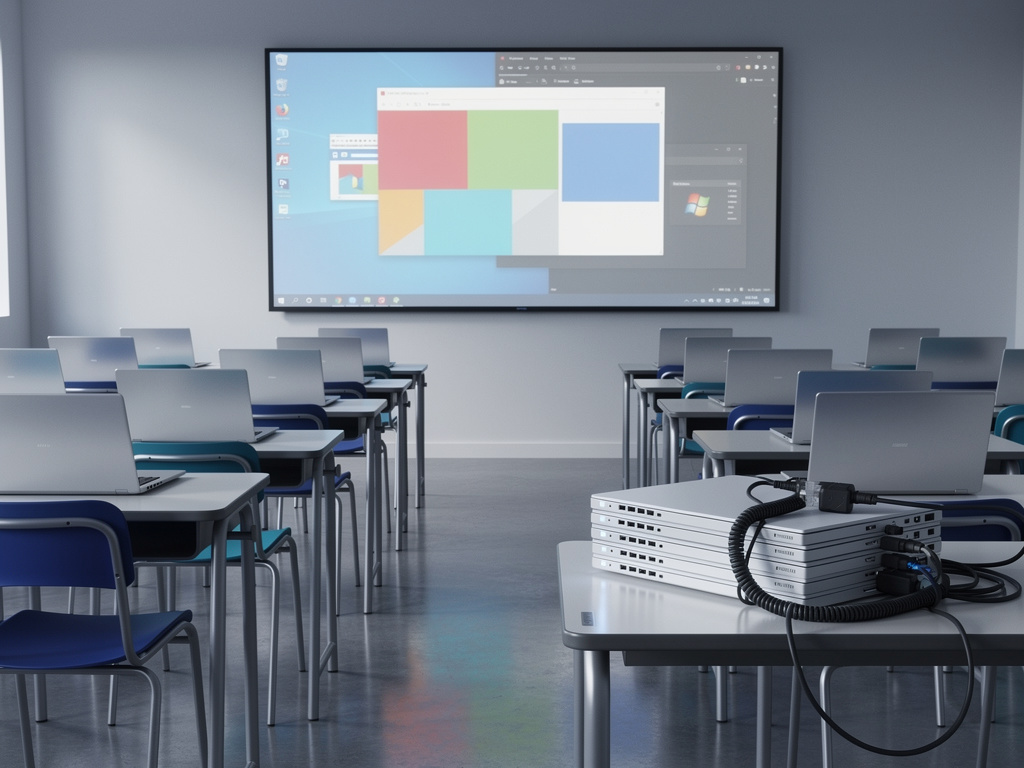
Microsoft’s Education Gambit Fades: The Impending End of Windows 11 SE
In the ever-evolving realm of educational technology, Microsoft has quietly signaled the conclusion of one of its ambitious ventures. Windows 11 SE, designed specifically for K-8 classrooms as a streamlined operating system to rival Google’s Chrome OS, is set to lose official support in 2026. This development, confirmed through recent updates in Microsoft’s documentation, underscores the challenges tech giants face when attempting to disrupt established markets in education. Schools that adopted the platform now confront a pressing deadline, with security updates and feature enhancements ceasing after October 2026.
Launched in late 2021 amid much fanfare, Windows 11 SE was positioned as a lightweight, cloud-focused OS tailored for low-cost devices. It promised simplified management for IT administrators, restricted app installations to enhance security, and integration with Microsoft’s suite of productivity tools like Teams and OneDrive. The goal was clear: to capture a share of the education market dominated by Chromebooks, which have become ubiquitous in U.S. schools due to their affordability and ease of use. However, adoption rates never quite matched the hype, hampered by hardware limitations and competition from more agile rivals.
Recent reports highlight that Microsoft has designated Windows 11 version 24H2 as the final feature release for SE, aligning its end-of-life with broader product cycles. This move comes as the company shifts focus toward more versatile Windows editions that can serve multiple sectors, including education. Industry observers note that while SE offered unique features like Intune for Education for device management, it struggled with perceptions of being too restrictive, limiting its appeal in dynamic learning environments.
The Roots of SE’s Struggle in a Competitive Arena
Delving deeper into the backstory, Windows 11 SE emerged from Microsoft’s recognition of Chrome OS’s stronghold in education. According to a report from Digital Trends, the OS was engineered for affordability, with devices like the Surface Laptop SE priced at around $249, aiming to undercut Chromebooks. Yet, feedback from educators revealed pain points: the inability to install third-party apps outside the Microsoft Store often frustrated users seeking flexibility for diverse teaching needs.
Posts on X, formerly Twitter, reflect a mix of sentiments from the tech community. Some users lament the end of what was billed as a “ChromeOS-killer,” while others point to its limited rollout as a sign of underwhelming market traction. For instance, discussions highlight how SE’s cloud-centric approach, while innovative, didn’t fully address the offline capabilities that many schools in rural or under-resourced areas require.
Microsoft’s broader strategy appears to be consolidating its offerings. As detailed in an article from Windows Latest, the sunset of SE marks the end of the company’s dedicated push against Chrome OS, redirecting efforts toward enhancing standard Windows 11 with education-specific features. This pivot suggests a pragmatic acknowledgment that a specialized OS might not be the most efficient path forward.
Implications for Schools and IT Departments
For educational institutions invested in Windows 11 SE, the end of support poses significant logistical challenges. Without ongoing security patches, devices running the OS after 2026 could become vulnerable to cyber threats, a critical concern in an era of increasing digital attacks on schools. Administrators must now plan migrations, either upgrading to full Windows 11 or transitioning to alternative platforms.
A forum post on Windows Forum outlines a migration playbook, emphasizing the need for schools to assess their device inventories and budget for replacements. This is particularly burdensome for underfunded districts, where the initial appeal of SE was its low cost. Experts recommend starting with pilot programs to test compatibility with existing curricula and software.
Moreover, the timing aligns with other Microsoft end-of-support milestones in 2026, including Windows 11 24H2 and Office 2021, as reported by Windows Latest. This wave of discontinuations could strain IT resources across sectors, but education feels the pinch acutely due to its reliance on consistent, secure tech for daily operations.
Shifting Strategies in Educational Tech
Microsoft’s decision reflects broader trends in how tech companies approach the education sector. Rather than maintaining a niche product like SE, the company is integrating education tools into its flagship OS. Features such as Microsoft 365 Education and enhanced Azure Active Directory support are being bolstered to provide similar benefits without the need for a separate edition.
Insights from Geo.tv suggest that schools might find value in upgrading to standard Windows 11, which offers greater flexibility while retaining cloud integration. However, this requires hardware that meets Windows 11’s stricter system requirements, potentially necessitating new purchases.
On X, educators and tech enthusiasts discuss the potential rise of alternatives like Linux-based systems or even Apple’s iPadOS for classrooms. These platforms offer robust ecosystems with strong security, challenging Microsoft’s dominance further. The sentiment underscores a market where adaptability and cost-effectiveness reign supreme.
Historical Context and Lessons Learned
Looking back, Windows 11 SE was part of a lineage of Microsoft education initiatives, from Windows 10 S to earlier classroom software bundles. Each iteration aimed to simplify computing for young learners, but SE’s focus on K-8 set it apart. A Reddit thread on r/Windows11, as captured in web searches, shows community disappointment, with users noting that SE’s restrictions, intended to prevent distractions, sometimes hindered educational innovation.
The end of support also coincides with the recent closure of Windows 10’s lifecycle, pushing more users toward Windows 11. According to Tech Edition, this phased approach allows Microsoft to streamline its support infrastructure, reducing overhead on legacy systems.
For industry insiders, this development signals a maturation in Microsoft’s product strategy. By phasing out underperforming variants, the company can allocate resources to AI-driven enhancements, such as Copilot integration in education tools, which promise to revolutionize personalized learning.
Navigating the Transition: Practical Advice for Educators
As schools prepare for the post-SE era, strategic planning is essential. IT teams should inventory devices, evaluate software dependencies, and explore Microsoft’s migration guides. Upgrading to Windows 11 Education edition could be a seamless step, offering advanced features like Windows Hello for secure logins and improved accessibility tools.
Budget considerations are paramount. With devices like the Surface Laptop SE nearing obsolescence, schools might leverage grants or partnerships with Microsoft resellers for discounted upgrades. Additionally, training staff on new systems will minimize disruptions, ensuring that the focus remains on teaching rather than tech troubleshooting.
Web searches reveal emerging guides, such as those on Windows Forum, which provide step-by-step migration strategies tailored to educational settings. These resources emphasize data backup, app compatibility testing, and phased rollouts to avoid overwhelming school networks.
Broader Market Dynamics and Future Prospects
The demise of Windows 11 SE highlights the competitive pressures in educational technology. Google’s Chrome OS continues to thrive, with its auto-update features and vast app ecosystem. Apple, too, has made inroads with iPads, emphasizing creative tools for students.
Microsoft, undeterred, is investing in hybrid solutions. Recent announcements point to deeper integration of Windows with Android apps via the Windows Subsystem for Android, potentially bridging gaps that SE couldn’t fill. This could attract schools seeking versatility without abandoning the Windows environment.
From X posts, there’s optimism about Microsoft’s adaptive approach. Users speculate that lessons from SE will inform future products, perhaps leading to a more modular OS framework that caters to specific sectors without full-fledged editions.
Economic and Security Ramifications
Economically, the end of SE support could accelerate hardware refresh cycles in schools, boosting sales for device manufacturers partnered with Microsoft. However, for cash-strapped institutions, this represents an unwelcome expense, potentially widening the digital divide.
Security-wise, unpatched devices post-2026 pose risks, from malware to data breaches. Cybersecurity experts advise immediate action, recommending alternatives like Chrome OS for its robust update mechanism.
In a global context, as noted in international coverage like t3n, similar end-of-support issues affect multiple Windows versions, urging users worldwide to upgrade proactively.
Voices from the Field: Educator Perspectives
Interviews and online discussions reveal varied educator reactions. Some praise SE for its focus on core learning apps, reducing distractions in classrooms. Others criticize its rigidity, arguing it stifled creativity.
Looking ahead, the integration of AI in education tools could redefine the sector. Microsoft’s push into generative AI might offer personalized tutoring, making the transition from SE an opportunity for advancement.
Ultimately, the end of Windows 11 SE serves as a case study in tech innovation’s trials. As schools adapt, the emphasis will be on resilient, future-proof solutions that empower learning without the pitfalls of obsolescence.
Strategic Reflections for Tech Leaders
For tech executives, SE’s trajectory offers valuable insights. Balancing specialization with broad appeal is key, as is responding swiftly to market feedback.
Microsoft’s recalibration toward unified platforms may set a precedent, encouraging competitors to refine their offerings.
In the end, while SE fades, its legacy could inform more successful ventures, ensuring technology continues to enhance education effectively.


 WebProNews is an iEntry Publication