
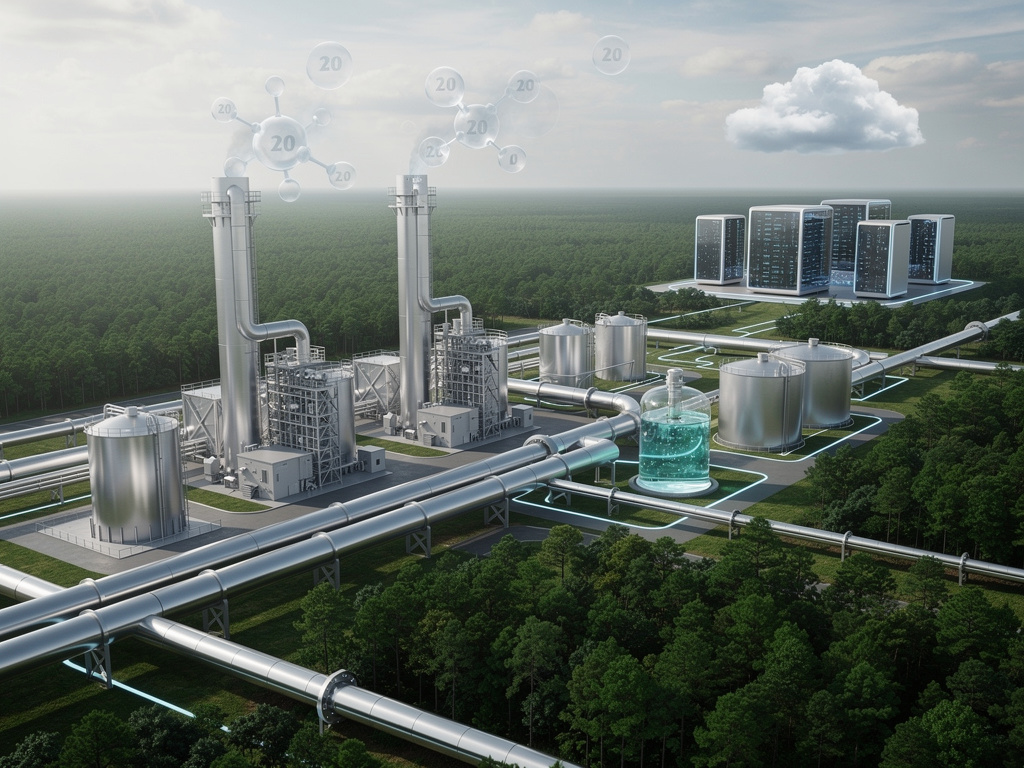
Microsoft’s ambitious push into artificial intelligence and cloud computing has supercharged its energy demands, forcing the tech giant to confront a stark reality: its carbon footprint is ballooning just as it races toward a self-imposed deadline to become carbon negative by 2030. In a bold move announced this week, the company has inked a deal to purchase 3.6 million metric tons of carbon removal credits from a bioenergy facility in Louisiana, marking one of the largest such agreements in the emerging field of carbon capture. This transaction underscores how Big Tech is increasingly turning to innovative, if controversial, solutions to offset emissions from data centers that power everything from AI training to everyday cloud services.
The agreement, detailed in a report from TechCrunch, involves Microsoft buying credits from a plant owned by C2X, a biofuels company. The facility, slated to begin operations in 2029, will convert forest residues into methanol—a low-carbon fuel suitable for ships and aircraft—while capturing and storing the carbon dioxide produced in the process. This bioenergy with carbon capture and storage (BECCS) approach promises to remove CO2 from the atmosphere permanently, aligning with Microsoft’s stringent criteria for what counts as genuine carbon removal. Unlike simpler offsets like tree-planting, which can be temporary, BECCS aims for long-term sequestration deep underground.
For Microsoft, this deal is more than a one-off purchase; it’s a strategic hedge against the environmental costs of its explosive growth. The company’s data centers, essential for Azure cloud services and AI models like those powering ChatGPT through its partnership with OpenAI, consumed enough electricity last year to power a small country. As emissions from these operations climb, Microsoft has publicly acknowledged that its 2030 goal—to remove more carbon than it emits—is under threat. Carbon removal credits have become a critical tool in its arsenal, allowing the firm to balance the books while scaling up renewable energy sources.
The Technology Behind the Deal
At the heart of this arrangement is the bioenergy plant in Pineville, Louisiana, developed by Beaver Lake Renewable Energy, as outlined in a piece from Data Center Dynamics. The facility will process biomass like wood chips and agricultural waste into biomethanol, a renewable alternative to fossil fuels. During production, CO2 is captured at the source and piped to underground storage sites, effectively pulling carbon out of the cycle. This method is gaining traction because it not only generates usable energy but also creates a revenue stream from carbon credits, making it economically viable for operators.
Industry experts note that BECCS technology, while promising, faces hurdles in scaling. The process requires vast amounts of biomass, raising concerns about sustainable sourcing to avoid deforestation or competition with food crops. In this case, the plant’s focus on forest residues—waste from logging operations—helps mitigate those risks, but supply chain transparency will be key. Microsoft’s involvement could accelerate advancements, as the company’s purchasing power often catalyzes innovation, much like its past deals in renewable energy.
Moreover, the 12-year term of the agreement provides long-term certainty for C2X, enabling the firm to secure financing for the project’s construction. According to insights from Carbon Herald, this deal represents a significant investment in carbon dioxide removal (CDR) technologies, with Microsoft committing to buy credits generated starting in 2029. The scale—3.6 million tons—is equivalent to taking about 780,000 gas-powered cars off the road for a year, per EPA estimates, highlighting the potential impact if replicated across industries.
Microsoft’s Broader Climate Strategy
This bioenergy pact fits into Microsoft’s multifaceted approach to sustainability, which extends beyond carbon removal to aggressive renewable energy procurement. Recent posts on X from users tracking tech and energy trends emphasize Microsoft’s history of massive clean power deals, such as a 10.5-gigawatt renewable energy agreement with Brookfield Asset Management earlier this year, valued at over $10 billion. That deal, aimed at powering data centers in the U.S. and Europe, underscores how the company is diversifying its portfolio to include wind, solar, and now bioenergy.
In parallel, Microsoft has explored nuclear options, signing a 20-year contract with Constellation Energy to restart the Three Mile Island nuclear plant by 2028, providing 837 megawatts specifically for AI data centers. These moves reflect a pragmatic recognition that renewables alone may not suffice for the round-the-clock power needs of AI infrastructure. As one X post from an industry analyst put it, Microsoft’s strategy is evolving from mere offsets to building resilient, low-carbon energy systems.
Yet, critics argue that relying on carbon removal could enable companies to delay deeper emissions cuts. Environmental groups have pointed out that while BECCS is effective, it’s no substitute for reducing energy consumption at the source. Microsoft’s own reports acknowledge this, with the company investing in energy-efficient chip designs and data center cooling technologies to curb demand. Still, the Louisiana deal signals a vote of confidence in CDR as a necessary bridge to a net-zero future.
Implications for the Carbon Market
The transaction is poised to ripple through the nascent carbon removal market, which is projected to grow exponentially as corporations face regulatory pressures and investor scrutiny. A report from Moneycontrol highlights how Microsoft’s purchases are driving demand, potentially lowering costs for high-quality credits over time. Currently, prices for BECCS-derived removals hover around $100 to $200 per ton, though exact figures for this deal remain undisclosed, adding an element of opacity that market watchers are eager to unpack.
Comparisons to Microsoft’s prior CDR efforts reveal a pattern of escalation. In 2021, the company issued a request for proposals seeking 154 million tons of removals but found only 2 million tons met its rigorous standards for permanence and verifiability, as chronicled in a Nature commentary shared on X by Microsoft’s chief environmental officer. This latest agreement builds on those lessons, prioritizing projects with robust monitoring to ensure the carbon stays sequestered for centuries.
For the bioenergy sector, the deal could spur investment in similar facilities across the U.S. South, where abundant biomass resources make Louisiana an ideal hub. However, challenges like permitting delays and community opposition—common in energy projects—could slow progress. Local stakeholders in Pineville have expressed mixed views, with some welcoming job creation while others worry about environmental impacts, according to regional news coverage.
Competitive Pressures and Industry Trends
Microsoft isn’t alone in this arena; rivals like Google and Amazon are also ramping up carbon removal commitments to meet their own climate pledges. Google’s recent investments in direct air capture contrast with Microsoft’s bioenergy focus, illustrating diverse paths to the same goal. Yet, Microsoft’s scale—purchasing 3.6 million tons in one swoop—sets a new benchmark, as noted in a Mezha Media article detailing the plant’s methanol production plans.
On X, discussions among tech insiders suggest this deal may influence policy, with calls for government incentives to support CDR scaling. The Biden administration’s Inflation Reduction Act already offers tax credits for carbon capture, which could subsidize projects like C2X’s, making them more attractive to buyers like Microsoft.
Looking ahead, the success of this initiative will hinge on technological reliability and market maturation. If the Louisiana plant delivers as promised, it could validate BECCS as a cornerstone of corporate climate strategies, encouraging broader adoption.
Challenges and Future Outlook
Despite the optimism, hurdles remain. Verifying carbon removal at scale requires advanced monitoring, and any lapses could undermine trust in the system. Microsoft has committed to third-party audits, but the field is still young, with standards evolving through organizations like the Carbon Removal Alliance.
Economically, the high upfront costs of BECCS plants—often in the hundreds of millions—necessitate buyers like Microsoft to provide the financial backbone. This deal, spanning 12 years, offers that stability, but fluctuations in energy markets or regulatory changes could introduce risks.
Broader societal implications also loom. As AI drives energy consumption, questions arise about equity: Who bears the cost of these offsets, and do they truly benefit communities affected by climate change? Microsoft’s transparency reports aim to address this, but ongoing scrutiny from activists will be crucial.
In the evolving realm of corporate sustainability, this bioenergy deal represents a pivotal step for Microsoft, blending innovation with necessity. By leveraging purchases like this, the company is not just offsetting emissions but actively shaping the tools needed for a low-carbon economy. As data centers continue to proliferate, such agreements may become the norm, bridging the gap between technological ambition and environmental responsibility. With the 2030 deadline approaching, Microsoft’s actions today could define the viability of carbon-negative operations for tech giants worldwide.


 WebProNews is an iEntry Publication