
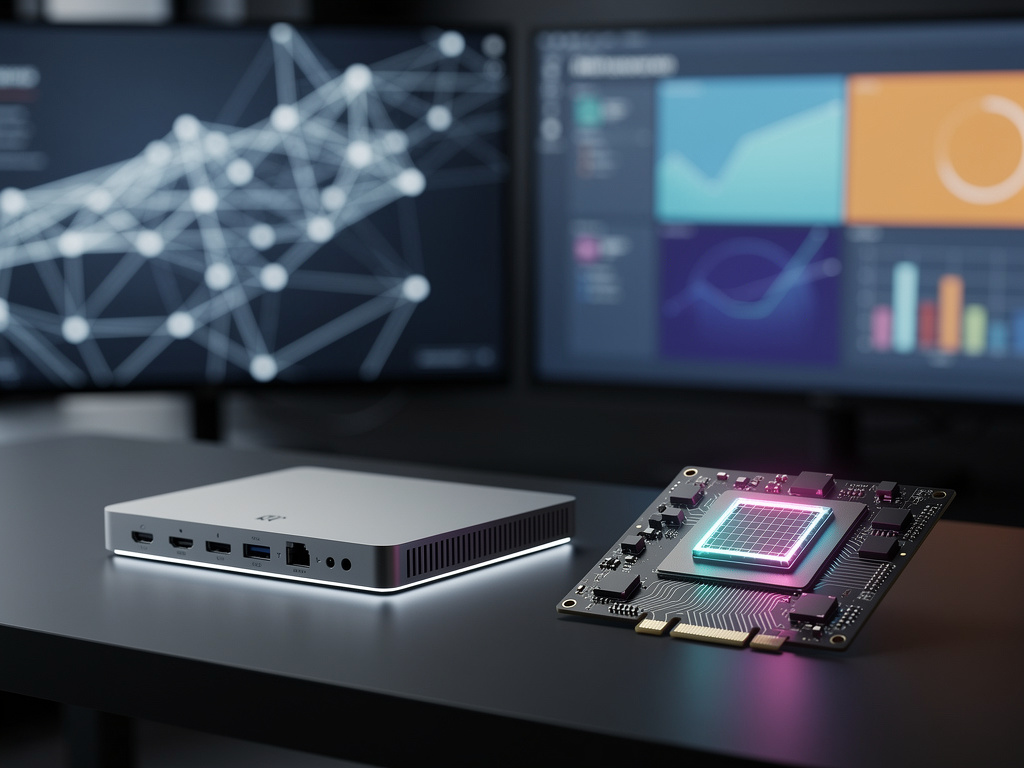
Microsoft just signaled a fresh commitment to developers who live in both Windows and Linux worlds. At its Build conference, the company outlined plans for tighter Linux integration on Windows alongside a new compact developer desktop powered by Nvidia’s RTX Spark superchip. The moves aim to position Windows as a serious platform for local AI work without forcing teams onto cloud bills or dedicated Linux machines.
The hardware grabs attention first. Surface RTX Spark Dev Box packs Nvidia’s new Arm-based superchip with up to 128GB of unified memory shared between CPU and GPU. It delivers around one petaflop of AI compute. Microsoft describes the box as compact enough for a desk yet capable of running models up to 120 billion parameters locally when quantized to 4-bit. Preloaded tools include Visual Studio Code, GitHub Copilot, Windows Terminal with inline assistance, PowerShell 7, and a tuned WSL setup.
Developers get GPU passthrough for WSL 2 with full CUDA support right out of the box. No lengthy configuration. The system ships with Windows 11 optimized specifically for this workload. Windows Developer Blog notes the device targets prototyping, model fine-tuning, and sustained local inference. Reach for Azure only when scale demands it.
And the software side matches that hardware push. Microsoft revealed a developer-optimized Windows 11 experience. It bundles command-line utilities, a comfort shell, faster setup, built-in Linux container creation, and an experimental Intelligent Terminal. WSL gains better file performance between Linux and Windows partitions, improved networking, and easier Docker integration.
These changes didn’t appear overnight. Earlier this year Microsoft already committed to faster WSL file access and reliability fixes. The Build announcements build directly on that foundation. Windows Latest reports the company now frames Windows as the trusted platform for agentic AI development. Local models run with OS-level security guardrails. Windows-native AI APIs sit alongside deeper GitHub Copilot and Azure ties.
Nvidia announced the RTX Spark family days earlier at Computex. The superchip combines a 20-core Grace CPU with a Blackwell GPU boasting 6,144 CUDA cores. Memory reaches 128GB in a single address space. Power envelope stays efficient at 100 watts for the dev box variant. Laptops and compact desktops from ASUS, Dell, HP, Lenovo, Microsoft Surface, and MSI arrive this fall. Acer and GIGABYTE follow later. Nvidia Newsroom highlights the platform’s focus on personal AI agents, content creation, gaming, and developer productivity.
But here’s the real test. Will developers actually shift heavy AI workloads onto these Windows boxes? Many already run Linux bare metal for CUDA stability and container simplicity. Microsoft counters with native GPU acceleration in WSL, preconfigured environments, and the promise of consistent behavior from laptop to dev box to cloud.
One executive quote stands out. Windows chief Pavan Davuluri explained the optimized experience brings “frequently used command line utilities, a familiar comfort shell, faster setup experience, a built-in way to create and interact with Linux containers on Windows and a new experimental Intelligent Terminal.” The statement appears in both the Ars Technica coverage and Microsoft’s own posts.
Critics point to past friction. File I/O between Windows and WSL has long frustrated users. Networking quirks in containers caused headaches. Microsoft claims targeted fixes address these exact pain points this time. Task scheduler updates also optimize for the RTX Spark’s hybrid Arm architecture, potentially benefiting broader Windows performance.
The dev box itself looks like a Mac Mini rival but tuned for sustained GPU loads. No spinning disks or flashy RGB. Just quiet, powerful local inference. Run a 70B model at decent speed without cloud latency or surprise invoices. Fine-tune smaller models overnight. Prototype agents that combine local reasoning with cloud tools.
Yet questions remain on software compatibility. Nvidia says Microsoft and the chip team worked to ensure Windows apps run properly on the Arm platform. Translation layers and native recompilation both play roles. Early benchmarks shared by partners suggest strong results for AI frameworks. PyTorch, TensorRT, and CUDA libraries receive first-class treatment.
So what does this mean for the industry? Teams that split time between Windows desktops and Linux servers may consolidate onto single machines. Enterprises already invested in Microsoft licensing gain an easier on-ramp to local AI without rewriting deployment scripts. Independent developers get a polished out-of-box experience that Linux distros often require manual assembly to match.
Microsoft didn’t stop at hardware and WSL. Agent runtimes, model packaging tools, and security layers for local execution received attention too. The goal appears clear: make Windows the default environment for building, testing, and running the next wave of AI agents.
Availability matters. The Surface RTX Spark Dev Box lands later this year. Pricing stays undisclosed for now but expect it to sit in premium workstation territory given the memory and compute. Partner laptops with the same silicon target all-day battery life for mobile developers alongside the desktop muscle.
Recent coverage from The Verge captured the full scope of Build announcements, noting how the developer Windows variant embraces Linux more than ever before. SiliconANGLE highlighted the system’s ability to run large models via WSL with native graphics and CUDA preconfigured.
Developers have heard big promises before. This round comes backed by actual silicon from Nvidia, measurable petaflop claims, and concrete WSL upgrades. The combination could finally close the gap that sent many AI practitioners straight to Linux workstations or cloud notebooks.
Watch the early adopters. Their feedback on WSL stability under heavy AI loads will decide whether this becomes the default developer rig or another interesting experiment. Microsoft clearly believes the former.


 WebProNews is an iEntry Publication