
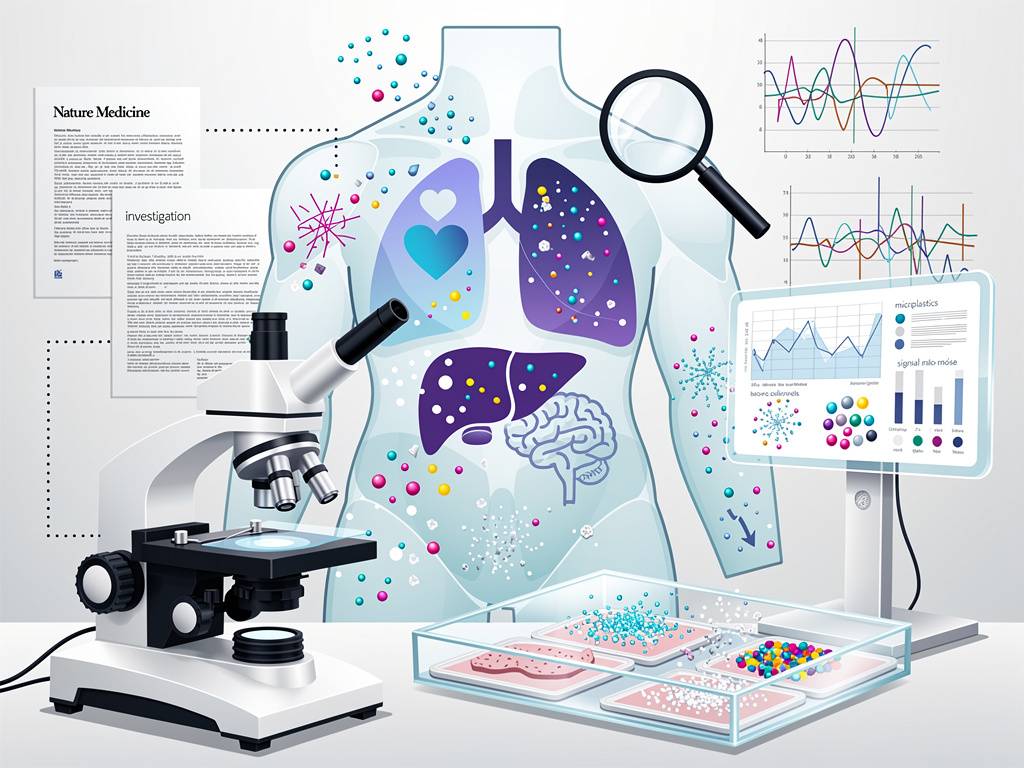
Like tobacco and asbestos decades ago, microplastics have ignited widespread alarm over invisible threats infiltrating human bodies. Recent revelations, however, are challenging the narrative. A flurry of high-profile studies claiming tiny plastic particles permeate organs from brains to placentas face mounting scrutiny from experts who argue methodological errors and contamination have fueled overstated risks.
The controversy erupted with a Guardian investigation published January 13, 2026, labeling the doubts a ‘bombshell.’ It spotlighted a letter in Nature Medicine questioning detection techniques in human tissue analyses. Signatories, including Dr. Dusan Materic of Germany’s Helmholtz Centre for Environmental Research, contended that body fat mimics polyethylene signals, potentially explaining perceived surges tied to rising obesity rates.
Dr. Fazel Monikh, a nanomaterials detection specialist at Italy’s University of Padua and another letter co-author, dismissed many findings outright. ‘When particulate materials enter a living organism, including the human body, they undergo biotransformation,’ he told The Telegraph. ‘Even if one were to assume the highly unlikely scenario in which an intact particle reaches a protected compartment, such as the brain, and is then successfully detected, it would not retain the appearance shown in most of the reported data.’
Origins of the Microplastics Scare
Microplastics—particles under 5 millimeters—were first confirmed in human stool in 2018 by Austrian researchers analyzing samples from eight countries, including Britain, as reported widely. No one disputes annual ingestion of tens of thousands of particles via water, food, and air. The dispute centers on nanoplastics, under 1 micrometer, allegedly embedding in tissues like lungs, livers, hearts, brains, placentas, testicles, bone marrow, and blood.
Alarmist papers linked these to inflammation, hormone disruption, gut microbe damage, lowered IQ, fertility drops, cardiovascular woes, cancer, heart attacks, and strokes. A study prompting the Nature Medicine letter claimed nanoplastics in brains tied to dementia, sparking eco-anxiety and shifts to plastic-free products from tea bags to chopping boards.
Yet skeptics highlight ubiquity complicating clean sampling. Labs require ‘blanks’—control samples processed identically to flag contamination—but many studies skip them, per Fay Couceiro, environmental pollution professor at the University of Portsmouth. ‘Some studies—particularly those based on humans—don’t follow the full standard methodologies used in environmental sampling around blanks, replicates and recovery checks,’ she said.
Detection Techniques Under Fire
Larger microplastics yield to microscopy and laser spectroscopy. Nanoplastics demand pyrolysis-gas chromatography mass spectrometry (Pyro-GC/MS), burning samples and analyzing emissions—a nascent, error-prone method prone to fat-plastic confusion. Dr. Materic’s team showed human fat yields polyethylene-like signals, per the Nature Medicine letter.
Oliver Jones, chemistry professor at Australia’s RMIT University, cautioned against past false alarms. ‘Many previous scary-sounding headlines on microplastics in blood and food have turned out to be measurement errors,’ he noted, referencing a critiqued 2022 blood study called ‘consistent with incidental or accidental contaminations’ in Environment International. Even pioneer Dr. Philipp Schwabl of Vienna’s Medical University admits health impacts remain unclear: ‘The question of how harmful these little foreign plastic bodies truly are remains open.’
A 2025 abstract at the European Society of Human Reproduction and Embryology on microplastics in reproductive fluids drew skepticism. Posts on X echoed this, with users sharing Telegraph pieces calling risks overstated, amplifying expert voices like Dr. Monikh.
Defenders Push Back on Skepticism
Not all concede ground. Philip Landrigan, pediatrician and epidemiologist at Boston College, led a Lancet microplastics review. ‘The Guardian article is accurate in pointing out that there is work to be done in refining, standardising and harmonising the analytical techniques,’ he said. ‘But the Guardian is wrong in implying that this whole area of science is rubbish.’
Matthew Campen of the University of New Mexico, whose brain study drew fire, stood firm post-conference. ‘We are 100 per cent confident that nanoplastics are in the brain,’ he asserted, citing new cerebrospinal fluid evidence. Vienna’s Medical University unveiled imaging tech avoiding sample burning, minimizing contamination and linking particles to disease.
Lukas Kenner, pathology deputy director at the same institution, urged nuance. ‘While early studies certainly had methodological limitations, the field has advanced rapidly. There is now good evidence that microplastics can enter and accumulate in the human body, and growing experimental evidence that they are biologically active rather than inert.’
Evolving Standards and Future Probes
Recent reviews bolster concerns indirectly. A PMC piece from October 2025 detailed microplastics’ ubiquity but stressed distinguishing from nanoplastics. Frontiers in Public Health (May 2025) outlined toxicological pathways yet noted detection gaps. Guardian follow-up on January 15 warned against blanket dismissal amid rushed publications.
X chatter reflects division: some decry fearmongering akin to past panics, others cite Vox noting unclear health damage. Christian Dunn of Bangor University emphasized nanoplastic detection limits: ‘The extent of how much of this plastic is entering and accumulating in our organs, and the damage this is doing to us, is still up for scientific discovery.’
Consensus may take years. Bodies might biotransform or expel particles, averting asbestos-like harm. Industry insiders watch for standardized protocols, as ConsumerAffairs reported January 14 on flawed methods’ potential implications. The debate reshapes environmental health priorities, demanding rigor over hype.


 WebProNews is an iEntry Publication