
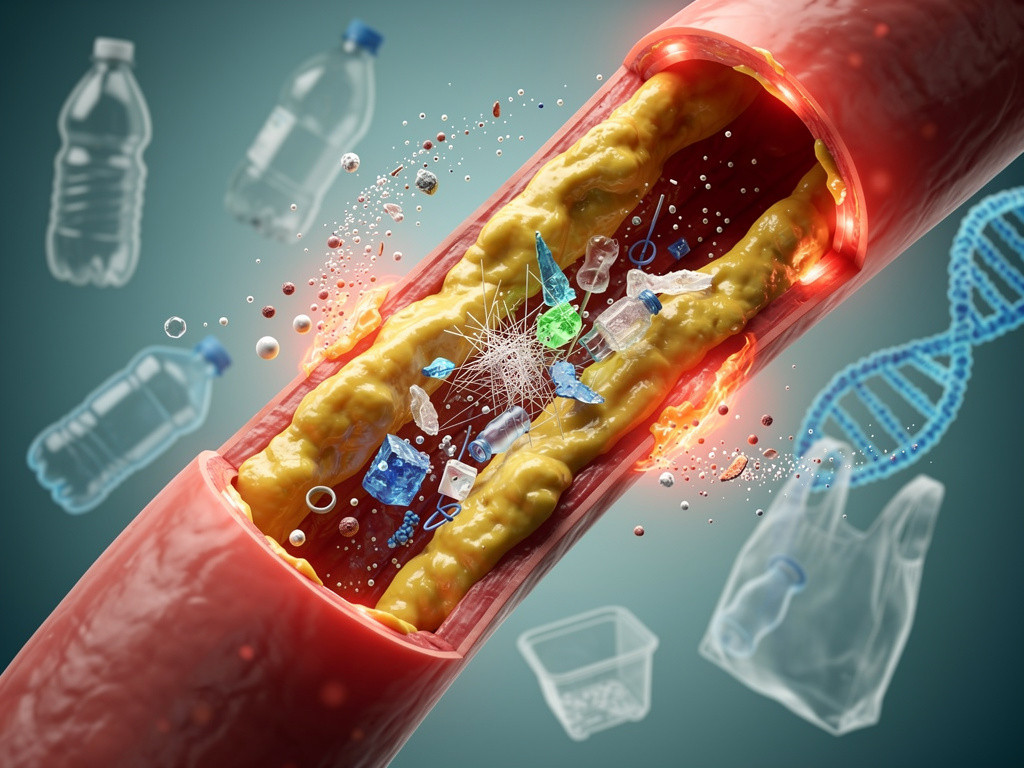
The Plastic Plague: Microplastics’ Stealth Assault on Human Hearts
In the quiet corridors of modern medicine, a disturbing discovery is reshaping our understanding of cardiovascular disease. Tiny fragments of plastic, invisible to the naked eye, are infiltrating human arteries, potentially accelerating the buildup of plaque that leads to heart attacks and strokes. This revelation stems from a wave of recent studies that link microplastics—particles smaller than five millimeters, often derived from degraded consumer products—to heightened risks of serious heart conditions. As researchers delve deeper, the evidence suggests these pollutants are not just environmental nuisances but active contributors to one of humanity’s leading killers.
The alarm bells rang loudly with a groundbreaking study published in 2024, where scientists analyzed arterial plaques from patients undergoing surgery. They found microplastics embedded in the fatty deposits clogging neck arteries, correlating their presence with a dramatically increased likelihood of adverse events. Patients with these plastic-laden plaques were over four times more likely to suffer heart attacks, strokes, or death within three years, according to findings reported in the Harvard Health publication. This wasn’t an isolated observation; similar patterns emerged in subsequent research, painting a picture of microplastics as insidious agents of inflammation and vascular damage.
Building on this, animal studies have provided mechanistic insights. In experiments with mice, exposure to environmentally realistic levels of microplastics led to accelerated plaque formation in arteries, but intriguingly, the effects were pronounced only in males. This sex-specific disparity hints at hormonal influences, such as estrogen’s protective role in females, as noted by lead researcher Changcheng Zhou from the University of California, Riverside. The study, detailed in UCR News, underscores how these particles may burrow into blood vessel walls, fueling the atherosclerotic process that clogs arteries and precipitates cardiovascular crises.
Unseen Particles, Mounting Evidence
The journey of microplastics into the human body is a tale of ubiquitous pollution. These fragments originate from everyday items—plastic bottles, packaging, clothing fibers, and even cosmetics—breaking down into minuscule pieces that permeate air, water, and food chains. Once ingested or inhaled, they can cross biological barriers, entering the bloodstream and lodging in vital organs. A 2025 study from the American College of Cardiology highlighted correlations between microplastic concentrations in environments and higher prevalence of chronic diseases, including cardiovascular issues, across U.S. census tracts.
Further amplifying concerns, human tissue analyses have detected microplastics in over half of examined arterial plaques. In one investigation, polyethylene and polyvinyl chloride were quantified in plaques removed from carotid arteries, with levels averaging around 21 micrograms per milligram of plaque. This presence was associated with systemic inflammation, a known driver of heart disease, as evidenced in research shared by the American College of Cardiology. The implications extend beyond arteries; microplastics have been found in blood clots retrieved from hearts, brains, and legs, suggesting a broader role in thrombotic events.
Public sentiment on platforms like X reflects growing alarm. Posts from medical professionals and environmental advocates emphasize the urgency, with one noting that patients with plastic-contaminated plaques faced a 4.5-fold higher risk of stroke or death. Another highlighted microplastics in clots post-heart attack or stroke, underscoring the need for immediate action against plastic pollution. These online discussions, while not definitive, mirror the scientific consensus emerging from peer-reviewed work.
From Lab Mice to Human Hearts
Diving into the mechanics, rodent models offer a window into how microplastics wreak havoc. In a study led by Zhou, male mice fed microplastics exhibited worsened atherosclerosis, with particles embedding in vessel walls and promoting inflammation. Females, however, showed resilience, possibly due to estrogen’s anti-inflammatory effects. This finding, echoed in SciTechDaily, aligns with broader cardiovascular research where sex differences influence disease progression.
Human parallels are striking. A 2024 analysis of 257 patients, published in the New England Journal of Medicine and referenced in various outlets, revealed that those with detectable micro- and nanoplastics in carotid plaques had a hazard ratio of 4.53 for major cardiovascular events. This statistic, drawn from a follow-up period of about 34 months, indicates a direct link between plastic infiltration and clinical outcomes. Researchers speculate that plastics trigger immune responses, exacerbating plaque instability and rupture.
Moreover, environmental factors compound the risk. Areas with higher microplastic pollution correlate with elevated chronic disease rates, as per the American College of Cardiology’s review. Urban dwellers, exposed through contaminated air and water, may face amplified dangers, prompting calls for regulatory interventions to curb plastic production and waste.
The Broader Health Implications
Beyond arteries, microplastics’ reach extends to other systems. Studies have linked them to inflammation in lungs, guts, and reproductive organs, potentially contributing to a spectrum of ailments. In cardiovascular contexts, their ability to induce oxidative stress and endothelial dysfunction—key steps in artery narrowing—positions them as novel risk factors alongside traditional culprits like cholesterol and smoking.
Recent news from late 2025, including reports from USA Today, reiterate that prior research showed plastics causing negative bodily effects. A December 2025 article in Business Standard detailed how daily exposure accelerates artery damage, particularly in men, with particles lodging in vessels and promoting hardening.
X posts from 2025 amplify these concerns, with users sharing links to studies showing microplastics in 80% of clots from major vascular events. While such social media buzz isn’t scientific proof, it highlights public awareness and the push for more research funding.
Sex Differences and Future Risks
The male-specific vulnerability observed in mice raises intriguing questions for human health. Estrogen’s protective effects could explain why women might be less susceptible, but post-menopausal shifts might equalize risks. This nuance, explored in the UCR study, calls for gender-stratified analyses in future trials to tailor prevention strategies.
Globally, microplastics’ pervasiveness demands attention. Detected in remote areas and human placentas, their infiltration seems inevitable. A 2025 piece in American Heart Association news noted higher plastic levels in plaques of stroke survivors, reinforcing the connection to cerebrovascular events.
Industry insiders in pharmaceuticals and environmental tech are watching closely. Biotech firms are exploring anti-inflammatory agents to mitigate plastic-induced damage, while policymakers debate bans on single-use plastics. The economic toll—billions in healthcare costs from preventable heart disease—adds urgency to these efforts.
Strategies for Mitigation and Research Horizons
Reducing exposure starts at the source: minimizing plastic use through alternatives like biodegradable materials. Filtration systems for water and air could curb ingestion, as suggested by environmental health experts. On the medical front, screening for microplastics in at-risk patients might become routine, informing personalized therapies.
Ongoing studies aim to quantify safe exposure levels and unravel exact pathways of harm. Collaborations between toxicologists and cardiologists, as seen in the Futurism report on mouse experiments increasing plaque in male arteries, are pivotal. This research, building on 2024 findings, posits microplastics as accelerators of heart disease.
Looking ahead, longitudinal human cohorts will track long-term impacts, potentially reshaping public health guidelines. As evidence mounts, the narrative shifts from plastics as mere waste to potent health threats, urging a reevaluation of our material world.
Policy and Personal Actions in Focus
Governments are responding sluggishly, but initiatives like the EU’s microplastic restrictions offer models. In the U.S., advocacy groups push for similar measures, citing studies from the American College of Cardiology linking pollution to disease prevalence.
Individually, consumers can opt for glass or metal over plastic, reduce fast fashion purchases, and support clean-up efforts. These steps, while small, contribute to lowering collective exposure.
Ultimately, confronting the microplastic menace requires interdisciplinary action—merging science, policy, and innovation to safeguard cardiovascular health against this stealthy invader. As research evolves, staying informed through outlets like The Independent, which reported on the strongest evidence of direct heart disease contributions, will be key for industry leaders navigating this emerging crisis.


 WebProNews is an iEntry Publication