
Burry’s Power Play: Nvidia’s Energy Crisis and the Looming AI Showdown with China
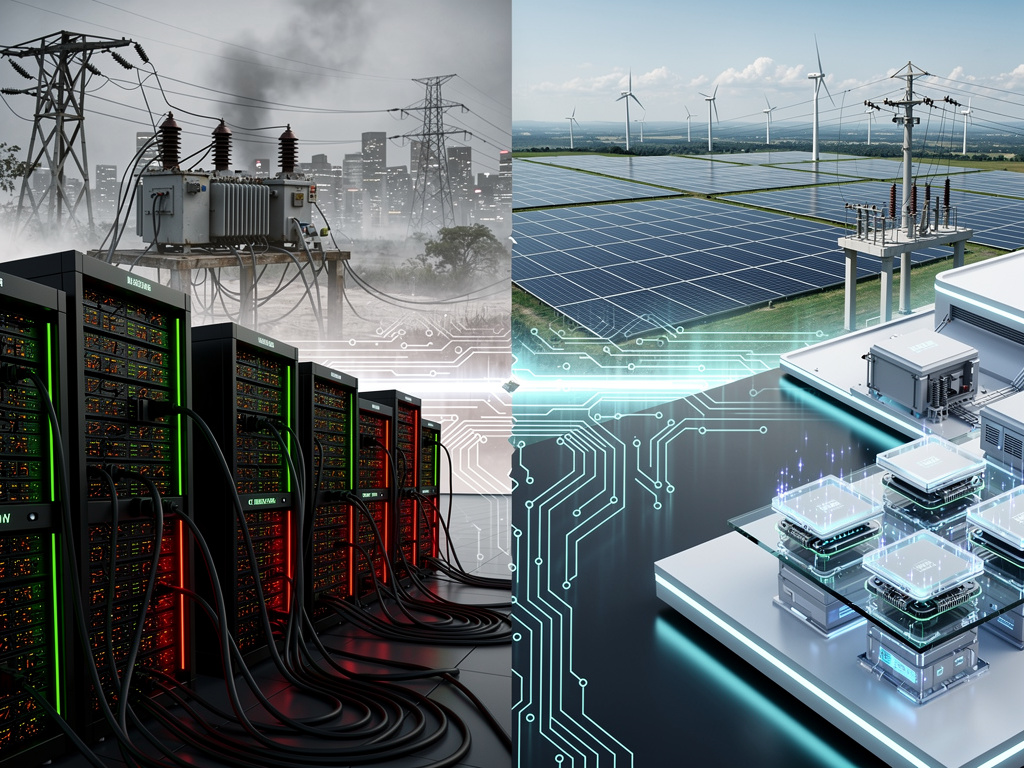
Michael Burry, the investor immortalized in “The Big Short” for his prescient bet against the housing market, has turned his sharp eye to the artificial intelligence boom. In a recent post on his Substack, Burry argued that the U.S. risks falling behind China in the AI arms race unless it breaks free from reliance on Nvidia’s energy-intensive chips. He described Nvidia as having a “death grip” on the sector, with its products demanding vast amounts of power that the American grid may not sustain. This warning comes amid surging demand for AI infrastructure, where power consumption has become a critical bottleneck.
Burry’s critique centers on the inefficiency of Nvidia’s graphics processing units (GPUs), which he likens to outdated technology in an era demanding sleeker, more efficient alternatives. He points to China’s aggressive expansion of its energy infrastructure, including rapid deployment of renewable sources and nuclear power, as giving it a decisive advantage. While the U.S. grapples with regulatory hurdles and aging grids, China is building data centers at a pace that could outstrip American capabilities by 2025. Burry suggests that without a pivot to less power-hungry chips, the U.S. could cede ground in AI development.
This isn’t Burry’s first salvo against Nvidia. Earlier in November, he criticized the company’s response to his concerns about an AI bubble, labeling it a series of “straw man” arguments. Nvidia, in a private memo to analysts, pushed back against Burry’s claims, defending the longevity and value of its chips. Yet Burry doubled down, revealing put options against Nvidia and Palantir, signaling his bearish stance on the sector’s overhyped valuations.
The Energy Crunch in AI’s Engine Room
Nvidia’s dominance in AI hardware is undeniable, with its chips powering everything from large language models to autonomous vehicles. However, as AI models grow more complex, their energy needs have skyrocketed. A single training run for a state-of-the-art model can consume as much electricity as hundreds of households over weeks. Burry highlights how Nvidia’s latest offerings, like the Blackwell series, exacerbate this issue, potentially overwhelming U.S. power supplies that are already strained.
Recent reports underscore this vulnerability. According to Benzinga, Burry warned that China’s power grid expansions provide a “structural edge” in AI, allowing it to scale data centers without the constraints facing the U.S. China’s investments in hydropower, solar, and advanced nuclear reactors enable it to support the massive energy draws of AI without the blackouts or delays plaguing American projects.
Industry insiders note that U.S. utilities are struggling to keep up. Proposals for new power plants face environmental reviews and local opposition, slowing rollout. In contrast, China’s state-directed approach has led to a surge in capacity, with plans to add gigawatts of power specifically for tech hubs. This disparity could tilt the balance in AI innovation, where speed and scale are paramount.
China’s Quiet Ascendancy in Chip Technology
Beyond energy, Burry’s concerns touch on broader geopolitical tensions. U.S. export controls aimed at curbing China’s access to advanced semiconductors have backfired in some ways, spurring domestic innovation. Posts on X from users like Zhao DaShuai highlight how Nvidia’s market share in China plummeted from 95% to near zero due to bans, forcing local firms like Huawei to develop competitive alternatives.
These homegrown chips, while not yet matching Nvidia’s performance in all areas, are closing the gap rapidly. A recent breakthrough reported in Interesting Engineering describes China’s light-based AI chips that outperform Nvidia GPUs in specific tasks by up to 100 times, all while using far less energy. This photonic technology sidesteps traditional silicon limitations, offering a path to efficiency that aligns with China’s power advantages.
Burry’s Substack post emphasizes that Nvidia’s “power-hungry” designs are ill-suited for a future where energy efficiency dictates winners. He argues the U.S. must foster alternatives, perhaps through incentives for startups developing low-power AI hardware. Without this shift, China could dominate not just in production but in deploying AI for applications like surveillance, manufacturing, and military strategy.
Nvidia’s Defense and Market Realities
Nvidia has not taken Burry’s criticisms lightly. In a memo circulated to analysts, as detailed in CNBC, the company name-checked Burry while rebutting claims of an AI bubble. Nvidia argued that its chips’ depreciation rates are reasonable and that demand for AI infrastructure remains robust, with shipments of its Blackwell GPUs reportedly in the billions for 2025.
Yet skepticism persists. Burry recently called for photographic evidence of warehoused Nvidia GPUs after an analyst questioned CEO Jensen Huang’s shipment figures. This echoed in updates from Yahoo Finance, which noted Burry’s push for transparency amid debates over actual deployment versus stockpiling. Such scrutiny suggests potential overproduction, where hype outpaces real-world utility.
Market reactions have been mixed. Nvidia’s stock has soared on AI enthusiasm, but Burry’s put options reflect betting on a correction. He also critiqued accounting practices in the sector, warning in The Motley Fool that companies may be under-depreciating chips, inflating earnings and masking true costs.
Geopolitical Ripples and Industry Shifts
The U.S.-China tech rivalry extends beyond chips to the very foundations of AI ecosystems. X posts from figures like Rohan Paul quote Nvidia’s own Jensen Huang acknowledging China’s advantages in cheaper power and lighter regulations, which could fragment U.S. efforts across state lines. Huang’s comments to the Financial Times, as relayed in these posts, warn of regulatory splintering slowing American progress.
China’s strategy includes massive AI capex, with Jefferies estimates cited on X projecting $108 billion for 2025, a 40% hike. This funding supports not just hardware but software ecosystems, reducing dependence on U.S. tools like Nvidia’s CUDA platform. Local alternatives are emerging, with companies adapting to export rules by developing compliant chips like Nvidia’s planned B30 for Q4 2025.
For industry players, this means reassessing supply chains. U.S. firms reliant on Nvidia face risks if power constraints limit scaling, while Chinese competitors gain from integrated energy-tech policies. Burry’s warning urges a rethink: invest in energy-efficient innovations or risk obsolescence.
Investor Sentiment and Future Bets
Burry’s track record lends weight to his views. His Substack has become a platform for dissecting market froth, from crypto to now AI. Recent posts on X, such as those from Business Insider amplifying his latest alert, show growing investor chatter about Nvidia’s vulnerabilities. One post quips that Nvidia’s chips are “as efficient as a flip phone in a smartphone world,” capturing the sentiment that power inefficiency could dethrone the giant.
Analysts are divided. Some, per DNYUZ, note Burry’s $1.1 billion short bet against AI stocks, advising caution on his “doom-mongering.” Others see merit, especially after Oracle’s failed AI debt deal, which Burry highlighted as evidence of cooling enthusiasm.
Looking ahead, the AI sector must navigate these power dynamics. U.S. policymakers could accelerate grid upgrades or subsidize efficient chip R&D, but time is short. China’s light-based chips and energy expansions position it for leadership, potentially reshaping global tech hierarchies.
Strategic Imperatives for Tech Leaders
For executives in Silicon Valley, Burry’s analysis demands action. Diversifying beyond Nvidia involves risks, but sticking with power-thirsty tech could prove costlier. Emerging players in low-power computing, from startups to giants like AMD, offer alternatives, as hinted in X discussions about China’s inference needs.
Geopolitically, easing export controls might stabilize markets, but security concerns loom. Huang’s own admissions, echoed across platforms, suggest the U.S. must unify regulations to compete. Without it, fragmented approaches could hinder data center builds, ceding innovation to Beijing.
Burry’s broader point resonates: AI’s future hinges on sustainable power. As 2025 unfolds, the race will test whether the U.S. can adapt or if China’s structural advantages prevail, redefining tech power balances for decades.
Echoes of Past Crises in Today’s Warnings
Reflecting on Burry’s housing bet, his AI critique feels familiar—a bubble built on unsustainable foundations. Power, like subprime debt, could be the overlooked flaw. Industry insiders should heed this, probing their dependencies and exploring resilient paths.
China’s advancements, from photonic chips to grid expansions, aren’t just threats but lessons in integration. U.S. firms might collaborate on hybrid solutions, blending Nvidia’s prowess with efficient designs.
Ultimately, Burry challenges the sector to evolve. Ignoring energy realities risks not just market corrections but a shift in global AI dominance, with profound implications for economies and security.


 WebProNews is an iEntry Publication