
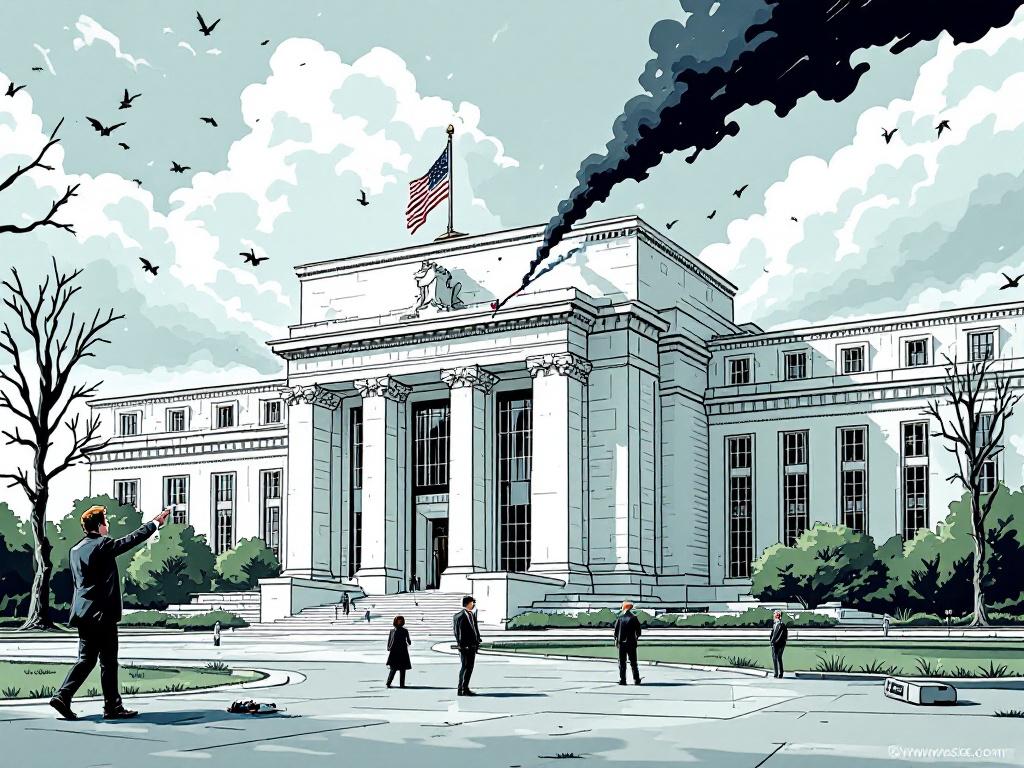
Burry’s Radical Vision: Could Trump Dismantle the Federal Reserve?
In the ever-shifting arena of economic policy and financial forecasting, few voices carry the weight of Michael Burry, the investor immortalized in “The Big Short” for his prescient bets against the housing market before the 2008 crash. Now, Burry is turning his sharp critique toward one of America’s most entrenched institutions: the Federal Reserve. In a recent statement that has rippled through Wall Street circles, Burry argued that the U.S. doesn’t need the Fed at all, suggesting that President-elect Donald Trump could effectively replace it with another entity. This isn’t just idle speculation; it’s a provocative challenge to the central bank’s century-old role in steering the nation’s monetary policy.
Burry’s comments come at a pivotal moment, as Trump prepares to take office in January 2025 amid debates over interest rates, inflation, and the Fed’s independence. According to a report from Business Insider, Burry described the Fed’s job as “the easiest in the world,” implying that its functions could be absorbed by the Treasury Department or another institution. He envisions a scenario where Trump, known for his willingness to upend norms, might push for such a radical overhaul, potentially ending the Fed’s autonomy in setting interest rates and managing the money supply.
This idea isn’t entirely new in fringe economic discussions, but Burry’s endorsement lends it credibility among investors who hang on his every tweet and filing. His track record—spotting bubbles others miss—makes his warnings hard to ignore. Yet, dismantling the Fed would require navigating a thicket of legal, political, and economic hurdles, including amending the Federal Reserve Act of 1913. Insiders whisper that Trump’s team is already eyeing ways to exert more influence over monetary policy, fueled by frustrations over high interest rates that some blame for slowing economic growth.
Echoes of Past Predictions and Current Tensions
Burry’s latest pronouncement builds on his history of sounding alarms about systemic risks. Just months ago, he warned of a “massive economic bubble” and criticized Fed Chair Jerome Powell for policies that he believes inflate asset prices unsustainably. Posts on X, formerly Twitter, from users tracking Burry’s moves highlight a growing sentiment that the Fed’s rate decisions are out of step with an economy facing potential stagflation—high inflation coupled with sluggish growth. For instance, recent X discussions point to the Fed’s December 2024 decision to cut rates by 25 basis points to 4.50%, while simultaneously raising inflation expectations to 2.5% for 2025, signaling concerns over Trump’s proposed tariffs.
These social media insights reflect broader market anxieties. One prominent X account noted the Fed’s median 2025 PCE inflation forecast rising to 2.5% from 2.1%, interpreting it as an implicit acknowledgment that Trump’s policies, including tariffs and tax cuts, could stoke inflationary pressures. This aligns with analyses from economists like Paul Krugman, who have coined the term “Trumpcession” to describe a potential recession triggered by such measures. A piece in Business Insider earlier this year grouped Burry with other doomsayers like Jeremy Grantham, warning that overvalued equities and policy-induced inflation could finally materialize their long-predicted downturn.
Trump’s own history with the Fed adds fuel to this fire. During his first term, he frequently lambasted Powell for raising rates, once calling the central bank a bigger problem than China. Now, with a second term looming, speculation is rife about his pick for the next Fed chair. News from The Economic Times suggests Kevin Hassett, a Trump favorite, is a frontrunner, with prediction markets giving him up to 79% odds. Hassett’s potential appointment could tilt the Fed toward more accommodative policies, aligning with Trump’s push for lower rates to boost growth.
The Mechanics of Fed Independence Under Scrutiny
At its core, the Federal Reserve’s independence is designed to insulate monetary policy from political whims, allowing it to make tough calls like hiking rates to combat inflation, even if unpopular. Burry’s suggestion to fold its duties into the Treasury challenges this separation, echoing historical debates from the Fed’s founding. Proponents of such a move argue it could streamline decision-making, especially in crises, but critics warn it risks politicizing the currency, leading to hyperinflation or economic instability.
Recent Fed decisions underscore these tensions. In January 2025, the central bank held rates steady at 4.25%-4.50% in its first meeting since Trump’s return, drawing his sharp criticism, as reported by NBC News. By March, it maintained the range while slowing quantitative tightening, reducing Treasury runoff from $25 billion to $5 billion monthly—a move seen as cautious amid tariff threats. Powell emphasized the economy’s strength, but X posts from market watchers like those tracking Burry’s portfolio noted this as pricing in “bad news,” with some predicting a bullish turn if rates fall further.
Trump’s rhetoric has intensified, with calls for a 1% policy rate that experts say could overheat the economy. A Reuters analysis warns that such low rates aren’t indicative of a thriving investment environment, contradicting Trump’s boasts. Meanwhile, a September 2025 Fed meeting showed unexpected unity in cutting rates by a quarter-point despite Trump’s attacks, per AP News, highlighting the bank’s resolve to maintain independence.
Potential Ramifications for Markets and Policy
If Burry’s vision gains traction, the implications for financial markets could be profound. Ending the Fed might lead to Treasury-led monetary policy, potentially lowering borrowing costs but risking unchecked inflation. Investors are already positioning for this, with X sentiment pointing to falling Treasury yields—the 10-year dipping under 4% and heading toward 3%, as one influential poster predicted, alongside a weakening dollar index toward 90. This could propel assets like Bitcoin to new heights, with forecasts of $315,000 amid aggressive rate cuts.
However, not all views align with Burry’s optimism about replacement. Historical precedents, like Treasury Secretary Steven Mnuchin’s 2018 defense of Fed independence against Trump’s criticisms, as covered in an older AP News story, suggest resistance from within the administration. Current analyses, including one from CBS News, urge the Fed to defend its autonomy, warning that yielding to pressure could erode investor confidence.
Burry’s past warnings, such as his 2023 alarm on uninsured deposits at banks like Comerica and U.S. Bancorp, reported by TheStreet, remind us of his knack for spotting vulnerabilities. A FinancialContent piece from November 2025 reiterates his bubble concerns, tying them to Powell’s leadership.
Navigating Uncertainty in a Post-Fed World
As 2025 unfolds, the debate over the Fed’s future will likely intensify with Trump’s inauguration. Powell’s term ends in May 2026, opening a window for change. Market analysts, including those in a The WealthAdvisor article, see Burry and Grantham’s cautions potentially vindicated by a “Trumpcession,” where tariffs inflate prices while growth stalls.
X discussions amplify this, with users debating the Fed’s May 2025 decision to hold rates amid rising unemployment and inflation risks from tariffs, as noted in an NBC News report. Some posts warn of a “Ponzi scheme” trajectory in U.S. debt, echoing Burry’s structural critiques.
For industry insiders, the key question is feasibility. Amending laws to dissolve the Fed would face congressional battles, and international repercussions could unsettle global finance. Yet, Burry’s influence persists, as evidenced by tracking accounts on X that dissect his every move, from rate cut predictions to inflation outlooks.
Broader Economic Implications and Investor Strategies
Ultimately, Burry’s proposal invites a reevaluation of central banking in an era of populist leadership. If Trump pursues greater control, it could reshape everything from mortgage rates to stock valuations. A Reuters overview of Fed news underscores ongoing policy shifts, with futures pricing an 87.6% chance of a December 2025 cut.
Investors might hedge by diversifying into inflation-resistant assets, mindful of Burry’s history. His 2024 warnings on Fed forecasts, amplified on X, suggest preparing for volatility. As one X post framed it, with rates potentially dropping 200+ basis points under a new chair like Hassett, markets could “run very hot.”
This isn’t just about one investor’s bold claim; it’s a litmus test for America’s economic framework. Whether Burry’s vision becomes reality or remains a provocative footnote, it underscores the fragility of institutions in turbulent times. As debates rage, from boardrooms to social media, the path ahead promises both peril and opportunity for those attuned to the signals.


 WebProNews is an iEntry Publication