
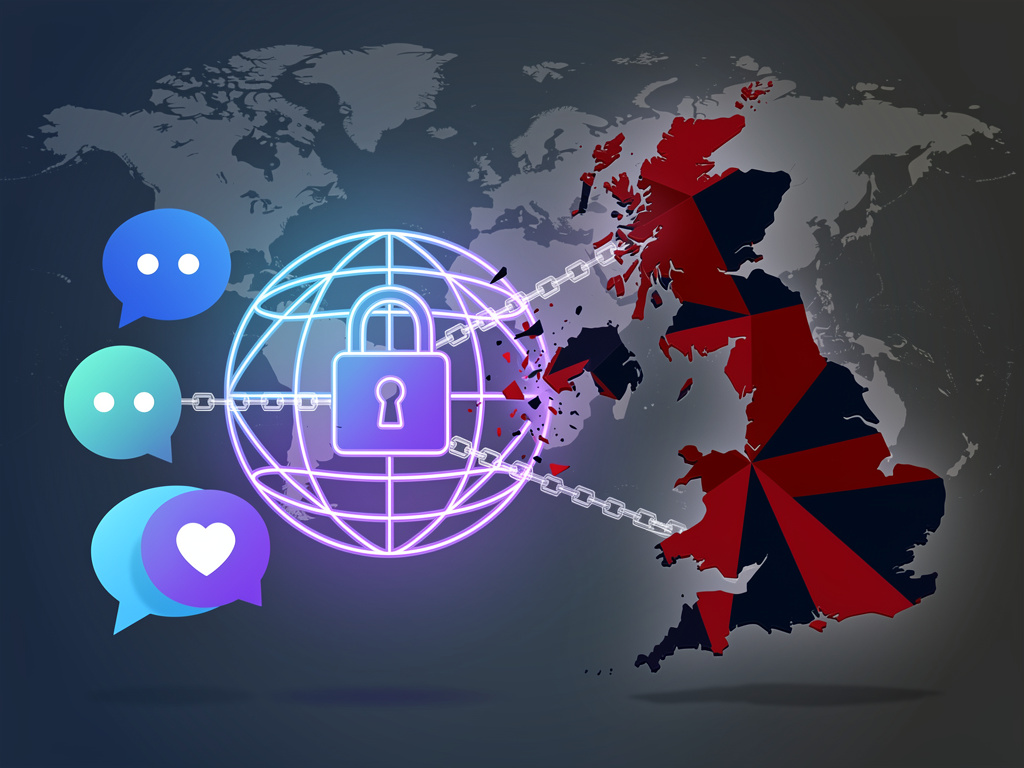
For years, Meta positioned itself as a champion of private communication. Mark Zuckerberg penned a 3,200-word manifesto in 2019 declaring that “the future is private” and pledging to wrap all of the company’s messaging platforms in end-to-end encryption. By late 2023, Messenger had finally received that protection by default. It was, by any measure, a massive technical undertaking — one that required rebuilding infrastructure serving more than a billion people.
Now Meta appears to be walking it back.
Not loudly. Not with a press conference or a blog post. But through a combination of regulatory capitulation, technical workarounds, and strategic repositioning that, taken together, amount to a significant erosion of the encryption guarantees the company once championed. The question for the industry — and for the billions of people who use Meta’s platforms daily — is whether this retreat is a pragmatic response to impossible regulatory demands or something more troubling: a signal that Big Tech’s commitment to user privacy bends wherever government pressure is strongest.
The most concrete development comes from the United Kingdom. As Android Police reported, Meta has begun disabling end-to-end encryption for Facebook Messenger and Instagram DMs for users in the U.K., a direct response to provisions in the country’s Online Safety Act. That law, which received royal assent in October 2023, gives the U.K. communications regulator Ofcom the power to compel technology companies to scan messages for child sexual abuse material, even in encrypted environments. Rather than fight the mandate or exit the market, Meta chose compliance — stripping encryption protections from British users.
This isn’t a minor market. The U.K. has roughly 50 million internet users. And the precedent it sets extends far beyond British borders.
The Online Safety Act’s approach to encryption has been controversial since its inception. Privacy advocates, cryptographers, and even some members of the U.K. Parliament argued that you cannot scan encrypted messages without fundamentally breaking encryption itself. The mathematics don’t allow for a “good guys only” backdoor. If a system can scan content before or after encryption — so-called client-side scanning — it introduces vulnerabilities that any sufficiently motivated attacker could exploit. This isn’t theoretical. It’s the consensus view of the cryptographic research community.
Apple learned this lesson publicly. In 2021, the company announced plans to implement client-side scanning for CSAM on iPhones, only to reverse course after a firestorm of criticism from security researchers who demonstrated how the system could be repurposed for authoritarian surveillance. Apple quietly shelved the project. Meta, facing similar technical realities but different regulatory pressures, has taken the opposite path — not by implementing scanning on encrypted messages, but by simply removing encryption altogether for affected users.
The implications are stark. Without end-to-end encryption, messages are readable by Meta, by law enforcement with a warrant (or in some jurisdictions, without one), and potentially by any attacker who compromises Meta’s servers. The company’s own infrastructure becomes a single point of failure for the private communications of tens of millions of people.
The Regulatory Domino Effect
What makes Meta’s U.K. decision so consequential is the signal it sends to other governments. The European Union has been debating its own version of mandatory chat scanning — informally known as “Chat Control” — for more than two years. Australia passed its own Online Safety Act in 2021 with provisions that could compel similar access. India’s IT rules already require platforms to identify the “first originator” of certain messages, a requirement that is functionally incompatible with true end-to-end encryption.
Each of these regulatory efforts has been met with resistance from privacy groups and parts of the technology industry. But Meta’s capitulation in the U.K. undermines the argument that compliance is technically impossible. If Meta can flip a switch and turn off encryption for one country’s users, other governments will ask — reasonably, from their perspective — why they shouldn’t demand the same.
According to Android Police, Meta has framed its decision as a temporary measure while it works on technologies that might satisfy regulators without fully abandoning encryption. But the company has offered no timeline and no technical specifics. That vagueness is itself revealing. The cryptographic community has spent decades searching for a way to provide lawful access to encrypted communications without compromising security for everyone. No one has found it.
Signal president Meredith Whittaker has been among the most vocal critics of these regulatory efforts. She has repeatedly stated that Signal would rather exit a market entirely than weaken its encryption — a position that highlights the philosophical gulf between a nonprofit focused solely on secure communication and a publicly traded advertising company with $135 billion in annual revenue. Meta’s business model depends on maintaining access to large user bases. Walking away from the U.K. was never a realistic option.
And that’s precisely the problem. The companies with the largest user bases — the ones whose decisions affect the most people — are also the ones least able to resist government pressure. Signal can credibly threaten to leave. Meta cannot. So the users who most need the protection of a large, well-resourced platform are the ones most likely to lose it.
There’s a deeper irony here. Meta spent years and considerable engineering resources building end-to-end encryption into Messenger. The project, which began in earnest after Zuckerberg’s 2019 privacy pivot, required fundamentally restructuring how Messenger stored and transmitted messages. Group chats, message reactions, read receipts — all had to be re-engineered to work in an encrypted context. When the feature finally rolled out as the default in December 2023, it was treated as a milestone. Barely a year and a half later, the company is pulling it back for an entire country.
The timing also coincides with Meta’s broader strategic shift toward AI. The company has been aggressively integrating its Meta AI assistant into WhatsApp, Messenger, and Instagram. Some of these AI features — like message summarization, suggested replies, and in-chat search — work best when the platform can read message content. End-to-end encryption, by design, prevents exactly that. While Meta has insisted that AI features in encrypted chats process data on-device, the tension between an AI-first strategy and a privacy-first messaging architecture is real and growing.
This isn’t to suggest that Meta disabled encryption in the U.K. to improve its AI features. The regulatory pressure is genuine and well-documented. But it would be naive to ignore that the company’s strategic interests and the regulatory environment are, for the moment, pushing in the same direction.
WhatsApp, Meta’s most popular messaging platform globally, remains end-to-end encrypted — for now. The app’s encryption is based on the Signal Protocol and has been active by default since 2016. But WhatsApp is subject to the same regulatory pressures as Messenger and Instagram. If the U.K.’s approach succeeds in forcing Meta to disable encryption on two of its three messaging platforms, pressure on WhatsApp will inevitably follow. The U.K. government has already signaled that WhatsApp is not exempt from the Online Safety Act’s requirements.
For enterprise users and businesses that rely on Meta’s messaging infrastructure, the implications are immediate. Companies operating in the U.K. that use Messenger or Instagram for customer communications can no longer assume those conversations are protected from third-party access. Regulated industries — healthcare, finance, legal services — may need to reassess their use of these platforms entirely.
The broader technology industry is watching closely. Google has been expanding end-to-end encryption in its own messaging products, most recently enabling it by default in Google Messages for RCS conversations. Whether Google would comply with a similar government demand is an open question, but Meta’s precedent makes resistance harder to justify to shareholders and regulators alike.
There’s also the matter of trust. Meta has faced repeated privacy scandals — Cambridge Analytica, the 2019 breach that exposed hundreds of millions of phone numbers, the revelation that the company provided user data to law enforcement agencies investigating people who sought abortions. Each incident eroded public confidence. The encryption rollout was supposed to be part of the remedy, a structural guarantee that even Meta itself couldn’t access user messages. Removing that guarantee, even in one country, reopens every question about whether the company can be trusted with private communications.
So where does this leave users? In the U.K., the practical advice is straightforward: if you need encrypted messaging, use Signal or WhatsApp (while it lasts). For users elsewhere, the lesson is more uncomfortable. Encryption protections that exist today can be removed tomorrow if a government demands it and the platform decides compliance is easier than resistance. The only durable protection comes from services whose operators have no ability to disable encryption for specific users or regions — a design choice that is, by definition, incompatible with the kind of granular regulatory compliance Meta just demonstrated it’s willing to perform.
Meta hasn’t published a detailed public statement explaining its U.K. decision beyond acknowledging the regulatory requirements. Requests for comment on the company’s long-term encryption strategy have gone unanswered. That silence speaks volumes. A company that once made privacy the centerpiece of its messaging strategy now has very little to say about dismantling it.
The encryption wars aren’t new. They date back at least to the 1990s Clipper Chip debate, when the U.S. government tried to mandate a backdoor in consumer encryption hardware. That effort failed. But the current regulatory push is broader, more coordinated, and backed by the politically potent cause of child safety. Opposing it requires arguing that the abstract principle of encryption is more important than catching child abusers — a position that is correct on the merits but nearly impossible to win in a legislative hearing.
Meta’s retreat in the U.K. won’t be the last chapter. It may not even be the most consequential one. But it establishes a template: governments can compel the largest technology companies to disable encryption for their users, and those companies will comply rather than lose market access. For anyone who believed the privacy pivot was permanent, that’s a cold dose of reality.


 WebProNews is an iEntry Publication