
Neural Scribbles: How Meta’s Wristband is Rewriting Wearable Interaction
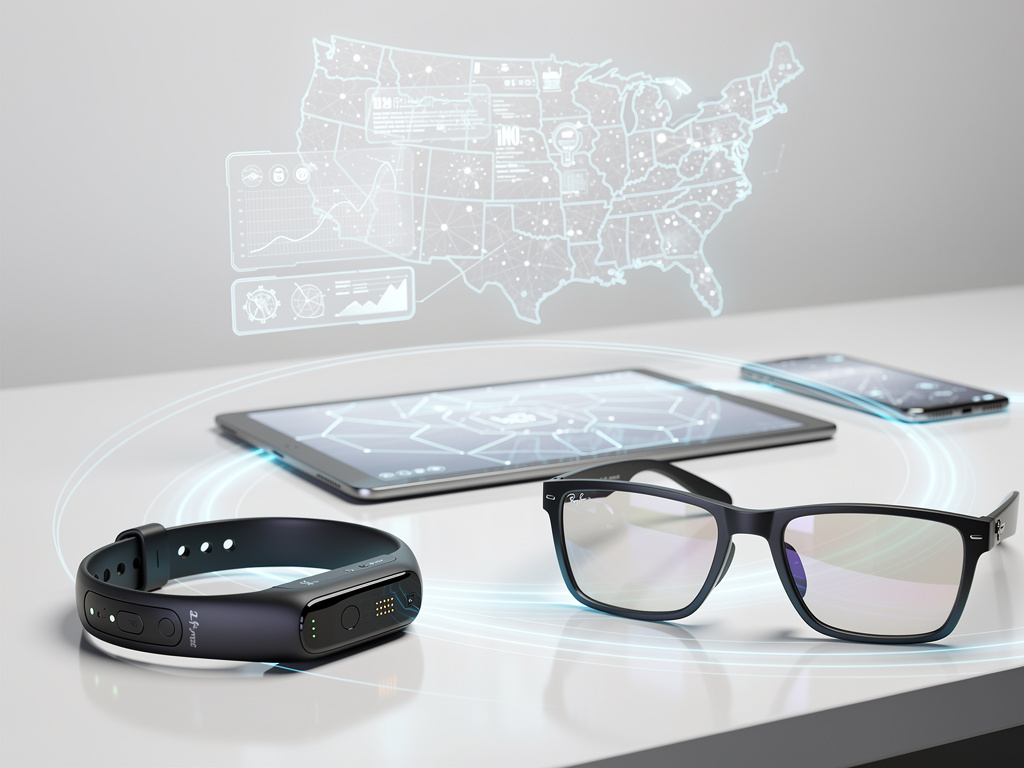
In the ever-evolving realm of wearable technology, Meta has once again pushed boundaries with its latest update to the Neural Band, integrated with Ray-Ban Display glasses. This innovation allows users to “handwrite” messages on virtually any surface—be it their leg, a table, or even in mid-air—translating neural signals into digital text. Announced at CES 2026, this feature marks a significant leap in human-computer interaction, blending electromyography (EMG) with artificial intelligence to capture intended movements without physical input devices. Early adopters in the United States are already experimenting with this early access program, signaling Meta’s commitment to refining user experiences in augmented reality.
The technology hinges on the Meta Neural Band, a wrist-worn device that detects subtle electrical signals from muscle movements. When paired with the Ray-Ban Display glasses, it interprets these signals as handwriting gestures, converting them into on-screen text for apps like WhatsApp and Messenger. This isn’t just about convenience; it’s a step toward seamless integration of digital tools into daily life, reducing reliance on smartphones or keyboards. Industry observers note that this could redefine productivity for professionals on the move, from journalists jotting notes during interviews to executives drafting emails during commutes.
Meta’s rollout comes amid high demand, prompting the company to delay international expansion and prioritize the U.S. market. According to reports from UploadVR, the pause allows Meta to focus on perfecting the feature domestically before broader deployment. This strategic shift underscores the challenges of scaling cutting-edge tech, where supply chain constraints and user feedback loops play critical roles in development.
From Concept to Wrist: The Evolution of EMG Tech
The roots of this technology trace back to Meta’s acquisition of CTRL-Labs in 2019, a startup specializing in neural interfaces. CTRL-Labs’ work on EMG bracelets laid the groundwork for non-invasive brain-computer interfaces, allowing control of devices through thought-like gestures. Fast-forward to 2026, and Meta has refined this into a consumer-ready product. Posts on X from experts like Yann LeCun, Meta’s chief AI scientist, have long highlighted the potential of such neuromotor interfaces, emphasizing their role in future wearables.
In practical terms, the Neural Band captures surface electromyography (sEMG) signals, which are electrical impulses generated by muscle contractions. These signals are processed by AI algorithms to predict intended handwriting, even if the user’s finger isn’t touching a surface. A demonstration video shared widely on social platforms shows users scribbling on their pants leg, with text appearing instantaneously on the glasses’ display. This capability extends beyond novelty; it’s poised to assist those with mobility impairments, offering a hands-free alternative to traditional input methods.
Collaborations have further bolstered Meta’s efforts. At CES 2026, partnerships with entities like Garmin for automotive integrations and the University of Utah for accessibility research were unveiled, as detailed in the Meta Quest Blog. These alliances aim to expand the Neural Band’s applications, from controlling car interfaces to aiding adaptive sports equipment like the TetraSki for paralyzed athletes.
Hands-On Impressions and User Feedback
Initial reviews paint a picture of promise tempered by realism. CNET describes the feature as enabling users to “scribble messages on your leg (or anywhere else),” though the reviewer notes they haven’t tested it personally. Early access users report varying accuracy, with the system excelling in controlled environments but struggling with rapid movements or distractions. On X, enthusiasts like VoodooDE VR have praised the innovation, calling it a “huge consumer innovation” while questioning the international delay.
Beyond handwriting, Meta introduced complementary features like a teleprompter mode, which displays notes or scripts on the glasses’ monocular display. This is particularly useful for public speakers or content creators, allowing them to maintain eye contact while referencing prepared text. Integration with Instagram Reels, as mentioned in Android Central, suggests broader social media applications, where users could compose captions or comments via neural inputs.
User sentiment on platforms like X reflects excitement mixed with skepticism. Posts from figures such as Brett Adcock highlight the band’s ability to control devices through simple gestures, drawing comparisons to more invasive technologies like Neuralink. However, concerns about privacy—given the band’s access to neural data—have surfaced, prompting Meta to emphasize robust encryption and user consent protocols in their announcements.
Technical Underpinnings and AI Integration
At its core, the Neural Band leverages advanced machine learning models trained on vast datasets of muscle signals and handwriting patterns. Meta’s research, published in journals like Nature, demonstrates how sEMG can decode intended actions with high fidelity. This builds on earlier work, such as a 2021 study referenced in X posts by hardmaru, which achieved brain-to-text communication via decoded handwriting from motor cortex activity.
The AI component is crucial for accuracy. By analyzing patterns in EMG signals, the system distinguishes between deliberate writing gestures and incidental movements, reducing false positives. Meta’s engineers have optimized this for real-time performance, ensuring minimal latency—essential for a natural user experience. As reported in Digital Trends, expansions include pedestrian navigation and reading assistance, further embedding AI into everyday tasks.
Comparisons to competitors are inevitable. While Apple’s Vision Pro focuses on spatial computing, Meta’s approach emphasizes lightweight, glasses-based AR with neural controls. Industry insiders speculate this could pressure rivals to accelerate their own neural interface developments, potentially leading to standardized protocols for wearable inputs.
Market Implications and Challenges Ahead
The U.S.-centric rollout, as covered by Android Central in a separate piece, reveals supply constraints amid surging demand. Meta’s decision to pause international plans allows for iterative improvements based on American user data, a tactic reminiscent of phased launches in tech history. This could strengthen Meta’s position in the AR market, projected to reach billions in value by the end of the decade.
Challenges persist, however. Accuracy in diverse scenarios—varying skin types, sweat, or ambient noise—remains a hurdle. Meta is addressing this through ongoing software updates and user calibration tools. Regulatory scrutiny, particularly around data privacy and health implications of prolonged EMG exposure, could influence adoption rates.
Looking ahead, Meta’s vision extends to broader ecosystems. Partnerships announced at CES, including with Garmin for “unified cabin” automotive interfaces, hint at neural controls in vehicles—imagine adjusting music or navigation with a wrist flick. Accessibility initiatives, like collaborations with the University of Utah, aim to empower users with disabilities, aligning with broader societal goals.
Beyond the Band: Future Horizons in Neural Wearables
Envisioning the future, experts on X, such as Rihard Jarc, laud the Neural Band as a “truly impressive” innovation, affordable and accessible. This contrasts with high-end alternatives, positioning Meta as a democratizer of advanced tech. Potential expansions could include multilingual support or integration with virtual reality headsets, enhancing Meta’s Quest lineup.
Critics, however, warn of over-reliance on proprietary systems. Open-source advocates call for transparent AI models to foster innovation. Meta has responded by sharing select research, as seen in publications like Nature, encouraging academic collaborations.
In the grand scheme, this handwriting feature is a microcosm of Meta’s ambition to merge physical and digital worlds. By turning neural impulses into actionable data, it’s not just about writing on pants—it’s about redefining how we interact with technology, one gesture at a time.
Ecosystem Expansion and Industry Ripple Effects
Meta’s announcements at CES 2026 also spotlight proof-of-concept demos, such as controlling external devices beyond glasses. Engadget notes the band’s potential to interface with smart home systems or computers, expanding its utility. This versatility could disrupt markets from gaming to healthcare, where precise, non-verbal controls are invaluable.
User adoption will hinge on seamless integration. Early feedback from X posts by David Sussillo celebrates the cool factor, but long-term success depends on battery life and comfort—areas Meta continues to refine. Priced accessibly, the Ray-Ban Display bundle appeals to a wide audience, from tech enthusiasts to professionals seeking efficiency gains.
As competitors like Google experiment with AI glasses prototypes, Meta’s neural edge provides a differentiator. The company’s focus on EMG over optical tracking offers privacy advantages, as it doesn’t require cameras monitoring hand movements.
Strategic Delays and Global Aspirations
The international delay, detailed in PetaPixel, stems from production bottlenecks, yet it allows Meta to gather rich data for AI improvements. This data-driven approach could lead to more robust global versions, incorporating region-specific languages and gestures.
Privacy remains a focal point. Meta assures users that EMG data stays on-device, processed locally to minimize risks. Nonetheless, industry watchers urge vigilance, drawing parallels to past data scandals in tech.
Ultimately, Meta’s Neural Band handwriting tech exemplifies the convergence of AI, wearables, and human augmentation. As it rolls out, it promises to transform mundane tasks into intuitive experiences, setting the stage for a future where thoughts seamlessly translate to digital actions. With continued innovation, Meta could lead this neural revolution, influencing how we connect with the world around us.


 WebProNews is an iEntry Publication