
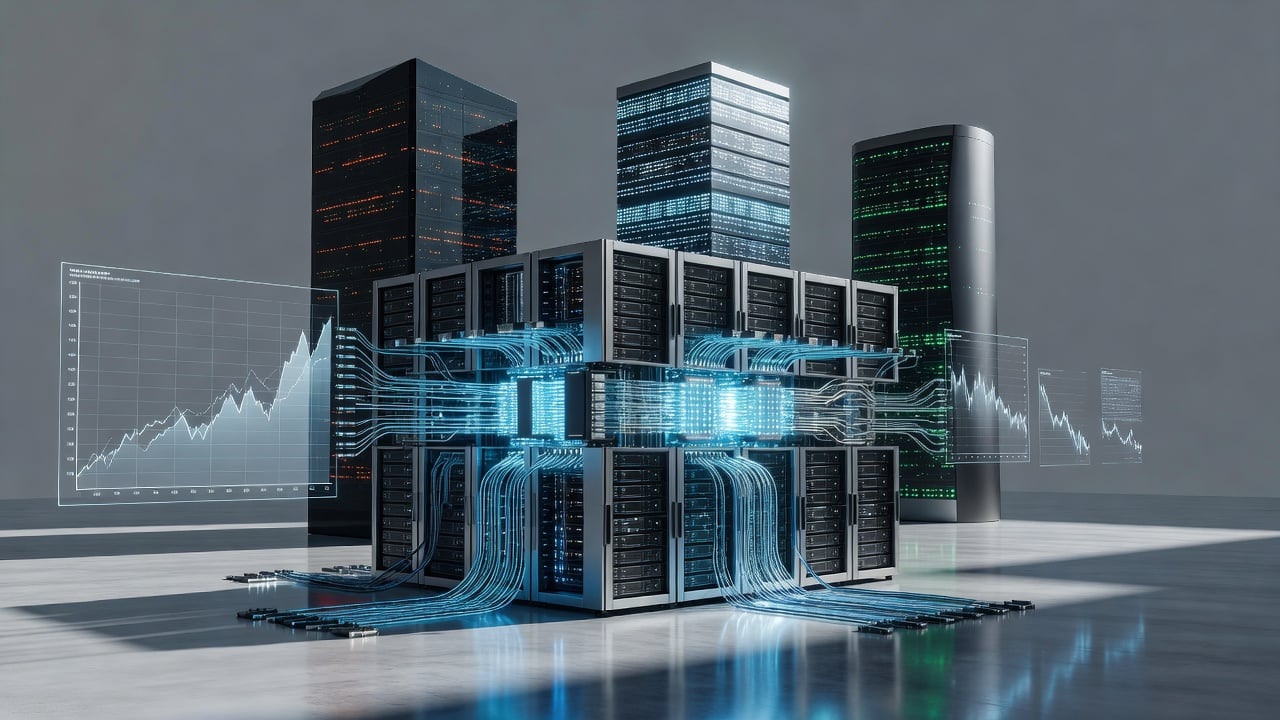
Meta Platforms is quietly assembling the pieces of a cloud infrastructure business. The social media giant aims to sell excess computing power for artificial intelligence tasks to outside customers. This shift comes as the company pours tens of billions into data centers and chips each year.
The plans surfaced in a Bloomberg report on July 1. People familiar with the discussions described a service that could let developers pay for access to Meta’s AI models hosted on its own hardware. Or it might simply rent raw compute capacity in the style of newer cloud specialists. Either path would mark a direct challenge to Amazon Web Services, Microsoft Azure and Google Cloud.
But don’t mistake this for a sudden pivot. Meta CEO Mark Zuckerberg floated the idea months earlier. “It’s definitely on the table,” he told shareholders in May, according to a CNBC account of the annual meeting. He spoke then of potential overspending on data centers that might leave spare capacity. Now the company appears to be turning that contingency into strategy.
The effort sits inside Meta Compute. The unit launched in January to handle the firm’s massive AI infrastructure buildout. Santosh Janardhan, Meta’s head of infrastructure, co-leads it alongside Daniel Gross of Meta Superintelligence Labs and president Dina Powell McCormick. Their mandate stretches beyond internal needs. It now includes figuring out how to monetize what the company cannot consume itself.
Scale explains the urgency. Meta expects to spend as much as $145 billion on AI infrastructure this year alone. Reuters noted the figure in its coverage of the Bloomberg story. That outlay forms part of a broader commitment to invest $600 billion in U.S. operations by 2028. The numbers dwarf earlier tech spending cycles. They also raise pointed questions about returns if all that capacity serves only Facebook, Instagram and the company’s research labs.
So Meta is looking for buyers. One option involves offering hosted access to models such as Muse Spark, its recently introduced closed-weight system. Customers would pay both for the model and the compute required to run inferences or training jobs. Another path mirrors so-called neocloud providers. Meta could lease bare-metal servers or GPU clusters directly, letting customers bring their own software stacks.
Either choice carries risks. Full-stack cloud services demand sales teams, support organizations, billing systems and a catalog of managed offerings that Meta has never built at enterprise scale. Bare-metal rentals might prove simpler to launch yet yield thinner margins and attract fewer customers. TechCrunch drew the parallel to SpaceX, which has explored similar monetization of surplus compute. The pattern repeats across Big Tech. Heavy AI bets create overcapacity that must be put to work or written off.
Wall Street liked the news. Meta shares jumped as much as 11 percent in early trading on July 1 before closing up nearly 9 percent. The move appeared to validate the company’s enormous capital expenditures in the eyes of investors hungry for AI upside beyond advertising. Yet the reaction was not uniform. Shares of CoreWeave and other specialized AI cloud operators fell sharply. Analysts saw Meta’s entry as a threat to their business models.
Fierce Wireless captured the tension in its analysis. The publication questioned whether Meta would win on bare metal alone or need to build a complete service portfolio to compete. “Meta’s cloud play may hinge on bare metal, not winning full-stack fight,” its headline read. The story, published hours after the initial report, highlighted how neoclouds have thrived by offering raw capacity without the overhead of legacy cloud features.
History offers mixed lessons. Meta once operated one of the world’s largest data center fleets optimized for its own social workloads. It open-sourced much of that hardware design through the Open Compute Project. Yet it never sold access to outsiders at meaningful scale. The current AI wave changes the equation. Demand for training and inference capacity outstrips supply in many markets. Even hyperscalers have turned away customers at times.
That scarcity gave Zuckerberg confidence in May. He suggested Meta might have turned down additional internal projects because Google itself faced GPU shortages. Now the company finds itself on both sides of the transaction. It buys heavily from external providers while preparing to become one.
Success will hinge on execution details still under wraps. How will Meta price its offerings against entrenched competitors? Will it restrict access to its best models or open them broadly? Can the firm attract serious enterprise buyers who worry about relying on a social media company for mission-critical infrastructure? These questions linger.
One thing looks clear. The era of hyperscalers treating AI infrastructure as a purely internal cost center is ending. Amazon, Microsoft and Google already sell cloud AI services aggressively. Oracle and smaller players have carved niches. Meta’s move adds another heavyweight to the mix and signals that even the largest builders of AI capacity now see value in renting it out.
The implications stretch further. If Meta can generate meaningful revenue from excess compute, it reduces the net cost of its AI ambitions. That in turn might accelerate spending rather than rein it in. Other tech giants facing similar overbuild could follow suit. The result might be a more liquid market for AI compute, with prices that fluctuate based on real supply and demand instead of allocation queues.
Of course, plans can change. The Bloomberg sources emphasized that the strategy remains fluid. Meta has not publicly confirmed the cloud initiative or provided timelines. Yet the internal momentum appears strong. The company has hired aggressively for its superintelligence team. It continues to announce new data center projects at gigawatt scale.
Investors will watch closely for updates in coming earnings calls. Analysts want to hear how management balances the capital appetite of AI against the promise of new revenue streams. For now, the market has granted Meta the benefit of the doubt. A stock pop on a single report reveals how hungry participants remain for any sign that AI spending can pay dividends beyond better chatbots and recommendation algorithms.
The coming months will test whether Meta can translate its internal infrastructure prowess into a viable commercial cloud offering. The bar is high. AWS took years to reach profitability. Microsoft leveraged its enterprise relationships. Google brought unmatched technical depth. Meta possesses vast scale in consumer data and advertising cash flow. Converting those advantages into trust as a cloud provider presents a different test altogether.
Still, the direction is set. Meta no longer views its data centers solely as the engine of its social platforms. They are becoming potential profit centers in their own right. The cloud business, if executed well, could diversify revenue at a time when regulators and competitors continue to pressure the core advertising model. It also positions the company more squarely in the AI arms race not just as a builder of models but as a seller of the underlying capacity that powers them.
That dual role may define the next phase of technology infrastructure. Companies that once consumed compute now produce and sell it. The lines between customer and competitor blur. And in that blur lies both opportunity and new competitive tension across the industry.


 WebProNews is an iEntry Publication