
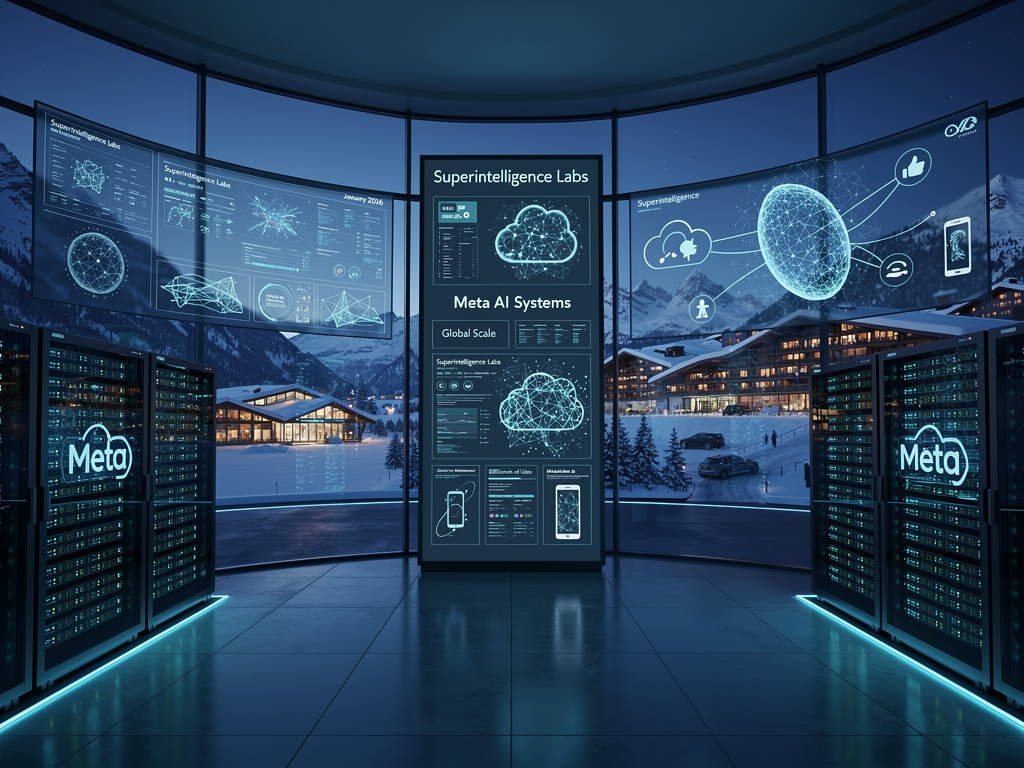
Meta Platforms has achieved a significant internal milestone in its quest to dominate artificial intelligence, with its newly formed AI lab delivering high-profile models just months after launch. Chief Technology Officer Andrew Bosworth revealed the development during a briefing at the World Economic Forum in Davos, Switzerland, stating the models have already been deployed across key teams within the company.
This rapid progress comes amid intense scrutiny of Meta’s AI efforts, following delays and criticism surrounding its Llama 4 release. Bosworth described the new models as showing "a lot of promise," hinting at performance that could challenge rivals from Alphabet and OpenAI. The announcement, first reported by Reuters, underscores CEO Mark Zuckerberg’s aggressive reorganization of the company’s AI division last year.
The lab, known as Meta Superintelligence Labs, was established to accelerate development of advanced AI systems capable of superhuman intelligence. Bosworth emphasized that these initial models represent a "high-profile" achievement, delivered internally in January 2026.
Roots of Meta’s AI Overhaul
Meta’s push stems from a strategic shakeup initiated by Zuckerberg, who poached top talent including Alexandr Wang from Scale AI and Nat Friedman, former GitHub CEO, to lead the superintelligence effort. The team aims to build AI that surpasses human capabilities across multiple domains, a goal Bosworth said is "very good" in early tests, per Sherwood News.
Prior setbacks with Llama 4, including accusations of benchmark manipulation, prompted the creation of this elite unit. Internal delivery means engineers across Meta’s product groups—spanning Facebook, Instagram, and WhatsApp—are now integrating these models, potentially powering next-generation features like enhanced content recommendation and real-time translation.
Bosworth’s comments align with recent web searches revealing follow-up coverage, such as India TV reporting the models as a "renewed push to compete with Google."
Technical Leap and Internal Impact
The models’ internal rollout suggests they exceed benchmarks of previous Llama iterations, focusing on multimodal capabilities and reasoning. Reuters quoted Bosworth saying the lab "has delivered its first high-profile AI models internally this month." This timing—mere weeks into 2026—indicates Meta leveraged massive compute resources, including its custom MTIA chips and partnerships for GPU access.
Industry insiders note this positions Meta to embed frontier AI directly into its 3.2 billion daily users, unlike competitors reliant on API access. Web updates from Yahoo Finance highlight early results as part of an "AI reset," with potential for consumer-facing launches soon.
Challenges remain, including ethical concerns over superintelligence and regulatory hurdles. Bosworth addressed skepticism at Davos, affirming the team’s progress without disclosing specifics on model size or training data.
Competitive Pressure Mounts
Meta’s advance intensifies rivalry, as Google and OpenAI grapple with their own scaling issues. The Indian Express, citing Reuters, noted Zuckerberg’s leadership changes as key to this momentum, via The Indian Express.
Posts on X from tech observers echo excitement, with sentiment pointing to Meta closing the gap on leaders. TradingView News reported Bosworth’s briefing details, emphasizing the models’ promise at TradingView.
Financial implications are stark: Meta’s stock rose post-announcement, reflecting investor confidence in AI monetization through ads and new services.
Path to Superintelligence
Superintelligence Labs targets "systems that can outperform humans in most economically valuable work," per Meta’s prior statements. Internal benchmarks reportedly show gains in coding, math, and vision tasks, building on Llama’s open-source foundation.
Gadgets360 covered criticism of Llama 4 but noted this delivery as a turnaround, linking to Reuters at Gadgets360. Bosworth’s optimism suggests phased public releases later this year.
Recruitment continues, with Meta targeting PhDs in reinforcement learning and scaling laws experts.
Broader Industry Ripples
This milestone accelerates the arms race, pressuring peers to match Meta’s integration speed. Channel News Asia detailed the Davos reveal, quoting Bosworth on delivery timing via CNA.
Analysts predict these models could enhance Meta AI assistants across apps, driving engagement. Rappler highlighted promise in the models, per Rappler.
Meta’s open-source strategy may evolve, balancing proprietary edges with community contributions.


 WebProNews is an iEntry Publication