
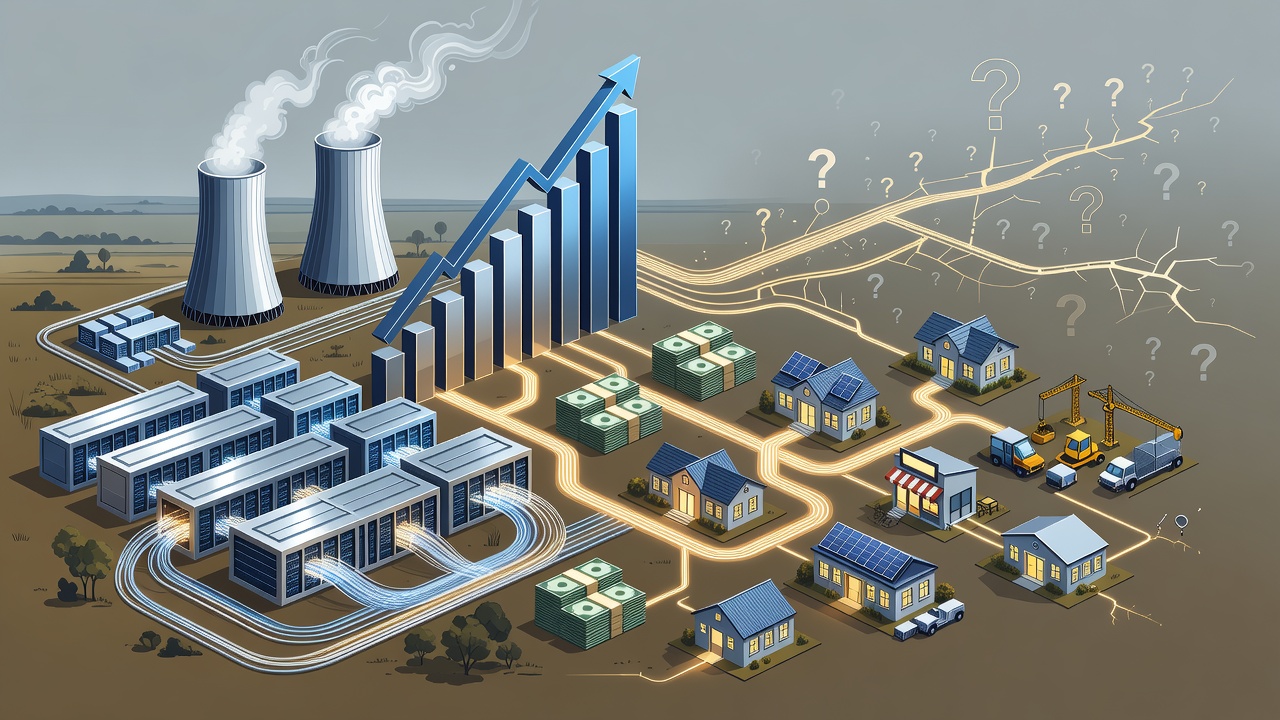
In the piney woods of northeast Louisiana, a transformation is underway. Meta Platforms is scaling up its massive Hyperion data center in Richland Parish to 5 gigawatts of compute capacity. The project now carries a total investment topping $50 billion. That’s a sharp increase from the $27 billion figure first discussed. And the ripple effects have already begun.
Teachers in this rural district of about 20,000 people recently received bonuses as high as $50,935. Last year the maximum stood at $10,200. The surge stems from a temporary flood of sales tax revenue during construction. Sales-tax receipts jumped as workers poured in. Materials moved. Local spending exploded. The result? Bonuses that for some educators exceed their base salaries.
Sheldon Jones, superintendent of the Richland Parish School District, didn’t mince words. “Last year, our teachers received a $10,000 bonus, this year that check was over $50,000,” he said, according to Meta’s official announcement. “It’s life-altering for our teachers and their families, and it’s transforming our schools. Meta’s investment has made Richland Parish a destination for education as well as industry.” Jones added that for the first time in his 30-year career, every teacher interviewed was fully certified.
But this windfall isn’t permanent. Construction generates the bulk of the taxable activity. Once the facility comes online, that revenue stream could slow. Critics point to this reality. They question whether the gains will endure. The New York Times reported that while the bonuses are unprecedented, they don’t solve deeper structural issues in rural education funding.
Still, the immediate benefits extend far beyond the classroom. Local businesses have landed more than $1.6 billion in contracts since ground was broken in December 2024. That’s according to both Meta and independent coverage. One small eatery, Holy Tacos, saw business boom from the influx of construction crews. Coffee shops and service providers tell similar stories. Thomasina Minor, owner of HeBrews Coffee, described how the project brought steady customers where seasonal fluctuations once ruled.
Meta isn’t stopping at contracts. The company pledged more than $1 billion for local infrastructure upgrades. Roads are being widened. Water and wastewater systems expanded. And crucially, Meta is covering all energy and water costs for the data center itself. This arrangement saves Entergy Louisiana customers more than $2 billion over 20 years. An earlier commitment added another $650 million in savings. Such moves help blunt criticism that hyperscale facilities strain public utilities.
Energy demands for AI training remain enormous. Data centers like Hyperion consume vast amounts of power. Water too, for cooling. Environmental groups have raised alarms. Earthjustice requested an investigation into financing structures that might shift costs to ratepayers if Meta pulls out early. Regulators denied the request in February 2025. Yet the concerns linger as the industry scales.
Meta’s announcement Monday frames the expansion as part of a larger $600 billion commitment to U.S. infrastructure and jobs over the next three years. The company already operates or builds 32 data centers worldwide. Twenty-eight sit inside the United States. Hyperion stands out. At 5 gigawatts, it ranks among the largest AI-focused facilities on record. Earlier plans targeted just over 2 gigawatts for large language model training.
Job creation forms another pillar. More than 1,000 positions are expected once the center reaches full operation. Many will require specialized skills. To address that gap, Meta donated $5 million to Louisiana Delta Community College. The funds support scholarships and training programs aimed at data center roles. Every graduate from Richland Parish high schools, starting with the class of 2026, qualifies for full scholarships in relevant trade programs.
The company also launched America’s Workforce Academy in June. It offers free tuition and guaranteed jobs for graduates in skilled trades. Shelly York, a local business leader, praised the initiative. She noted how it equips residents for the new economy without forcing them to leave home.
Scott Franklin, founder of the Richland Parish Chamber of Commerce, highlighted the “13th check” bonuses in comments to local media. Vested, certified teachers received around $50,900. Support staff got more than $17,000. “This is going to help us attract top teaching talent,” he told the Shreveport Times. Home prices have nearly tripled in some areas. Demand for housing ticks upward.
Yet not everyone sees only upside. Some residents worry about long-term sustainability. The sales tax boost tied to construction won’t last forever. Once the build phase ends, the district must find other revenue sources. Property taxes might rise. Or education budgets could tighten again. The New York Post noted the bonuses represent a short-term bump. Local officials hope the improved schools and trained workforce will draw additional investment.
Jeff Landry, Louisiana’s governor, welcomed the news. He pointed to the state’s business-friendly policies that helped land the project. Rachel Peterson, a Meta vice president, emphasized the company’s focus on community partnerships. “We want this to be a win for everyone involved,” she said in the Meta release.
The story fits a broader pattern. Big Tech’s AI race drives infrastructure spending at unprecedented scale. Hyperscalers compete for power, land and talent. Rural areas often offer cheaper real estate and fewer regulatory hurdles. In return, they receive economic jolts that can feel transformative. Richland Parish illustrates both the promise and the precarity.
Construction continues at pace. Trucks roll through Holly Ridge. Crews pour foundations for additional halls. The 4 million square feet already planned will grow. Power substations multiply. And local leaders scramble to prepare.
Dr. Justin Hoggard, president of Louisiana Delta Community College, called the scholarships a game changer for students who might otherwise lack options. Savannah Morris, a recent high school graduate, plans to enroll in the data center technician track. “I can stay here and build a career,” she said.
Similar dynamics play out elsewhere. Other states court data centers with tax incentives. Yet few have seen the direct link to teacher pay that Louisiana now displays. The “13th check” has become a talking point in debates over AI’s local benefits.
Meta’s approach stands out for its transparency on costs. By footing the bill for energy and water, the company shields ratepayers. That decision may set a precedent. Other operators face pressure to follow suit as power grids strain under AI loads.
Back in Richland Parish, the mood mixes celebration with caution. Bonuses arrived just in time for many families. Teachers paid down debt. Bought homes. Invested in their own education. But they know the checks may shrink next year.
Superintendent Jones remains optimistic. The certified teacher pipeline, the new facilities, the community grants. All signal lasting change. Meta funded improvements across every public school and youth program. Fire districts and the sheriff’s office received support too.
Lindsey and Tim Allen run a small contracting firm. They secured work on the site. “This project saved our business,” Lindsey said. TJ and Kaycie Weed expanded their welding shop to handle data center components. Their story repeats across the parish.
So what comes next? Meta expects the expanded facility to support its AI ambitions for years. Training ever-larger models. Powering recommendation systems. Underpinning virtual reality experiences. The compute demand shows no sign of slowing.
For Richland Parish, the question is adaptation. How to convert a construction boom into steady growth. Workforce programs help. Infrastructure upgrades matter. Strong schools could become a magnet.
The Hyperion project offers a live case study. One where an AI data center didn’t just consume resources. It funded bonuses. Trained workers. Built roads. And altered expectations in a place long overlooked. Whether that model scales remains to be seen. But for now, in rural Louisiana, the numbers speak loud.
Recent coverage reinforces the momentum. Fox Business highlighted the $50 billion AI push and its direct community returns. Reuters detailed the capacity jump and Meta’s broader U.S. investment pledge. The conversation continues. Local gains. National implications. And an industry racing forward.


 WebProNews is an iEntry Publication