
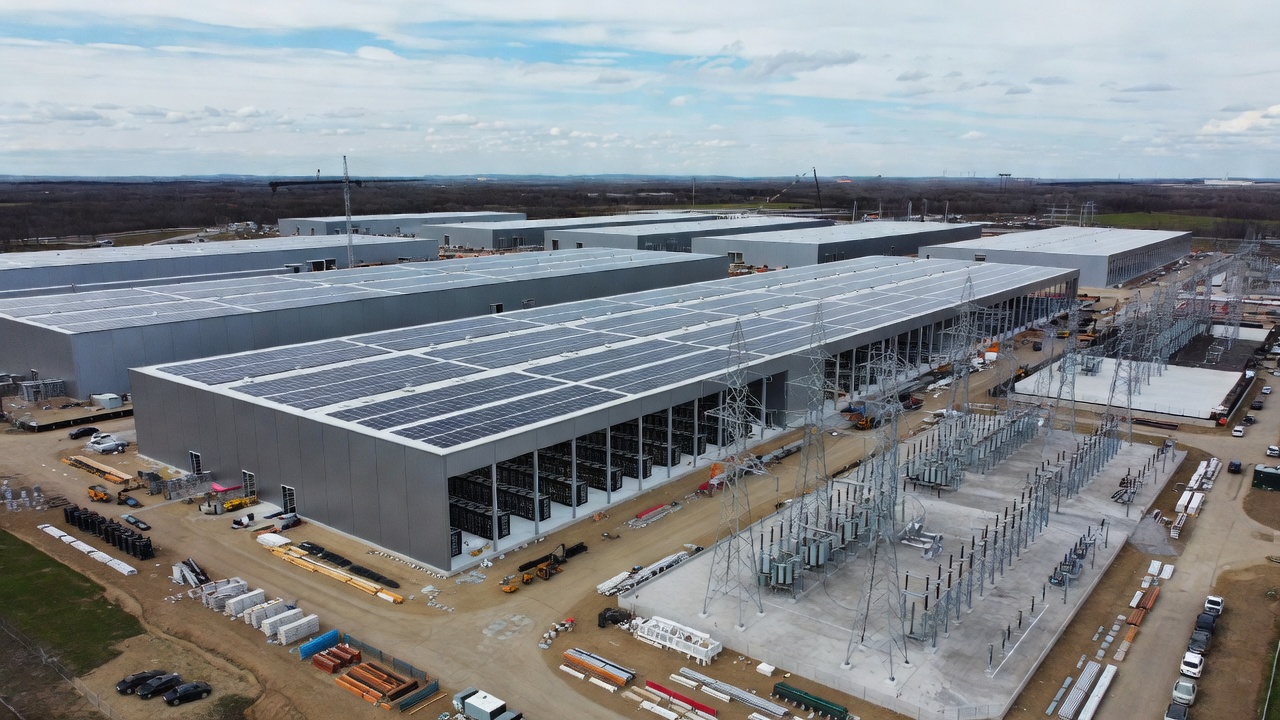
Meta has announced plans to construct a massive artificial intelligence data center in Canada, with an investment exceeding nine billion dollars scheduled for completion by 2026. The project, located in Newmarket, Ontario, represents one of the largest commitments to AI infrastructure in North America and signals the company’s aggressive push to expand its computational capabilities amid growing competition in the technology sector.
The facility will span more than 250 acres and is expected to create around 1,000 construction jobs during its build-out phase while adding hundreds of permanent technical positions once operational. According to details shared with Business Insider, the site will house advanced computing systems designed specifically to train and run large language models and other generative AI applications that power Meta’s social media platforms and emerging products.
This move comes as Meta continues to invest heavily in artificial intelligence across multiple fronts. The company has already poured tens of billions of dollars into AI research and development in recent years, hiring thousands of engineers and acquiring specialized hardware. The Canadian data center forms part of a broader strategy that includes similar facilities in the United States and Europe, though the Ontario project stands out for its scale and the level of provincial government involvement.
Ontario Premier Doug Ford has played an active role in bringing the project to his province. Provincial officials worked closely with Meta executives to secure the investment, offering a package of incentives that includes infrastructure support and workforce development programs. The government views the data center as a significant economic boost that will position Ontario as a North American hub for artificial intelligence operations.
Electricity requirements for the facility have drawn particular attention from energy analysts. The data center is projected to consume substantial amounts of power, equivalent to that used by hundreds of thousands of homes. To address these needs, Meta has partnered with local utilities to ensure reliable supply while exploring options for renewable energy integration. Hydro One, the provincial electricity transmission company, will upgrade transmission lines and substations to accommodate the increased demand without disrupting service to surrounding communities.
The choice of Canada reflects several strategic considerations. The country offers access to relatively clean hydroelectric power, a skilled technology workforce, and stable political conditions. Cooler northern temperatures also help reduce cooling costs for server equipment, an important factor given that data centers can generate enormous amounts of heat during intensive AI training runs. Additionally, Canada’s proximity to Meta’s existing operations in the United States allows for efficient coordination between development teams on both sides of the border.
Inside the facility, engineers will deploy thousands of graphics processing units and other specialized accelerators optimized for machine learning workloads. These systems will support Meta’s ongoing work on models like Llama, the open-source large language model family that has gained significant attention since its initial release. By housing these resources in a dedicated location, Meta aims to accelerate its research timelines and reduce dependency on third-party cloud providers for its most sensitive computational tasks.
The project also highlights shifting dynamics in global data center construction. While many technology companies once relied primarily on leasing capacity from providers like Amazon Web Services, Microsoft Azure, and Google Cloud, an increasing number are choosing to build and operate their own facilities. This approach gives them greater control over hardware specifications, energy sources, and data security protocols. For Meta, which processes enormous volumes of user data across Facebook, Instagram, and WhatsApp, maintaining direct oversight of infrastructure has become a priority.
Community reactions in Newmarket have been largely positive, though some residents have expressed concerns about potential impacts on local infrastructure and real estate prices. Town officials have worked to address these worries through public meetings and detailed planning documents that outline traffic management strategies, water usage parameters, and environmental protection measures. The data center will incorporate advanced water recycling systems to minimize consumption, an important consideration in a region that has experienced periodic drought conditions.
From a technical perspective, the facility will feature multiple layers of redundancy to ensure continuous operation. Backup generators, battery storage systems, and diverse network connections will protect against power outages and connectivity failures that could otherwise interrupt AI training processes that sometimes run for weeks without stopping. Security measures will include biometric access controls, perimeter fencing, and advanced surveillance systems to protect the valuable intellectual property housed within.
Meta’s investment aligns with similar moves by other major technology companies. Microsoft, Google, and Amazon have all announced billion-dollar data center projects in recent months, creating a competitive environment where access to power, land, and talent has become increasingly contested. In this context, securing a large site in Canada represents a meaningful advantage for Meta, particularly as American data center markets in Virginia, Texas, and Arizona face growing constraints on available capacity.
The timing of the announcement also carries significance. Meta has faced pressure from investors to demonstrate concrete returns on its artificial intelligence spending, which reached approximately $40 billion in 2024 alone. By committing to a visible, long-term infrastructure project, the company aims to show confidence in its AI strategy and its belief that these technologies will drive future revenue growth through improved advertising systems, content moderation tools, and new consumer products.
Workforce development forms another key element of the project. Meta has pledged to partner with local colleges and universities to create training programs focused on data center operations, network engineering, and AI system maintenance. These initiatives could help address the chronic shortage of qualified technical workers that has hampered data center expansion across North America. The company plans to recruit both recent graduates and experienced professionals, offering competitive salaries and benefits to attract talent to the Ontario region.
Environmental considerations have received careful attention in project planning. While data centers have traditionally been criticized for their carbon footprints, Meta has committed to powering this facility with 100 percent renewable energy by its operational start date. The company will achieve this goal through a combination of on-site solar installations, power purchase agreements with wind and hydroelectric producers, and carbon offset programs where necessary. These measures reflect Meta’s broader corporate sustainability targets, which include reaching net zero emissions across its value chain by 2030.
The Newmarket facility will also incorporate the latest advances in cooling technology. Rather than relying solely on traditional computer room air conditioning units, the data center will use liquid cooling systems that circulate chilled fluid directly to server racks. This approach improves energy efficiency and allows for higher computing densities, enabling more powerful AI models to run within the same physical footprint. Engineers have designed the building with future expansion in mind, leaving space for additional halls that could be constructed as computational demands continue to grow.
Industry observers see the Canadian project as part of a larger trend toward regional diversification in technology infrastructure. For years, data center construction concentrated heavily in a few key markets, but rising land costs, power constraints, and regulatory hurdles have pushed companies to explore new locations. Canada has emerged as an attractive option due to its abundant natural resources, educated population, and government policies that actively court technology investment.
As construction begins, Meta will need to coordinate with numerous stakeholders including municipal authorities, utility companies, equipment suppliers, and local businesses. The scale of the project means that concrete will need to be poured, fiber optic cables laid, and specialized machinery installed over the coming months. Project managers have emphasized their commitment to minimizing disruption to nearby residents while maintaining an ambitious timeline that targets full operation by late 2026.
The data center’s impact will extend beyond immediate job creation and economic activity. By establishing a major presence in Canada, Meta gains access to a pool of AI researchers and engineers from top universities including the University of Toronto, University of Waterloo, and McGill University. These institutions have produced notable advances in machine learning, and closer collaboration could accelerate Meta’s progress in areas such as computer vision, natural language processing, and recommendation systems.
Technical specifications for the facility remain partially confidential, but available information suggests it will rank among the most powerful AI computing sites in the world upon completion. The combination of scale, advanced hardware, and efficient design should allow Meta to train models with hundreds of billions or even trillions of parameters more quickly than previously possible. This capability could translate into faster product development cycles and more sophisticated features for users of the company’s applications.
Challenges remain, however. Supply chain issues for specialized semiconductors continue to affect the industry, and competition for electrical capacity has intensified in many regions. Meta will need to work closely with Canadian authorities to ensure that the necessary equipment arrives on schedule and that power infrastructure upgrades proceed without delay. Any setbacks could push back the operational date and affect the company’s broader AI roadmap.
Despite these potential obstacles, the announcement has been received as a vote of confidence in both artificial intelligence technology and the Canadian economy. Provincial leaders have hailed the project as validation of their strategy to attract high-tech investment, while technology analysts suggest it may encourage additional companies to consider similar moves north of the border.
For Meta, the data center represents more than just another building. It forms a foundational element of the company’s vision for artificial intelligence integration across its products and services. As the facility takes shape over the next two years, it will stand as a physical manifestation of the enormous resources being dedicated to this transformative technology. The project’s success or difficulties will likely influence not only Meta’s future trajectory but also the broader direction of AI infrastructure development throughout North America and beyond.


 WebProNews is an iEntry Publication