
Meta’s Whisper in the Crowd: How Smart Glasses Are Redefining Hearing and Privacy
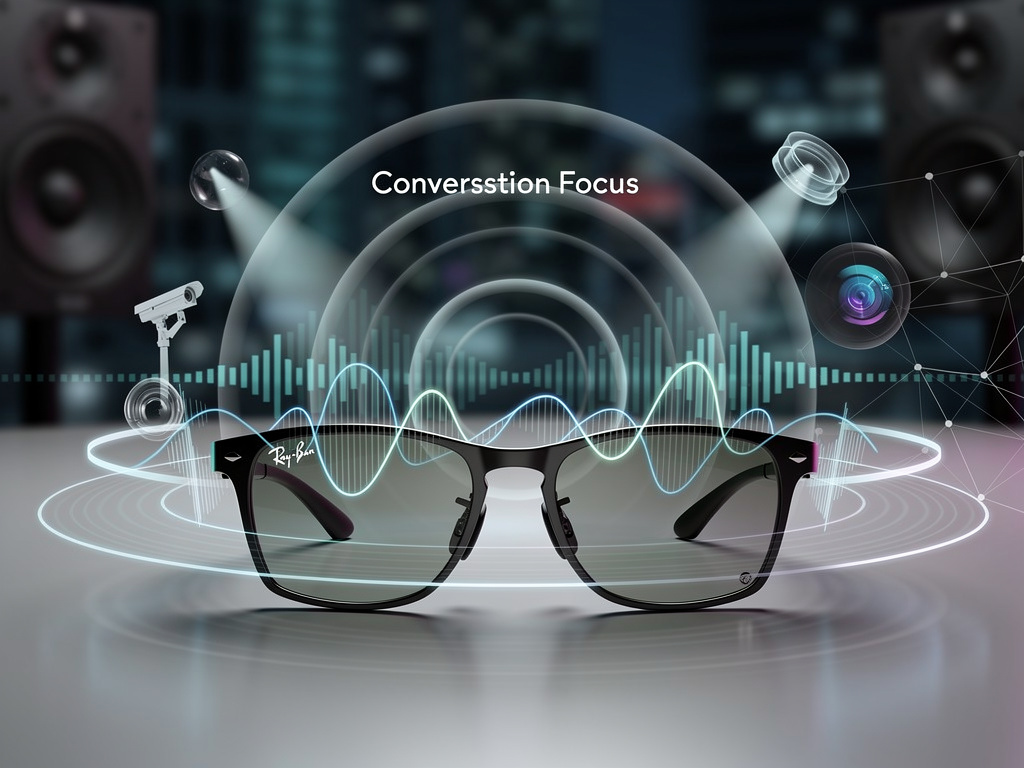
In the bustling world of wearable technology, Meta Platforms Inc. has unveiled a significant update to its Ray-Ban Meta smart glasses, introducing a feature called Conversation Focus. This innovation allows users to amplify the voice of the person they’re speaking with, even in noisy environments like crowded parties or busy streets. According to a recent report from CNET, the update leverages the glasses’ open-ear speakers and advanced audio processing to filter out background noise, making it easier to hear conversations without needing to lean in or ask for repetitions.
The rollout of this feature comes at a time when smart glasses are gaining traction as everyday accessories rather than niche gadgets. Meta’s partnership with EssilorLuxottica, the maker of Ray-Ban, has already seen the glasses achieve meaningful revenue boosts, as noted in a Reuters analysis. However, this growth is tempered by emerging rivals and persistent privacy debates, which could shape the device’s future adoption.
Beyond Conversation Focus, the update includes integrations with popular services like Spotify, enabling users to control music playback seamlessly through voice commands or gestures. Meta’s official blog post on about.fb.com highlights how these enhancements build on the glasses’ AI capabilities, turning them into multifaceted tools for daily life.
Amplifying Voices in a Noisy World
For users with hearing challenges or those frequently in loud settings, Conversation Focus represents a practical advancement. The feature uses directional audio technology to isolate and boost specific voices, drawing on Meta’s investments in artificial intelligence. As detailed in a piece from The Verge, this isn’t just about volume; it’s about clarity, with AI algorithms distinguishing between ambient sounds and targeted speech.
Industry insiders point out that this update positions Meta’s glasses as a competitor to hearing aids and noise-canceling earbuds. Unlike traditional devices, these glasses maintain an open-ear design, preserving situational awareness while enhancing select audio inputs. Posts on X, formerly Twitter, from tech enthusiasts like Manish Balakrishnan describe it as a “game-changer” for social interactions in chaotic environments, such as bars or public transport.
Yet, the technology isn’t without limitations. Early user feedback, echoed in discussions on platforms like Reddit’s r/privacy subreddit, suggests that while effective, the feature may struggle in extremely crowded scenarios or with multiple overlapping conversations. Meta acknowledges this, stating in their update announcement that ongoing improvements via software updates will refine accuracy.
The integration with Spotify adds another layer of utility, allowing users to switch tracks or adjust volume without pulling out their phones. This seamless connectivity underscores Meta’s vision for the glasses as an extension of the user’s digital ecosystem. According to TechCrunch, the AI-driven controls make interactions feel intuitive, potentially increasing user retention.
Privacy concerns, however, loom large. The glasses’ built-in cameras and microphones have long sparked debates about surveillance. A Verge article on privacy laws from October 2025 explains how current regulations struggle to keep pace with such wearables, which can record without obvious indicators.
On X, posts from users and outlets like the New York Post highlight fears of “spy glasses,” with one viral thread from 2023 resurfacing amid the update, warning about hidden cameras enabling covert filming. Meta insists on features like LED indicators for recording, but skeptics argue these are insufficient in real-world use.
Navigating the Privacy Minefield
The Conversation Focus feature amplifies not just voices but also ethical questions. By processing audio in real-time, the glasses collect data that could be used to train AI models, as indicated in X posts referencing Meta’s default AI settings that analyze voice and images without explicit consent. This has drawn criticism from privacy advocates who fear unintended data harvesting.
Legal experts, as quoted in various reports, emphasize the need for updated frameworks. For instance, the Reuters piece notes that while the glasses have boosted EssilorLuxottica’s revenue, privacy hurdles could cap growth, especially in regions with stringent data protection laws like the European Union.
Meta’s response includes transparency measures, such as user controls over data sharing. Their newsroom post on X from December 16, 2025, reassures that Conversation Focus operates locally on the device, minimizing cloud-based processing. However, this doesn’t fully address concerns about potential misuse, such as in unauthorized eavesdropping.
Comparisons to other wearables reveal Meta’s edge in integration but also its vulnerabilities. Apple’s AirPods Pro offer similar noise reduction, but without the visual AI components of Meta’s glasses. A CNET feature on upcoming smart glasses predicts a wave of competitors by 2026, including options with advanced AR displays, which could challenge Meta’s market position.
User anecdotes on X, such as those from Harvard students experimenting with facial recognition add-ons, illustrate the darker potential. One post describes how combining the glasses with software revealed strangers’ personal details rapidly, raising alarms about stalking and identity theft.
Despite these issues, adoption is growing. Sales figures from EssilorLuxottica indicate a surge, driven by the glasses’ stylish design and multifunctional appeal. Industry analysts suggest that features like Conversation Focus could appeal to professionals in fields like journalism or event management, where clear communication in noisy settings is crucial.
The Broader Implications for AI Wearables
Looking ahead, Meta’s update signals a shift toward more immersive AI experiences. The glasses now support real-time translations and message reading on lenses, as mentioned in an X post from ESP Projects Ltd., blending audio enhancements with visual aids. This convergence could redefine how we interact with technology, making it less about screens and more about augmented senses.
However, the privacy discourse is intensifying. A Reddit thread with thousands of comments questions societal acceptance of such devices, with users debating the ethics of constant recording. Meta counters by emphasizing user benefits, like aiding those with hearing impairments, positioning the technology as assistive rather than intrusive.
Competitive pressures are mounting. With rivals like Google and startups entering the fray, Meta must innovate while addressing concerns. The Investing.com report on the update notes Spotify integration as a strategic move to lock in users through ecosystem stickiness.
For industry insiders, the key takeaway is balancing innovation with responsibility. Meta’s approach involves iterative updates based on user feedback, as seen in their rapid rollout of Conversation Focus across the U.S. and Canada. Yet, as X posts from figures like Mario Nawfal point out, default AI training on user data could erode trust if not handled transparently.
The technology’s potential extends to enterprise applications. Imagine sales teams using Conversation Focus in trade shows or doctors in busy hospitals. Such use cases could drive B2B adoption, expanding beyond consumer markets.
Still, regulatory scrutiny is inevitable. Privacy laws, as discussed in The Verge’s legal analysis, may evolve to mandate clearer consent mechanisms or recording notifications, influencing how Meta and others design future features.
Evolving User Experiences and Market Dynamics
User experiences with the updated glasses vary. Some praise the audio clarity in tests, like those shared on X by CNET News, while others note battery drain from intensive AI processing. Meta promises optimizations in forthcoming patches, aiming to extend usage time.
Market dynamics show Meta leading in smart eyewear, but not without challenges. The Virtual Reality News site describes the audio feature as “game-changing,” yet warns of competition from AR-heavy devices expected in 2026.
Privacy advocates call for boycotts, but mainstream acceptance grows, fueled by celebrity endorsements and viral demos. An X post from Evan highlights video calling additions, further embedding the glasses in social communication.
As Meta refines its offerings, the line between enhancement and intrusion blurs. Conversation Focus exemplifies this, offering convenience at the cost of potential surveillance risks.
In professional circles, discussions focus on data security. With microphones always potentially active, cybersecurity becomes paramount. Reports suggest Meta’s encryption is robust, but vulnerabilities in connected apps like Spotify could pose risks.
Ultimately, the update underscores Meta’s ambition to make AI ubiquitous. By focusing on practical features like voice amplification, the company aims to normalize wearables, even as debates rage.
Future Horizons for Smart Eyewear
Peering into the future, experts anticipate more sensory integrations, such as haptic feedback or advanced health monitoring. Meta’s trajectory, informed by user data, could lead to personalized AI companions.
Privacy reforms might include opt-out defaults or third-party audits, as suggested in online forums. This could set precedents for the industry, ensuring ethical AI deployment.
For insiders, monitoring adoption metrics will be key. If Conversation Focus boosts engagement, it could validate Meta’s strategy, paving the way for bolder innovations.
The conversation around these glasses is just beginning, much like the feature itself—tuning into what’s said while filtering out the noise, but always with an ear to the concerns that echo louder.


 WebProNews is an iEntry Publication