
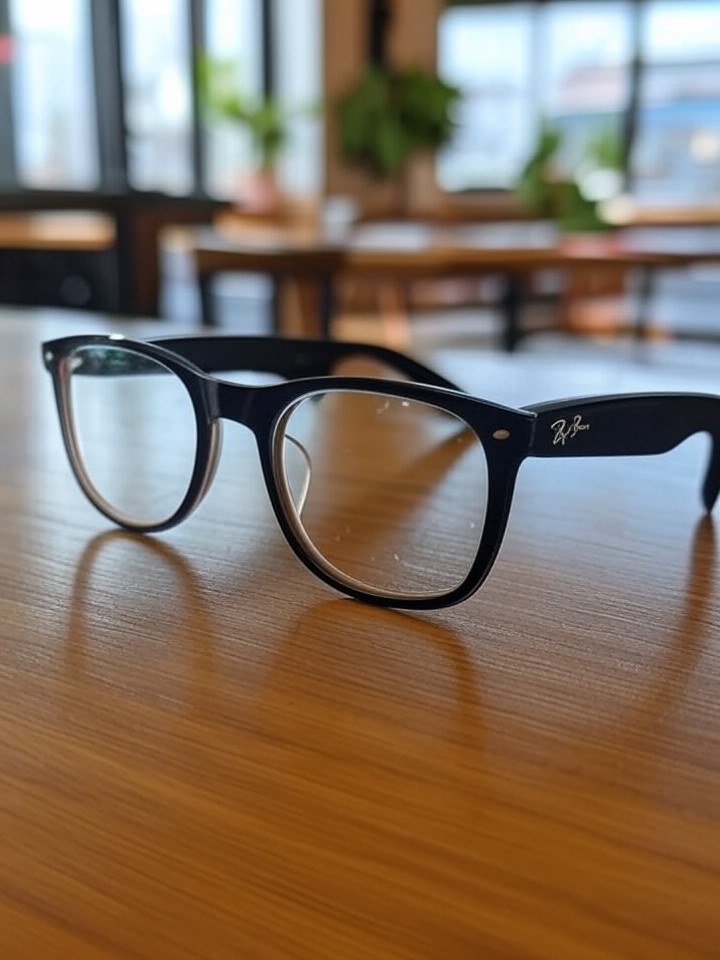
In the bustling cafes of New York or the crowded conference halls of Silicon Valley, maintaining a clear conversation has long been a challenge for professionals and socialites alike. Meta Platforms Inc., the tech giant formerly known as Facebook, is aiming to change that with its latest innovation in wearable technology. The company’s Ray-Ban smart glasses, already popular for their blend of style and functionality, have received a software update introducing “Conversation Focus,” a feature designed to enhance speech clarity in noisy environments. This development, rolled out in early access to select users in the U.S. and Canada, leverages directional audio processing to amplify the voices of people directly in front of the wearer while suppressing ambient sounds.
At its core, Conversation Focus uses the glasses’ built-in microphones and open-ear speakers to create a focused audio bubble. Users can activate it with a simple voice command like “Hey Meta, turn on Conversation Focus,” making it hands-free and intuitive. According to reports from Digital Trends, the technology works best within about 1.8 meters, ideal for one-on-one chats or small group discussions in settings like restaurants or networking events. This isn’t just a gimmick; it’s a practical tool that could benefit everyone from business executives straining to hear pitches over office din to individuals with mild hearing impairments seeking subtle assistance.
Meta’s push into this area reflects a broader trend in augmented reality wearables, where audio enhancements are becoming as crucial as visual overlays. The feature draws on advanced AI algorithms to distinguish human speech from background noise, such as clattering dishes or overlapping conversations. Early testers have noted that it doesn’t amplify all sounds indiscriminately, which prevents the overwhelming effect common in traditional noise-canceling headphones. Instead, it creates a directional emphasis, almost like turning the wearer’s head into a spotlight for sound.
How Meta’s Audio Innovation Stands Out in Wearable Tech
This selective amplification is powered by the glasses’ array of sensors, including beamforming microphones that pinpoint sound sources based on the user’s gaze and orientation. As detailed in coverage from Android Authority, the update allows the glasses to “single out a voice in a noisy crowd,” making it particularly useful in dynamic environments like trade shows or urban streets. Industry insiders point out that this builds on Meta’s existing AI capabilities, such as real-time translation and voice commands, integrating them into a more cohesive user experience.
Beyond convenience, Conversation Focus addresses accessibility needs without the stigma of traditional hearing aids. For professionals in high-stakes fields like finance or consulting, where mishearing a key detail could cost deals, this could be a game-changer. Meta has positioned the feature as part of its broader AI ecosystem, which includes integrations with apps like WhatsApp and Messenger for seamless communication. However, it’s worth noting that the early access phase means not all users have it yet, and full rollout details remain under wraps.
Comparisons to competitors are inevitable. Apple’s AirPods Pro offer active noise cancellation, but they enclose the ear, which can feel isolating. Meta’s open-ear design, in contrast, maintains situational awareness—a critical factor for safety in public spaces. Sources from TechCrunch highlight how the glasses use their speakers to “amplify the voice of the person you’re talking to,” emphasizing personalization over blanket noise reduction.
Technical Underpinnings and Development Journey
Delving deeper into the tech, Conversation Focus employs machine learning models trained on vast datasets of audio samples to differentiate speech patterns. This involves real-time processing on the glasses’ onboard chip, minimizing latency that could disrupt natural dialogue. Meta’s engineers, drawing from advancements in spatial audio, ensure the amplified voice sounds natural, avoiding the robotic tint that plagues some voice enhancement tools.
The feature’s origins trace back to Meta’s ongoing investments in AI and augmented reality, accelerated by partnerships like the one with EssilorLuxottica for the Ray-Ban branding. Recent posts on X (formerly Twitter) from tech enthusiasts and reviewers echo excitement, with users praising its potential for social settings. For instance, discussions on the platform note how it could transform interactions at events like CES, where ambient noise often drowns out networking opportunities.
Critics, however, raise privacy concerns. The glasses’ microphones are always listening for commands, and while Meta assures users that data isn’t stored without consent, the feature’s reliance on audio capture could invite scrutiny. In an era of increasing data protection regulations, such as the EU’s GDPR, Meta must navigate these waters carefully to avoid backlash similar to past privacy scandals.
Market Implications for Professionals and Consumers
For industry professionals, Conversation Focus could redefine productivity tools. Imagine a journalist conducting interviews in a crowded press room or a salesperson closing deals at a noisy trade fair—the ability to focus on a single voice streamlines these scenarios. According to insights from WebProNews, the tool “enhances interactions for professionals, social users, and those with hearing needs,” positioning Meta as a frontrunner in practical wearables.
The economic angle is compelling too. Priced starting at around $300, the Ray-Ban Meta glasses are more accessible than high-end AR headsets like Apple’s Vision Pro. This affordability, combined with regular software updates, could drive adoption among enterprise users. Companies might integrate them into corporate kits for remote workers or field agents, where clear communication is paramount.
Looking at user feedback from early access, as shared in various online forums and X threads, many appreciate the subtlety. One common sentiment is that it feels like an extension of natural hearing rather than an intrusive gadget. Yet, limitations exist: it performs optimally in close range and may struggle with multiple speakers or heavy accents, areas Meta is likely refining based on beta testing.
Broader Ecosystem Integration and Future Prospects
Integration with Meta’s AI assistant adds another layer. Users can combine Conversation Focus with features like live captions or translations, creating a multifaceted communication aid. For global business leaders, this means seamless discussions across language barriers in international meetings. Reports from Next Reality describe the update as “transforming their Ray-Ban smart glasses from simple recording devices into something much more sophisticated,” underscoring its evolution.
On the competitive front, rivals like Google and Amazon are exploring similar audio tech in their wearables, but Meta’s fashion-forward approach via Ray-Ban gives it an edge in consumer appeal. Industry analysts predict that as AR glasses mature, features like this will become standard, much like smartphone cameras did in the 2010s.
Potential expansions could include customizable audio profiles or integration with smart home devices. For those with hearing challenges, it offers a discreet alternative to bulky aids, potentially partnering with healthcare providers for tailored solutions. X posts from accessibility advocates highlight its promise, with some calling it a “game-changer” for the hard of hearing, echoing earlier innovations like real-time subtitle glasses mentioned in older tech discussions.
Challenges and Ethical Considerations Ahead
Despite the hype, challenges loom. Battery life is a concern; intensive audio processing could drain the glasses faster, limiting all-day use. Meta has yet to disclose exact impacts, but users in early reviews suggest it’s manageable for short bursts.
Ethically, the feature raises questions about consent in conversations. If one party is unknowingly amplified, does that infringe on privacy? Meta’s guidelines emphasize user control, but real-world application will test this. Regulatory bodies might step in, especially if misuse occurs in sensitive environments like courtrooms or confidential meetings.
Moreover, accessibility isn’t universal. The feature’s early access is limited, and full availability could take months. Pricing and compatibility—requiring the latest Ray-Ban Meta models—might exclude budget-conscious users or those with older devices.
Innovating for Real-World Communication Needs
As Meta refines Conversation Focus, its impact on social dynamics could be profound. In a post-pandemic world where hybrid work persists, tools that bridge physical and digital divides are invaluable. Professionals in noisy sectors like hospitality or event planning stand to gain the most, with clearer interactions boosting efficiency and reducing misunderstandings.
Looking ahead, this feature might inspire a wave of audio-centric innovations across the tech sector. Meta’s commitment to iterative updates, as seen in previous additions like hands-free texting, suggests Conversation Focus is just the beginning. By blending AI with everyday eyewear, the company is not only solving immediate problems but also paving the way for more immersive augmented experiences.
Ultimately, for industry insiders, Conversation Focus exemplifies how wearable tech is evolving from novelty to necessity. Its success will depend on user adoption and Meta’s ability to address feedback swiftly. As the feature rolls out more widely, it could set new standards for how we hear—and connect—in an increasingly noisy world.


 WebProNews is an iEntry Publication