
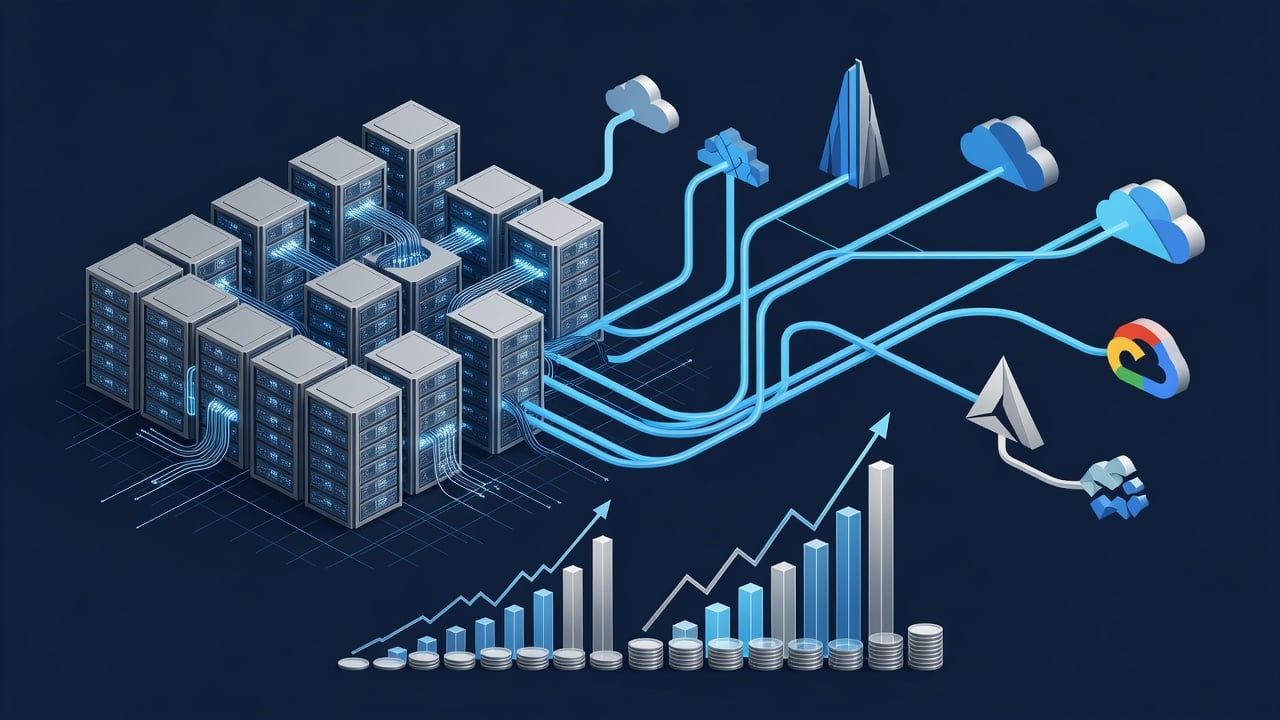
Meta Platforms is moving to sell its surplus artificial intelligence computing power. The social media giant has begun shaping a cloud infrastructure business. This effort aims to turn massive data center investments into fresh revenue.
Details remain fluid. Yet the direction is clear. According to people familiar with the plans, Meta wants to offer outside customers access to raw AI compute capacity and hosted models. The move pits the company against Amazon Web Services, Microsoft Azure and Google Cloud. It also echoes tactics used by specialized providers known as neoclouds.
From Internal Buildout to External Sales
Mark Zuckerberg hinted at the possibility months ago. In May he told investors that entering the cloud business sat “definitely on the table” if Meta built more capacity than it needed. Now that table holds real plans. Bloomberg first reported the development on July 1, 2026. (Bloomberg)
The initiative lives inside Meta Compute. Zuckerberg unveiled that internal program in January. Its leaders include Santosh Janardhan, head of infrastructure, Daniel Gross who runs Meta Superintelligence Labs, and president Dina Powell McCormick. Their task stretches beyond Meta’s own AI models. They must wring value from facilities that already consume billions in capital.
Spending has reached staggering levels. Meta committed $182.9 billion to AI infrastructure through the first quarter of 2026. Projections for this year alone climb as high as $145 billion. Last year the company burned through $72 billion, mostly on AI. Those figures form part of Big Tech’s collective outlay exceeding $700 billion. TechCrunch examined the numbers and the parallels to SpaceX, which sells excess capacity to Anthropic and others. (TechCrunch)
But. Excess capacity does not appear by accident. Meta raced to secure chips, land and power. It signed deals worth tens of billions with Nvidia and AMD. One agreement with AMD could top $100 billion and deliver enough silicon for six gigawatts of compute. The company also struck a long-term pact with Nebius valued at up to $27 billion. All this hardware populates enormous sites. One project in Ohio will match the physical footprint of Manhattan once complete. Another in Louisiana carries a $200 billion price tag over time.
So Meta faces a question every hyperscaler now confronts. How do you justify the expense when returns stay uncertain? Advertising still supplies the bulk of profit. Meta AI and the open-source Llama models have not yet produced major standalone revenue. Paid subscriptions for WhatsApp, Instagram and Facebook offer one path. Selling compute offers another.
The planned service would let developers rent time on Meta’s infrastructure. They could access models such as Muse Spark. Or they could buy raw GPU clusters for their own training runs. Some options resemble what CoreWeave and similar startups already deliver. Others would mirror established cloud giants. Either way, the goal is clear. Offset costs. Generate cash. Reduce reliance on the ad model that has powered growth for two decades.
TechRepublic laid out the strategic stakes in its coverage. The article noted Meta’s interest in renting data center capacity to AI companies as infrastructure bills mount. It highlighted competition with neocloud providers and the parallel to SpaceX’s high-value deals with Anthropic, reportedly $1.25 billion a month, and Google at $920 million monthly. (TechRepublic)
Market reaction spoke volumes. Meta shares jumped nearly 9 percent after the Bloomberg story broke. Neocloud stocks, including CoreWeave, fell sharply. Investors sensed a shift. If the largest social platforms start offering compute at scale, pure-play providers lose some of their edge. Wells Fargo analysts estimated a single gigawatt of capacity could represent $10 billion in annual revenue opportunity. That math excites Meta’s board. It worries smaller competitors.
Challenges remain. Meta’s own AI efforts continue at full throttle. Recent reports suggest its next model, internally called Watermelon, has narrowed the gap with OpenAI’s latest. That progress demands even more compute. Any external sales must avoid cannibalizing internal needs. Timing matters too. No public launch date exists. Development continues under wraps.
Energy questions loom larger still. These data centers devour electricity at unprecedented scale. Regulators, local communities and utility providers already push back in some locations. Meta has explored gas-powered sites to meet demand faster. The cloud business could help amortize those fixed costs across more users. Yet it cannot solve the underlying supply constraints the entire industry faces.
Other tech giants watch closely. Microsoft and Google already sell cloud access to their AI models. Amazon does the same. Meta enters later but arrives with enormous scale and open-source credibility. Its Llama models run efficiently on a range of hardware. That flexibility could appeal to customers wary of vendor lock-in.
Executives have signaled the shift for some time. Susan Li, Meta’s chief financial officer, emphasized last year that superior infrastructure would deliver better models and experiences. The cloud push extends that logic. Build once. Sell many times. Turn capex into opex for customers and recurring revenue for Meta.
Analysts differ on the upside. Some see a meaningful new business line that could reach tens of billions in annual sales. Others view it as defensive. A way to blunt criticism of runaway spending. Either interpretation marks a departure. For years Meta poured money into AI with few immediate financial returns. Now it hunts for payback.
The broader pattern grows familiar. Hyperscalers that overbuilt during previous cycles learned to monetize spare capacity. Meta follows the script but at AI speed and scale. Its success will hinge on execution. Can it create a product experience that matches the sophistication of its models? Will customers trust a social media company with their most sensitive training workloads?
Answers will emerge over quarters, not years. In the meantime Meta keeps building. More chips. More data centers. More power. And now, a sales force focused on selling slices of that empire to anyone who can pay. The era of compute as a pure cost center may be ending. For Meta, and perhaps the industry, it is becoming a product.


 WebProNews is an iEntry Publication