
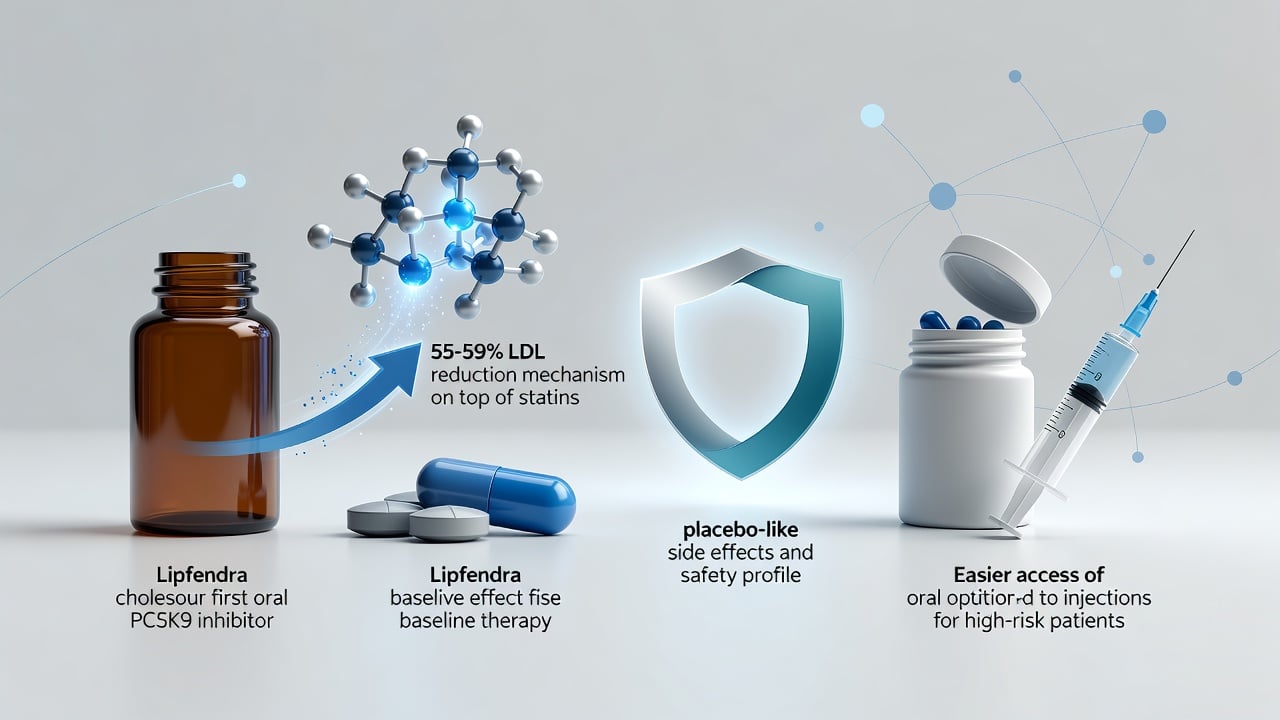
Merck just cleared a major regulatory hurdle. The FDA approved its once-daily pill Lipfendra on July 16, 2026. This marks the first oral drug in the PCSK9 inhibitor class. Patients with stubbornly high LDL cholesterol now have an alternative to injections.
The decision arrives at a moment when cardiologists seek better options. Statins remain the foundation. Yet many patients need extra help to hit aggressive LDL targets. Heart disease still claims more American lives than any other condition. High LDL drives plaque buildup in arteries. It raises risks for heart attacks and strokes.
Lipfendra, known chemically as enlicitide, blocks the PCSK9 protein. That action allows the liver to clear more LDL from the blood. Previous PCSK9 inhibitors from Amgen and others came only as injectables. Those treatments carried high list prices. Insurance hurdles limited uptake. Merck’s oral version promises broader access. Fortune reported the approval and its potential to shift treatment patterns.
Two late-stage trials supported the green light. In one study involving 3,000 high-risk patients already on statins, Lipfendra cut LDL levels more than 55% after six months. A second trial showed an average 59% reduction versus placebo. The benefit held up over a year, with only a slight decline. Side effects such as dizziness and diarrhea occurred at rates similar to placebo. The New York Times highlighted how the pill can drive LDL down to 50 or 60 in many adults. Typical untreated levels sit above 100.
Doctors recommend LDL below 70 for patients with heart disease or high cholesterol. Even lower targets apply for those at very high risk. Lipfendra fits as an add-on to diet and exercise. It targets adults with primary hypercholesterolemia, including heterozygous familial hypercholesterolemia.
Yet practical details matter. Patients must take the 20-milligram tablet on an empty stomach. Morning dosing, at least 30 minutes before food, works best. That requirement could challenge adherence for some. Still, a daily pill beats refrigeration and needles for many.
Merck set a list price of $10.50 per day. That equals roughly $315 a month. The company calls it up to 50% less than some existing PCSK9 therapies. Discounts, coupons and potential coverage through programs like TrumpRx could lower out-of-pocket costs further. Shares of Merck rose about 4% in morning trading after the news. Reuters detailed the pricing and market reaction.
The FDA granted approval through an accelerated pathway designed for drugs offering clear public health benefits. That program, shaped during the tenure of former official Dr. Marty Makary, drew scrutiny before his resignation in May 2026. Speed mattered here. Merck beat AstraZeneca, which is developing its own oral PCSK9 candidate called AZD0780. BioSpace noted Merck’s lead in the race to market.
Analysts project Lipfendra could generate more than $2 billion in annual sales within a few years. The oral format may expand the overall PCSK9 market. Many patients avoid or cannot tolerate injections. Primary care physicians could prescribe it more readily than specialists handle injectables. C&EN cited financial forecasts and quoted Merck Research Laboratories President Dean Y. Li: “This is a pivotal moment as we bring the first U.S. FDA-approved oral PCSK9 inhibitor to adults with high LDL-C, offering patients an important new option.”
Questions linger on clinical outcomes. The approval rests on LDL reduction. Merck continues longer-term studies to confirm drops in heart attacks, strokes and cardiovascular deaths. Earlier injectable PCSK9 drugs demonstrated such benefits. Experts expect similar results here. But proof remains pending.
Access and Adoption Challenges Ahead
Real-world uptake will test the thesis. Formulary placement, prior authorization requirements and physician familiarity will shape early sales. Some cardiologists already express caution. They want head-to-head data against injectables like Repatha. Others see the convenience as a clear win. Patients who skip doses or avoid shots may stay consistent with a simple tablet.
Merck plans to launch Lipfendra within weeks. The company has prepared manufacturing at commercial scale. Earlier this year it published a biocatalytic process for producing the macrocyclic peptide efficiently. That technical advance helped clear one production barrier for an oral biologic-like molecule.
Competition could intensify. AstraZeneca’s candidate remains in trials. If it reaches market later, pricing pressure might follow. For now Merck holds first-mover status in the oral segment. Its Keytruda franchise faces patent cliffs in coming years. Success with Lipfendra and other pipeline assets could help offset that revenue gap.
Public health implications stretch further. Better LDL control at population scale could trim cardiovascular events. That matters as millions of Americans live with elevated cholesterol. Statins work for many but not all. Intolerance or insufficient response leaves a gap. An oral PCSK9 option fills it without the logistics of injections.
Side effects stayed mild in trials. Diarrhea hit about 7% of patients. Dizziness affected 9%. Both rates matched placebo groups. Long-term safety data will accumulate post-launch. Regulators will watch closely.
Merck’s win reflects years of research into oral delivery of complex molecules. Peptides often degrade in the gut. The firm engineered Lipfendra to survive that environment and reach its target. The result offers a concrete example of pharmaceutical persistence paying off.
Cardiology practice may shift. Guidelines already push for very low LDL in high-risk groups. Easier tools to achieve those levels could encourage more aggressive prescribing. Primary care doctors, who manage most statin patients, gain a new arrow in their quiver.
Cost remains a watchpoint. While cheaper than some injectables on a list-price basis, $315 monthly still burdens uninsured or underinsured patients. Merck promises patient support programs. Actual net pricing after rebates and discounts will determine broad accessibility.
The approval also highlights evolving FDA priorities. Fast-track mechanisms aim to deliver promising therapies quicker. Critics question whether speed sometimes compromises scrutiny. In this case, robust Phase 3 data eased those concerns.
Industry insiders see broader lessons. Oral alternatives to injectable biologics could reshape multiple therapeutic areas. Success here may spur investment in similar delivery technologies. Merck’s approach with a macrocyclic peptide offers one template.
For patients, the news brings relief. No more monthly shots for those who qualify. No refrigeration worries. Just a pill. That simplicity matters when lifestyle demands already complicate chronic disease management.
Merck must now prove commercial execution matches the clinical achievement. Launch logistics, payer negotiations and physician education will decide initial momentum. Early signals look positive. Yet the cardiovascular outcomes trials will ultimately determine Lipfendra’s place in long-term guidelines.
The pill arrives as heart disease prevention gains fresh attention. Tools to lower LDL have improved steadily. From statins to injectables to this oral breakthrough. Each step expands options. Lipfendra represents the latest. And its convenience could widen the net of treated patients.


 WebProNews is an iEntry Publication