
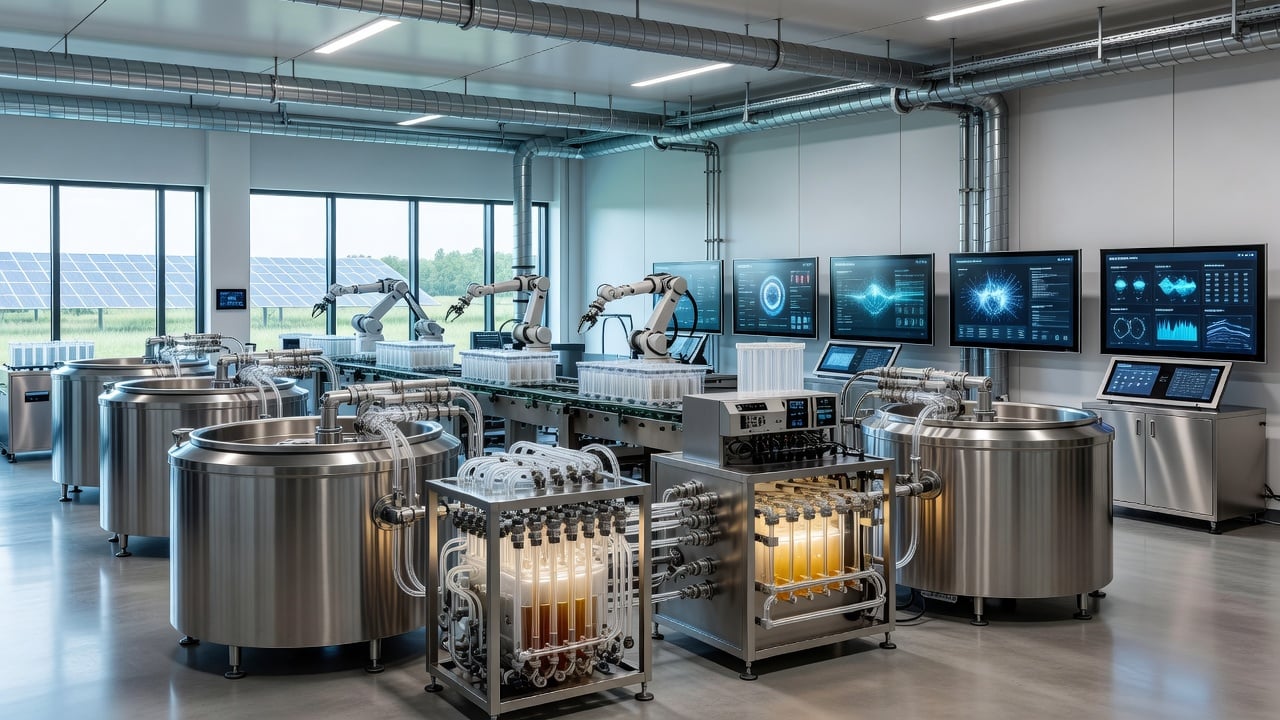
Germany’s Merck has announced a substantial increase in its investments for the life sciences division, committing hundreds of millions of euros to expand manufacturing capabilities and research infrastructure across multiple sites in the country. The move signals strong confidence in the future of biopharmaceutical production and positions the company to meet rising global demand for advanced therapies and laboratory tools.
The announcement, covered by Yahoo Finance, outlines plans to direct more than 300 million euros toward facilities in Darmstadt, Gernsheim, and other locations by the middle of the decade. This funding will support construction of new production lines for single-use bioprocessing equipment, purification resins, and filtration technologies that form the backbone of modern drug manufacturing. Company executives described the decision as a direct response to customer orders that have grown steadily since the pandemic highlighted vulnerabilities in global supply chains for critical medical components.
Merck operates as a diversified science and technology organization with three main business segments: healthcare, life sciences, and electronics. The life sciences unit, which includes the MilliporeSigma brand in North America, supplies everything from cell culture media to chromatography columns used by pharmaceutical companies and academic researchers worldwide. By expanding domestic production, the firm aims to reduce delivery times and strengthen supply security for European and international clients who increasingly prefer suppliers with transparent and regionally anchored operations.
The investment arrives at a time when the bioprocessing industry faces persistent capacity constraints. Many vaccine and biologic drug makers continue to report backlogs for essential consumables such as bioreactor bags and membrane filters. Merck’s additional manufacturing space will focus on these high-demand items while also accommodating growth in next-generation modalities including mRNA production equipment and viral vector purification systems. The company already maintains a sizable presence in Germany, employing thousands in research, development, and production roles that contribute directly to the national economy.
Beyond physical infrastructure, the capital injection will fund digital integration projects that connect production machinery with real-time monitoring platforms. Sensors embedded throughout new cleanrooms will feed data into centralized control systems, allowing engineers to track pressure differentials, temperature stability, and particulate levels with greater precision. Such connectivity helps maintain compliance with stringent regulatory standards set by the European Medicines Agency and equivalent bodies in export markets. Automated documentation processes developed through these upgrades are expected to shorten validation timelines for new products by several months.
Workforce development forms another pillar of the expansion strategy. Merck plans to hire additional specialists in process engineering, quality assurance, and analytical chemistry to staff the enlarged facilities. Partnerships with local universities and technical colleges will support apprenticeship programs tailored to the specific requirements of life science manufacturing. These educational initiatives aim to create a pipeline of skilled technicians who understand both the theoretical foundations of biotechnology and the practical demands of operating under current good manufacturing practice conditions.
The financial commitment reflects broader industry patterns observed across Europe. Several competitors have similarly increased spending on continental production sites to mitigate risks associated with long-distance shipping from Asia. Political leaders in Berlin have welcomed Merck’s decision, viewing it as validation of Germany’s standing as a premier location for high-technology industries. Federal and state incentives for research infrastructure likely played a supporting role, although the company emphasized that the primary driver remains anticipated market growth rather than subsidy programs.
Analysts following the sector project that demand for life science tools and consumables will continue expanding at mid-single-digit percentages annually through the end of the decade. Aging populations in developed countries drive the need for more biologic medicines to treat cancer, autoimmune disorders, and rare diseases. At the same time, emerging economies are building domestic pharmaceutical capabilities that require imported equipment and materials during initial phases. Merck’s enlarged German operations will help satisfy both segments while maintaining the quality standards that have built customer loyalty over decades.
Research activities funded by the new resources will concentrate on improving separation technologies that isolate therapeutic proteins from complex mixtures with higher yields and fewer steps. Current purification methods often account for the majority of production costs in biologic drug manufacturing. Any gains in efficiency can translate into lower prices for patients and improved profitability for manufacturers. Scientists at Merck’s updated laboratories will also explore novel filtration materials that remove impurities more selectively, potentially eliminating additional processing stages currently required to meet purity specifications.
Sustainability considerations have been integrated into the design of the new facilities. Energy-efficient HVAC systems, water recycling loops, and solar arrays on rooftops will reduce the carbon footprint associated with large-scale manufacturing. These features respond to customer requests for suppliers that demonstrate environmental responsibility throughout their value chains. Documentation of reduced emissions and resource consumption will be made available through regular corporate responsibility reports, allowing pharmaceutical partners to incorporate the data into their own sustainability calculations.
The life sciences expansion occurs alongside continued investment in Merck’s healthcare division, which maintains a strong oncology pipeline. However, the two segments operate with distinct market dynamics. While drug development carries high clinical risk and lengthy approval pathways, the tools and materials business provides more predictable revenue streams based on recurring consumable sales. This balance allows the company to fund ambitious research programs without exposing the entire organization to binary outcomes of individual clinical trials.
Competition in the bioprocessing market has intensified as new entrants introduce alternative technologies for cell culture and downstream processing. Established players like Merck counter by emphasizing their decades of experience validating processes for commercial-scale production. Regulatory agencies prefer equipment with extensive track records because documentation packages can be referenced across multiple submissions, reducing review times. The new German capacity will enable faster scale-up of these proven platforms while leaving room for pilot-scale testing of innovative formats.
Regional economic effects from the investment extend beyond direct employment. Suppliers of stainless steel, specialized glassware, and control instrumentation will likely see increased orders as construction progresses. Logistics companies handling temperature-controlled transport of sensitive biological materials will benefit from higher volumes moving through local distribution hubs. The ripple effects illustrate how targeted spending in one advanced manufacturing sector can stimulate activity across related industries.
Looking forward, Merck intends to maintain a balanced geographic footprint rather than concentrating all future growth in a single region. North American facilities will receive upgrades in parallel with the German projects, and selected Asian sites will gain additional capabilities for serving local markets. This distributed approach minimizes exposure to geopolitical disruptions and allows the company to respond quickly to regional regulatory changes or shifts in customer preferences.
The decision to increase life sciences spending in Germany also carries symbolic weight. The country has long maintained a reputation for engineering excellence and scientific rigor that dates back to the establishment of the modern chemical industry in the late 19th century. By choosing to enlarge its presence here rather than shifting production to lower-cost locations, Merck reinforces the idea that quality and innovation still thrive in traditional European industrial centers when supported by appropriate capital allocation.
Customers of the life sciences division can expect gradual rollout of additional capacity over the next three years. Initial phases will focus on filtration and chromatography products before expanding into complete single-use bioreactor assemblies. Order backlogs that accumulated during the height of the pandemic should begin to ease as these lines come online, although full normalization may take longer given continued growth in underlying demand.
Industry observers will watch closely to see whether Merck’s expanded manufacturing translates into accelerated product development cycles. The ability to test new membrane compositions or resin formulations at full commercial scale within company-owned facilities could shorten the interval between concept and market launch. Faster iteration benefits not only Merck but also the thousands of organizations that rely on its catalog to advance their own therapeutic candidates.
Overall, the investment underscores a conviction that life sciences will remain a growth engine for the foreseeable future. Demographic trends, scientific progress in understanding disease mechanisms, and policy emphasis on domestic production of critical medical supplies all point toward sustained expansion. By committing significant resources now, Merck aims to secure its position as a preferred partner for organizations developing tomorrow’s medicines while generating stable returns for shareholders through a portfolio of essential laboratory and production technologies. The carefully planned upgrades in Darmstadt and surrounding communities represent both a business decision and a statement of faith in the continued importance of European manufacturing excellence within the global health care supply network.


 WebProNews is an iEntry Publication