
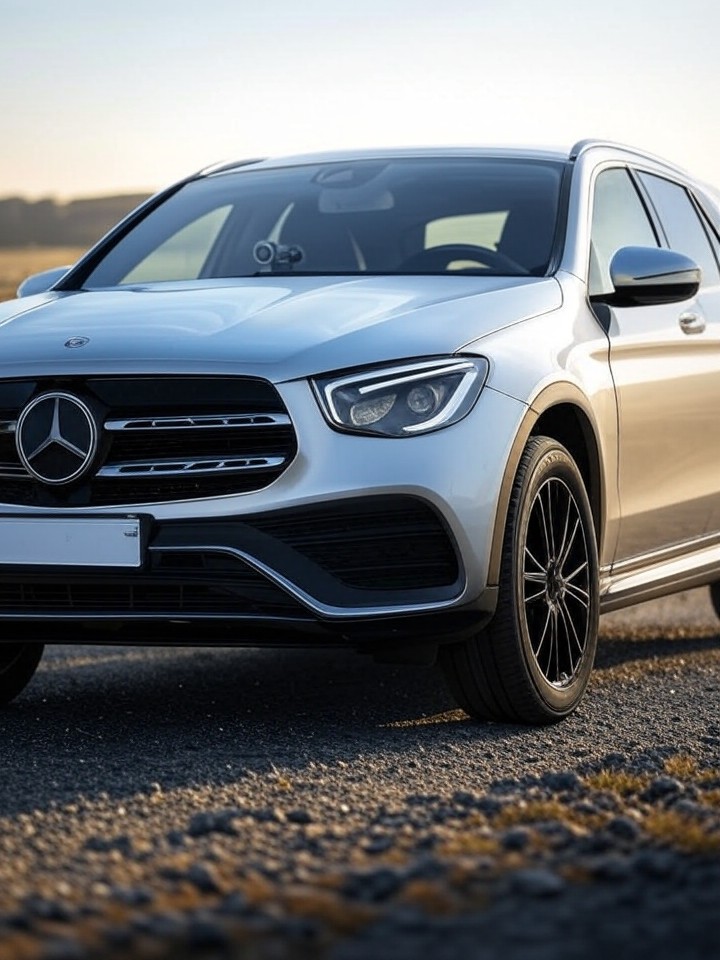
Mercedes’ Autonomy U-Turn: Why the Luxury Giant Shelved Its Pioneering Eyes-Off System
Mercedes-Benz, the storied German automaker synonymous with engineering excellence, has made a surprising move by pausing the rollout of its Drive Pilot system—a Level 3 autonomous driving feature that promised hands-free, eyes-off operation in specific scenarios. This decision, announced recently, comes as the company shifts focus toward more accessible Level 2 technologies, raising questions about the viability of advanced self-driving systems in the current market. Industry observers are watching closely, as this pivot could signal broader challenges in the race toward fully autonomous vehicles.
The Drive Pilot system, first introduced in 2023 for models like the EQS sedan and S-Class, allowed drivers to divert their attention from the road under controlled conditions, such as highway traffic jams at speeds up to 40 mph. It represented a significant step up from Level 2 systems, where drivers must remain vigilant. However, according to reports, Mercedes has decided not to include this feature in the upcoming facelifted S-Class, opting instead for enhancements in its Level 2 offerings.
This shift isn’t just a minor adjustment; it reflects deeper issues plaguing the development of higher-level autonomy. Sources indicate that low customer demand, high production costs, and regulatory hurdles played key roles in the decision. As one of the first manufacturers to offer a commercially available Level 3 system in Europe and the US, Mercedes’ step back underscores the complexities involved in scaling such technology.
The High Stakes of Level 3 Innovation
Delving into the specifics, Drive Pilot relied on an array of advanced sensors, high-definition maps, and real-time data processing to enable conditional automation. In practice, it meant drivers could watch a movie or check emails while the car handled stop-and-go traffic on mapped highways. But the system’s limitations were stark: it required clear weather, no construction zones, and specific infrastructure like visible lane markings.
Critics, including posts found on X, have long pointed out these constraints, with some users mocking the technology for its inability to function in rain, at night, or without a lead vehicle. One post highlighted that the system demands perfect conditions, including 5G connectivity, which severely limits its real-world applicability. This sentiment echoes broader industry feedback, where enthusiasts argue that true autonomy shouldn’t come with such caveats.
Mercedes’ own updates prior to this pause showed efforts to expand the system’s capabilities. For instance, in late 2024, the company announced an upgrade in Germany allowing speeds up to 95 km/h, as detailed on their official site. Yet, even these advancements couldn’t overcome the economic realities. Production costs for the necessary hardware and software reportedly soared, making the feature a tough sell for consumers already paying premium prices for luxury vehicles.
Market Realities and Consumer Hesitation
The pause aligns with a pattern seen among other automakers. BMW, for example, delayed its own Level 3 plans for the iX model back in 2021, citing the need for further technical safeguards. Posts on X from that period reflect similar skepticism, with users questioning the hype around these systems. Mercedes’ decision, therefore, isn’t isolated but part of a reevaluation across the sector.
Financially, the numbers didn’t add up. Reports suggest that uptake of Drive Pilot was minimal, with customers balking at the additional cost—often in the thousands of dollars— for a feature usable only in niche situations. As noted in a The Verge article, the company is now prioritizing a new point-to-point Level 2 system that competes more directly with Tesla’s Full Self-Driving suite, which, despite its controversies, has broader appeal due to its versatility.
This strategic pivot also highlights regulatory challenges. In the US, Level 3 systems transfer liability to the manufacturer during operation, a risk that requires extensive testing and certification. European markets impose similar stringent standards, and Mercedes’ experience shows that meeting these while keeping costs down is no small feat. Industry insiders speculate that the pause allows Mercedes to refine its approach without the pressure of immediate deployment.
Competitive Pressures in Autonomous Development
Looking at rivals, Tesla continues to push boundaries with its Autopilot and Full Self-Driving beta, albeit classified as Level 2, emphasizing over-the-air updates and data collection from a vast fleet. Posts on X often contrast this with Mercedes’ more conservative, hardware-heavy method, with some users praising Tesla’s scalability. Meanwhile, companies like Waymo focus on Level 4 robotaxis in geofenced areas, avoiding the consumer market altogether.
Mercedes isn’t abandoning autonomy entirely. Recent announcements, such as plans for urban autonomous driving tech in the US, indicate a focus on supervised systems that build consumer trust gradually. A Reuters report from early January 2026 details Mercedes’ launch of an advanced driver-assistance system for city streets, operating under driver supervision but with enhanced capabilities.
This move could position Mercedes better in a market where consumers prefer incremental improvements over revolutionary but restricted features. Analysts point out that Level 2 systems, while requiring driver attention, can be deployed more widely and updated via software, reducing long-term costs. The company’s MB.Drive Assist Pro, described as “Level 2++” in a Autoweek piece, allows hands-free navigation in urban environments, rivaling offerings from Tesla and others.
Technological Hurdles and Future Pathways
At the core of Mercedes’ decision are the technological barriers to Level 3. Ensuring safety in all scenarios demands redundant systems and massive computational power, driving up expenses. A Slashdot story from January 13, 2026, confirms the pause, noting that the revised S-Class arrives without the system, as first reported by German media.
Posts on X amplify this, with users like tech enthusiasts discussing how Mercedes’ system was “stuck in a local maximum,” unable to handle diverse conditions like inclement weather or construction. These limitations, combined with low demand, made continuation untenable. One post even suggested that scaling such technology to mass production is far more challenging than initial development.
Looking ahead, Mercedes’ focus on Level 2 advancements might accelerate progress toward higher autonomy. By gathering more real-world data through these systems, the company could eventually leapfrog to Level 4 without the interim risks of Level 3. This approach mirrors strategies in other industries, where iterative improvements lead to breakthroughs.
Industry-Wide Implications and Strategic Shifts
The broader impact on the self-driving sector is profound. Mercedes’ retreat could deter investments in Level 3 technologies, pushing companies toward either full autonomy or enhanced assistance. A electrive.com article from January 12, 2026, emphasizes that as the first German maker to offer such a system, Mercedes’ pause signals caution to peers.
Consumer sentiment, as gleaned from X posts, shows frustration with overhyped features that underdeliver. Users frequently cite restrictions like speed limits and weather dependencies, questioning the value proposition. This feedback loop is crucial, as automakers must balance innovation with practicality to avoid alienating buyers.
Moreover, economic factors play a role. With global supply chain issues and rising material costs, allocating resources to niche features becomes risky. Mercedes’ decision frees up capital for electrification and connectivity, areas with higher growth potential. Reports indicate the company is investing heavily in software-defined vehicles, where over-the-air updates can enhance features post-purchase.
Economic and Regulatory Considerations
Regulatory environments add another layer of complexity. In the US, the National Highway Traffic Safety Administration scrutinizes autonomous systems closely, especially after incidents involving competitors. Mercedes’ Level 3 certification was a milestone, but maintaining it amid evolving standards proved burdensome.
Internationally, varying regulations complicate global rollouts. Europe’s strict data privacy laws and safety requirements demand tailored approaches, increasing development overhead. By stepping back, Mercedes avoids potential legal pitfalls while refining its tech stack.
Industry experts, including those quoted in a Drive Tesla article from January 13, 2026, view this as a pragmatic reset. The piece notes the S-Class facelift’s debut without Level 3, signaling a focus on sustainable innovation.
Path Forward for Mercedes and the Sector
As Mercedes forges ahead with systems like MB.Drive Assist Pro, early reviews are promising. A Car and Driver hands-on from January 2026 praises its urban navigation, suggesting it could win over skeptics with reliable performance.
This evolution might inspire competitors to adopt similar strategies, emphasizing user-friendly autonomy over technical one-upmanship. Posts on X speculate that integrations with tech giants like Tesla could emerge, though that’s speculative.
Ultimately, Mercedes’ pause on Drive Pilot isn’t a defeat but a recalibration. By addressing demand, cost, and regulatory issues head-on, the company positions itself for long-term leadership in a field where patience and precision are key. As the sector matures, such decisions will likely become more common, shaping the future of mobility in profound ways.
In reflecting on this development, it’s clear that the path to widespread autonomy is fraught with obstacles, but Mercedes’ adaptability could set a precedent for others. With ongoing investments and a customer-centric approach, the automaker may yet redefine what’s possible on the road.


 WebProNews is an iEntry Publication