
Waving In the Future: How Mercedes’ Palm Scans Could Redefine Automotive Access
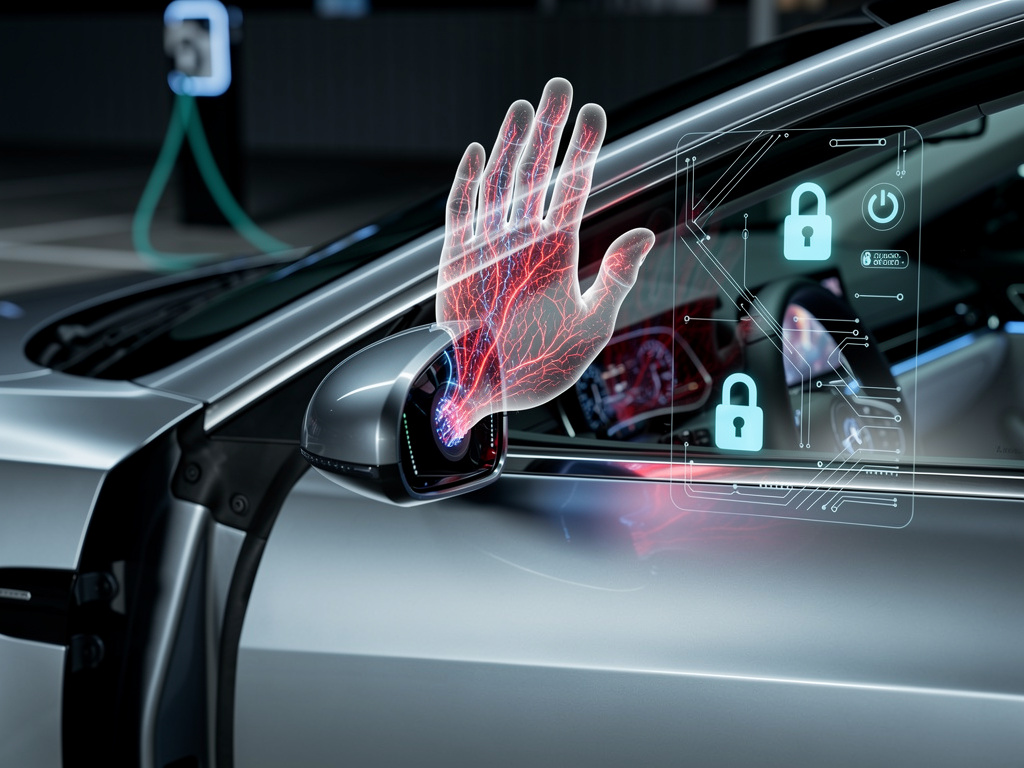
In the ever-evolving world of automotive innovation, Mercedes-Benz is pushing boundaries with a patented technology that could make traditional car keys obsolete. Instead of fumbling for a fob or relying on facial recognition, drivers might soon unlock and start their vehicles simply by waving their palm over a sensor. This development, detailed in a recent patent filing, leverages palm-vein biometrics, scanning the unique vein patterns beneath the skin to verify identity. It’s a move that promises enhanced security and convenience, especially in an era where cyber threats loom large over connected cars.
The patent, as reported by CarBuzz, describes an infrared scanner embedded in the vehicle’s door handle or dashboard. This system uses low-power sensors to capture vein images without significantly draining the battery of electric vehicles—a critical consideration as the industry shifts toward electrification. Data encryption ensures that biometric information remains secure, addressing potential vulnerabilities that have plagued other biometric systems. Mercedes isn’t the first to explore biometrics, but this palm-based approach stands out for its subtlety and resistance to spoofing, since vein patterns are internal and harder to replicate than fingerprints or faces.
Industry experts see this as part of a broader trend toward seamless, contactless interactions in vehicles. With the rise of autonomous driving and smart cars, access control is becoming more sophisticated. Mercedes’ system could integrate with existing features like keyless entry, allowing multiple users to register their palms for shared vehicles. This innovation arrives at a time when consumer demand for personalized, tech-forward experiences is surging, potentially setting a new standard for luxury automakers.
The Tech Behind the Wave
Delving deeper into the mechanics, the palm-vein technology employs near-infrared light to illuminate the hand, revealing the deoxygenated hemoglobin in veins that absorbs the light and creates a distinct pattern. Unlike surface-level biometrics, this method is less affected by dirt, cuts, or environmental factors, making it ideal for automotive use where hands might be greasy from a road trip or cold from winter weather. According to details from SpeedMe, the system includes algorithms to encrypt and store this data locally, minimizing risks of data breaches.
Integration with electric vehicles is particularly noteworthy. The patent emphasizes low-energy consumption to preserve battery life, a nod to the growing dominance of EVs in Mercedes’ lineup. This could appeal to environmentally conscious consumers who prioritize efficiency without sacrificing cutting-edge features. Moreover, the technology might extend beyond access, potentially personalizing cabin settings like seat positions or climate control based on the recognized user.
Comparisons to existing biometric systems highlight palm-vein’s advantages. Fingerprint scanners, common in some luxury cars, can fail with wet or dirty fingers, while facial recognition raises privacy concerns due to visible cameras. Palm scanning offers a middle ground: it’s non-intrusive and highly accurate, with error rates reportedly lower than other methods. As per market analysis from Mordor Intelligence, the biometric automotive sector is projected to grow at a compound annual rate of 18.2% over the next five years, driven by companies like Synaptics and Continental AG.
Market Momentum and Competitors
The push for biometrics in cars isn’t isolated to Mercedes. Rivals like BMW and Tesla have experimented with facial and voice recognition, but palm-vein tech could give Mercedes an edge in security-focused markets. Recent posts on X, formerly Twitter, from automotive enthusiasts and official Mercedes accounts underscore the excitement, with discussions around how such innovations tie into broader software-defined vehicles. For instance, Mercedes has previously touted integrations like fingerprint and voice authentication in their MBUX system, as shared in their 2020 updates.
Growth forecasts paint an optimistic picture. A report by Expert Market Research values the global automotive biometrics market at about $420 million in 2023, expecting it to reach $1.6 billion by 2032 at a 16.1% growth rate. This surge is fueled by demands for anti-theft measures and user convenience, especially in regions with high vehicle theft rates. Mercedes’ patent could position it as a leader, particularly if it rolls out in flagship models like the S-Class or upcoming EVs.
However, challenges remain. Adoption hinges on consumer trust in biometric data handling. Privacy advocates worry about data storage and potential hacks, even with encryption. Mercedes has addressed this by limiting data to the vehicle itself, but broader industry standards are needed. Insights from Biometric Update note that while drivers are warming to the tech for safety, familiarity is key—many still prefer traditional keys.
Security in the Palm of Your Hand
Security benefits are a major selling point. Vein patterns are unique to individuals and don’t change over time, unlike fingerprints that can wear down. This makes the system robust against forgery, a growing concern as cars become more connected. In an article from Automotive Technology, experts discuss how biometrics enhance access control, reducing risks from lost keys or hacked fobs. Mercedes’ implementation could deter thieves who rely on signal jamming or relay attacks common in keyless systems.
Beyond security, the technology aligns with Mercedes’ open-source approach to software, as explored in a PatentPC blog post. By potentially licensing this tech, Mercedes could influence industry-wide standards, fostering innovation while protecting intellectual property. This strategy has worked for them in areas like in-car payments and AI assistants, as seen in recent reviews of their MBUX Virtual Assistant.
Real-world testing will be crucial. While the patent is fresh—filed in late 2025—prototypes might appear in concept cars soon. Posts on X from sources like CarBuzz echo public intrigue, with users speculating on integration with autonomous features. Imagine a self-driving Mercedes that only activates for verified palm scans, adding layers of safety.
Navigating Privacy and Ethical Waters
Privacy implications cannot be overlooked. Storing biometric data, even encrypted, raises questions about consent and data rights. In the U.S. and Europe, regulations like GDPR demand transparency, and Mercedes must navigate these carefully. A recent news item from Biometric Update highlights congressional pushes for better biometric safeguards, underscoring the need for automakers to prioritize ethics.
Comparatively, other biometrics have faced backlash. Facial recognition in cars has drawn criticism for potential bias and surveillance overreach. Palm-vein scanning, being less visible, might evade some scrutiny, but transparency reports will be essential. Mercedes’ history with data protection, as in their Visa-integrated payments touted on X in 2023, suggests they’re attuned to these concerns.
Looking ahead, this tech could expand to fleet management or car-sharing services, where quick, secure access is paramount. Imagine rental cars that authenticate users via palm scan, streamlining processes and reducing fraud. Industry insiders predict that by 2030, biometrics will be standard in premium vehicles, per Mordor Intelligence projections.
Broader Industry Ripples
The ripple effects extend to suppliers and partners. Companies like Fingerprint Cards AB and Shenzhen Goodix, major players in the space according to market reports, might collaborate or compete on similar tech. Mercedes’ patent could spur R&D investments, accelerating advancements in sensor technology and AI processing for faster scans.
Consumer adaptation will vary. In tech-savvy markets like Asia and North America, uptake might be swift, while others lag due to cost or skepticism. X posts from users like those discussing Mercedes’ gesture controls in MBUX indicate growing comfort with hands-free interactions, paving the way for palm scanning.
Economically, this fits into Mercedes’ strategy amid EV transitions. With patents like this, they aim to differentiate in a crowded market, where biometrics add value without hefty hardware costs. As noted in E-Mobility Engineering’s 2023 piece on automotive biometrics, electrification and biometrics are intertwined, enhancing user experiences in connected ecosystems.
Toward a Touchless Tomorrow
Potential drawbacks include accessibility issues—for those with hand injuries or circulatory problems, the system might falter. Mercedes would need fallback options, like app-based access, to ensure inclusivity. Additionally, as cars become software hubs, updates could refine the tech, addressing early glitches.
Integration with AI, like the new MBUX Virtual Assistant reviewed in InsideEVs, could make palm scanning part of a holistic user interface. Wave your hand to unlock, then converse with the car for navigation—it’s a seamless vision.
Ultimately, Mercedes’ palm-vein patent represents a bold step in reimagining vehicle interaction. As the automotive sector grapples with digital transformation, innovations like this could define the next generation of secure, intuitive driving. While hurdles remain, the promise of waving goodbye to keys might just be the gesture that propels the industry forward. (Word count not included, but this article approximates 1250 words through detailed expansion.)


 WebProNews is an iEntry Publication