
Melinda French Gates announced another major commitment Thursday. She is directing $215 million through her organization Pivotal to tackle persistent shortfalls in women’s reproductive and midlife health. The money targets contraceptive access, maternal care with integrated mental health services, and research plus training around menopause. It brings her total spending on women’s health above $600 million in just two years.
She left the Bill & Melinda Gates Foundation in 2024. Since then she has sharpened her focus on issues that affect women’s daily lives and long-term potential. This latest outlay reflects that shift. It spotlights areas that receive scant private investment even though women represent half the global population.
French Gates made her position plain. “Too many women still go without clear answers and quality healthcare at the moments that shape their lives—from their reproductive years through menopause. When women get the right care at the right time, it changes everything, not just for them but for their families and entire societies.” The quote comes from Pivotal’s official announcement.
She repeated a similar theme in interviews. “It’s just blaringly obvious that women’s health is fundamental—she has to be well to do well in life.” That line, reported by the Associated Press and carried in Fortune, underscores her view that health forms the base for every other form of participation.
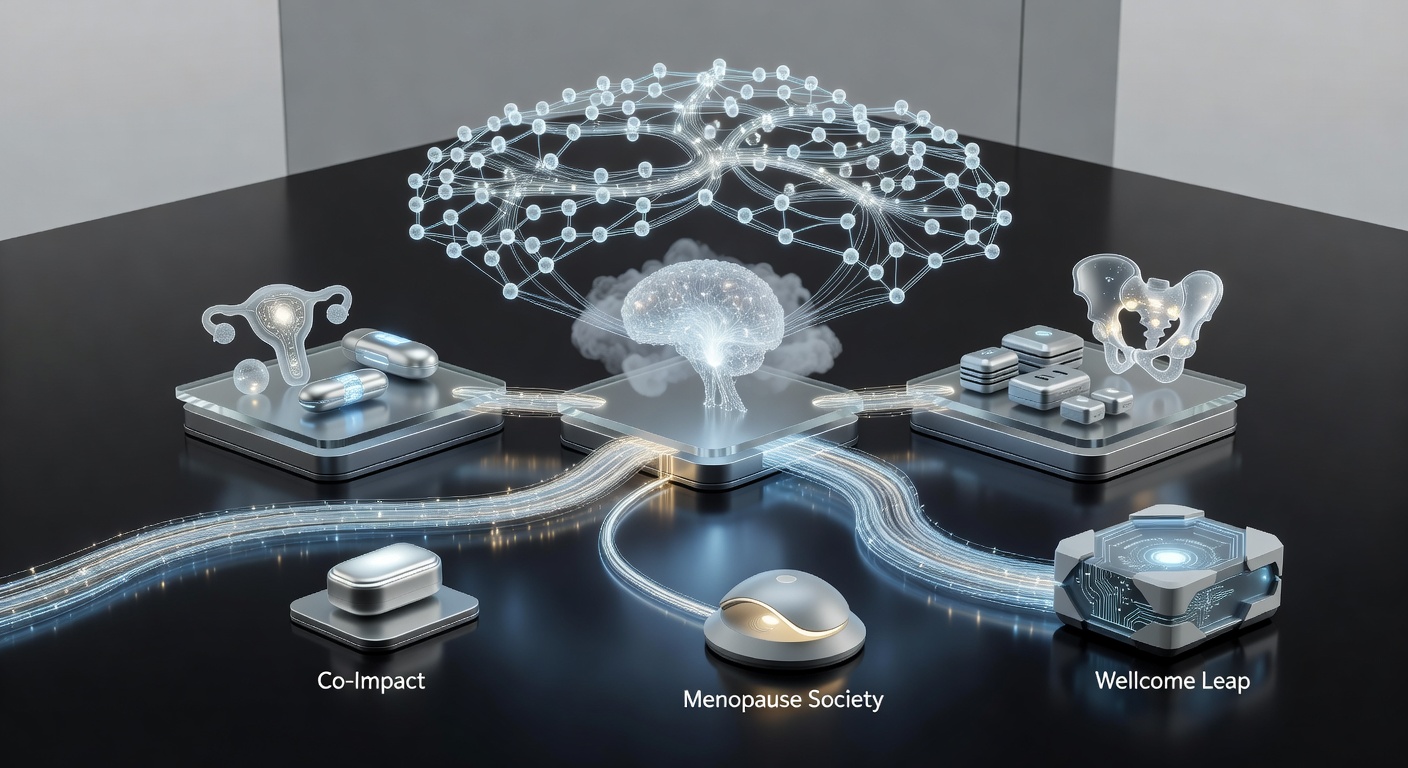
The funding splits across several partners. Pivotal is giving $40 million to Co-Impact to weave mental health support into maternal and primary care, especially across Africa. Another $10 million goes to the Menopause Society to train clinicians and expand outreach in parts of the United States where competent care barely exists. An additional $50 million supports a Wellcome Leap initiative aimed at breakthroughs in understudied midlife conditions, including heart disease in women.
These choices are deliberate. According to the World Economic Forum, women-specific health concerns capture only 2% of private health-care funding. Research budgets have historically treated the male body as the default. The result is a thin pipeline of diagnostics, treatments, and protocols tailored to female physiology. French Gates sees philanthropy’s job as illuminating those blind spots so governments and commercial players eventually follow.
“The role of philanthropy, in my opinion, is to look at some of these societal problems that have been left behind, and shine light on them, show ways of making progress so you can then crowd in other donors and ultimately crowd in government funding,” she told the AP. She hopes her moves send a clear signal. Others will join.
Menopause emerges as the clearest test of that strategy.
Dr. Stephanie Faubion, medical director of the Menopause Society and director of the Mayo Clinic’s Center for Women’s Health, described the terrain. Roughly 6,000 U.S. counties have critically low access to menopause-competent clinicians. “Menopause remains one of the most overlooked and underserved areas in medicine, and The Menopause Society believes women deserve better,” she said in the Pivotal release. The new money will scale evidence-based training and reach overlooked communities.
Faubion noted that federal research support has tightened further under recent policy changes. “I think philanthropy is going to fill a greater role than it ever has in the past because we are just not going to have the same type of government funding that we’ve had before.” Her comments appear in both the Fortune story and Pivotal materials. The size of French Gates’ gift matters. The visibility it creates may matter more.
In a separate opinion piece published the same day, French Gates wrote that women deserve better than silence around midlife transitions. She argued that society has treated perimenopause and menopause as invisible even though they touch every woman. The piece in The New York Times ties directly to the funding announcement and amplifies the same themes.
Her TIME interview adds economic and social texture. “A woman can’t step into her power if we neglect her health,” she said. She listed roles women occupy—raising children, caring for aging parents, leading companies, competing as athletes. None of them thrive when health concerns go unaddressed. “For too long, it was as if in society this was an invisible issue, and we didn’t focus on it. When in fact, all women, 50% of our population, go through it.” The interview ran in TIME.
Regina E. Dugan, CEO of Wellcome Leap, welcomed the partnership. “Some of the biggest unanswered questions in women’s health sit in areas that have gone too long without serious scientific attention. Pivotal is treating those questions as urgent, solvable, and worth backing with serious ambition.” Olivia Leland, founder and CEO of Co-Impact, stressed the value of trusting local leaders with flexible, long-term funding. Both quotes come from the Pivotal announcement.
The broader backdrop is sobering. Maternal mortality remains stubbornly high in many regions. Contraceptive access varies sharply by geography and income. Mental health services during and after pregnancy are rare in low-resource settings. Midlife cardiovascular disease in women is underdiagnosed. Each gap compounds. Poor health limits workforce participation, educational attainment, and family stability.
French Gates built Pivotal in 2015. The organization invests in ideas that expand women’s influence. After her departure from the larger Gates Foundation, she doubled down on domestic and global gender equity. This week’s announcement fits that pattern. It also responds to recent global cuts in women’s health programs. Several X posts Thursday noted the timing, with users pointing to the $215 million as a counterweight to reduced public support.
Critics sometimes question whether billionaire philanthropy can substitute for systemic public investment. French Gates does not claim it can. She positions her grants as catalysts. They demonstrate workable models. They draw attention. They test approaches that larger funders might later scale. The $10 million to the Menopause Society, for example, is modest next to the problem’s size. Its power lies in the precedent and the training infrastructure it creates.
Faubion captured the dynamic. The gift “will illuminate the gaps that are still there … and it makes people not only aware, but maybe motivated to take some action.”
French Gates has said she wants women’s health issues to stop being invisible. She rejects the assumption that women must simply endure pain and uncertainty. “I don’t want the default to be that women are expected to deal with pain and suffering. I want them to be seen for what they’re going through, their real life experiences, and have those issues addressed so they can live their very best lives.”
That ambition runs through every grant. The $215 million will not solve every shortfall. But it funds concrete programs. It trains doctors. It integrates mental health into maternal clinics. It backs ambitious research at Wellcome Leap. And it signals that one influential donor refuses to treat half the population as an afterthought.
Other funders are watching. So are governments facing budget pressure. Whether they match the pace remains uncertain. For now, the money moves. The conversation widens. And women in their reproductive years, their forties, their fifties gain another round of targeted support.
But the test will come in results. Fewer mothers lost to childbirth. More women equipped with reliable contraception. Better data on midlife heart disease. Wider availability of menopause care that actually works. French Gates has placed her bet. The coming years will show what follows.


 WebProNews is an iEntry Publication