
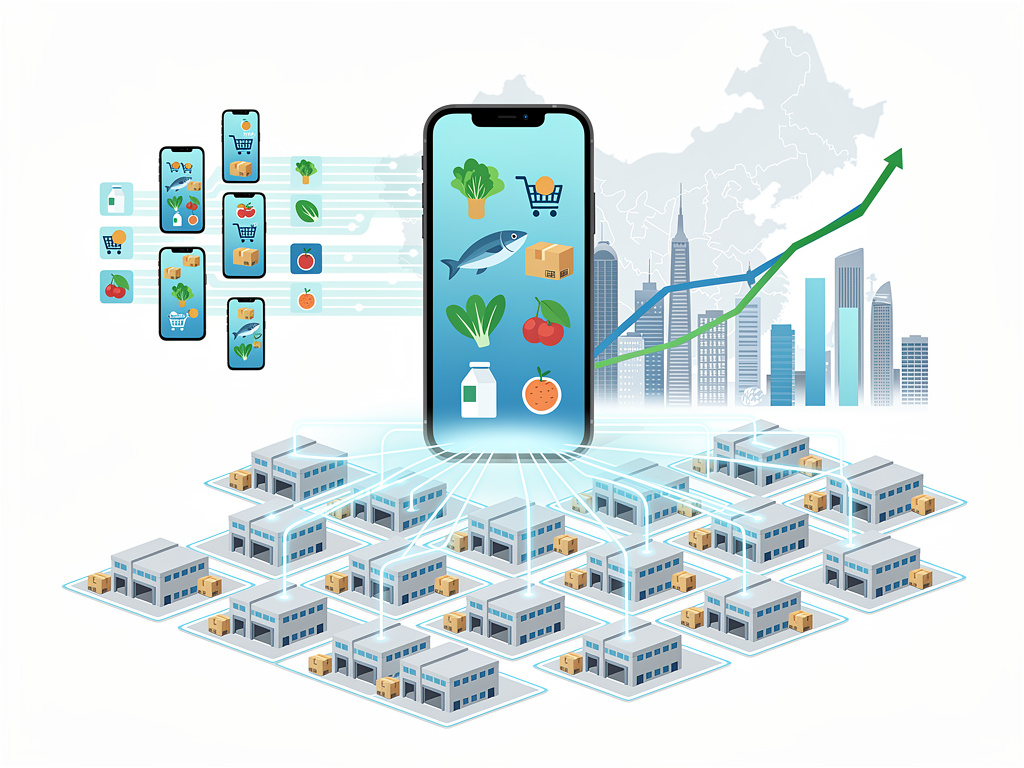
In a transaction that signals a dramatic consolidation in China’s fiercely competitive online grocery sector, Meituan — the country’s dominant food delivery and local services platform — has agreed to acquire Dingdong (Cayman) Limited’s China business for approximately $717 million in cash. The deal, announced in early 2026, will absorb a company that built its reputation on rapid delivery of fresh produce and groceries directly to consumers’ doors, and it marks one of the most significant acquisitions in Chinese e-commerce in recent years.
Dingdong, which trades on the New York Stock Exchange under the ticker DDL, confirmed the definitive agreement in a regulatory filing, noting that Meituan will purchase the entirety of its mainland China operations. According to PR Newswire, the transaction is structured as an all-cash deal and is subject to customary closing conditions, including regulatory approvals. As of September 2025, Dingdong reported more than 7 million monthly transacting users, a testament to the loyalty it had cultivated among urban Chinese consumers who prize convenience and freshness in their grocery shopping.
Why Meituan Wants Dingdong — and Why Now
Meituan’s strategic rationale for the acquisition is multifaceted. The company has spent years building out its own grocery and fresh food capabilities, including its Meituan Maicai (literally “Meituan Buy Vegetables”) community group-buying service and its Kuai Lv (flash delivery) operations. But the on-demand fresh grocery segment in China has proven notoriously difficult to crack profitably. Margins on perishable goods are razor-thin, logistics are complex, and consumer expectations for speed and quality are unforgiving. By acquiring Dingdong, Meituan gains not just a customer base but an entire operational infrastructure — including a network of front-end warehouses, proprietary supply chain technology, and deep expertise in sourcing and quality control for fresh produce.
As reported by the South China Morning Post, the deal represents Meituan’s effort to deepen its push into fresh grocery retail, a category that Chinese tech giants have long viewed as one of the last great frontiers of e-commerce. Fresh groceries account for a massive share of Chinese consumer spending — estimated at several trillion yuan annually — yet online penetration remains relatively low compared to categories like electronics or apparel. The acquisition of Dingdong positions Meituan to capture a larger slice of this enormous market by integrating Dingdong’s capabilities with its own vast delivery network and user base of hundreds of millions.
Dingdong’s Journey: From Startup Darling to Strategic Asset
Dingdong’s story is emblematic of the boom-and-bust cycle that has characterized much of China’s venture-backed consumer technology sector. Founded in 2017 in Shanghai by Liang Changlin, a serial entrepreneur, the company pioneered a model of operating small, distributed “dark warehouses” — fulfillment centers not open to the public — strategically located within residential neighborhoods to enable delivery of fresh groceries in as little as 29 minutes. The model attracted enormous investor enthusiasm, and Dingdong went public on the NYSE in June 2021, raising capital at a time when Chinese tech IPOs in the United States were still proceeding at a brisk pace.
But the years following the IPO were challenging. Dingdong, like many of its peers, burned through cash at an alarming rate as it expanded aggressively into new cities. The company faced withering competition not only from Meituan but also from Alibaba’s Freshippo (Hema), Pinduoduo’s Duo Duo Maicai, and JD.com’s grocery operations. According to Caixin Global, Dingdong had been working to narrow its losses and improve unit economics by retreating from less profitable markets and focusing on its stronghold cities, particularly Shanghai and other Yangtze River Delta metropolises. By 2024 and into 2025, the company had made meaningful progress toward profitability, which paradoxically made it a more attractive acquisition target.
The Economics of Fresh Grocery Delivery in China
The fresh grocery e-commerce sector in China has been a graveyard for capital. Over the past five years, dozens of startups and even well-funded divisions of major tech companies have scaled back or shut down their fresh food delivery operations. The fundamental challenge is one of economics: fresh produce is heavy, perishable, and low-margin. Customers expect perfection — a bruised apple or a wilted lettuce leaf can destroy trust. And the logistics of maintaining cold-chain integrity from farm to warehouse to doorstep require significant capital investment in infrastructure and technology.
Dingdong’s model, which relied on a dense network of front-end warehouses each serving a small radius, was capital-intensive but offered superior speed and quality control compared to alternatives. The company invested heavily in its own supply chain, including direct sourcing relationships with farms and fisheries, proprietary quality inspection systems, and even its own line of prepared meals and private-label products. As of its most recent disclosures, Dingdong operated hundreds of front-end warehouses across major Chinese cities, each stocked with thousands of SKUs. The company’s more than 7 million monthly transacting users as of September 2025, as noted in its regulatory filings cited by PR Newswire, demonstrated that the model could generate meaningful consumer engagement, even if profitability remained elusive at scale.
What the Deal Means for Meituan’s Competitive Position
For Meituan, the acquisition is as much about defense as it is about offense. The company’s core food delivery business, while dominant, faces slowing growth as the market matures. Grocery delivery represents a natural adjacency — the same riders who deliver restaurant meals can, in theory, deliver groceries, and the same app that consumers use to order dinner can be used to order tomorrow’s breakfast ingredients. But the operational requirements are fundamentally different, and Meituan’s own efforts in grocery have produced mixed results.
By absorbing Dingdong’s operations, Meituan acquires a proven playbook for managing the complexities of fresh food logistics. The South China Morning Post reported that the deal will allow Meituan to integrate Dingdong’s warehouse network and supply chain expertise into its broader ecosystem, potentially achieving synergies in areas like delivery fleet utilization, supplier negotiations, and technology development. The combined entity would have a formidable presence in China’s wealthiest and most densely populated urban markets — precisely the areas where on-demand grocery delivery is most viable.
Regulatory and Market Implications
The transaction will require regulatory approval from Chinese authorities, who have in recent years taken a more interventionist stance toward major technology deals. China’s State Administration for Market Regulation (SAMR) has blocked or imposed conditions on several high-profile acquisitions in the tech sector since 2021, and any deal involving a company of Meituan’s size will receive scrutiny. However, analysts have noted that the current regulatory environment appears somewhat more accommodating than it was during the peak of the tech crackdown in 2021-2022, and the deal’s relatively modest size — $717 million is significant but not transformative for a company of Meituan’s market capitalization — may reduce the likelihood of regulatory complications.
For Dingdong’s shareholders, the deal offers a path to liquidity at a time when the company’s NYSE-listed shares had traded well below their IPO price. The all-cash nature of the transaction provides certainty of value, which is particularly important given the broader challenges facing Chinese companies listed in the United States, including ongoing audit inspection disputes and the persistent threat of delisting. Caixin Global noted that the sale of Dingdong’s China business effectively represents the disposal of the company’s core operating assets, raising questions about the future of the listed entity post-transaction.
The Broader Consolidation Trend in Chinese E-Commerce
The Meituan-Dingdong deal does not exist in isolation. It is part of a broader wave of consolidation sweeping through China’s technology and e-commerce sectors, driven by a combination of slowing growth, investor pressure for profitability, and regulatory encouragement of what Beijing calls “healthy development” of the platform economy. In recent months, several other notable transactions have reshaped the competitive dynamics of Chinese tech, and industry observers expect more deals to follow as smaller players struggle to compete independently against well-capitalized incumbents.
For consumers, the consolidation may bring both benefits and risks. On one hand, a combined Meituan-Dingdong operation could offer a more seamless and comprehensive grocery shopping experience, with better selection, faster delivery, and potentially lower prices driven by supply chain efficiencies. On the other hand, reduced competition could eventually lead to less innovation and higher prices if dominant players face insufficient competitive pressure. The outcome will depend in large part on how aggressively rivals like Alibaba, JD.com, and Pinduoduo continue to invest in their own grocery operations.
What Comes Next for the Combined Entity
The integration of Dingdong into Meituan’s ecosystem will be a complex undertaking. The two companies have different corporate cultures — Dingdong was a scrappy, founder-led startup; Meituan is a publicly traded giant with a market capitalization in the tens of billions of dollars. Merging their technology platforms, warehouse operations, supplier relationships, and delivery fleets will require careful execution. History is littered with examples of acquisitions that looked compelling on paper but failed to deliver expected synergies due to integration challenges.
Yet the strategic logic is compelling. Meituan’s ambition is to become the indispensable platform for all of Chinese consumers’ local spending needs — from restaurant meals to movie tickets to hotel bookings to, now, fresh groceries. The acquisition of Dingdong, with its 7 million-plus monthly transacting users and deep expertise in fresh food logistics, brings that vision meaningfully closer to reality. Whether Meituan can execute on the promise of this $717 million bet will be one of the most closely watched stories in Chinese technology in the months and years ahead.


 WebProNews is an iEntry Publication