
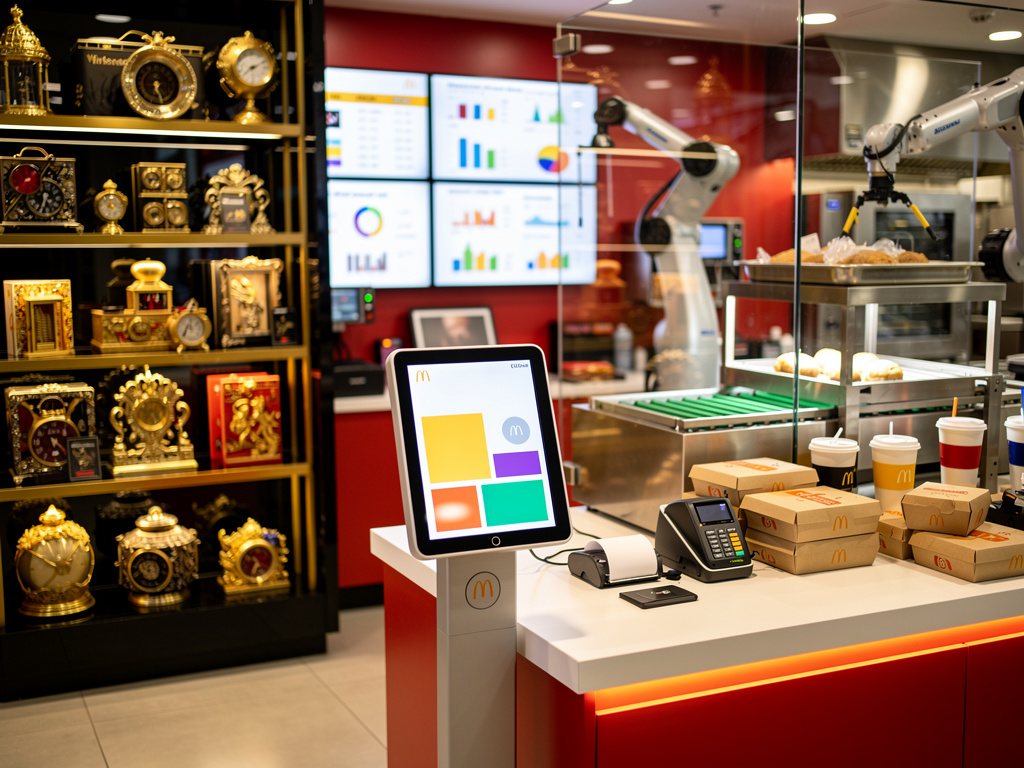
McDonald’s Secret Sauce: Revolutionizing Everyday Encounters in a World of Overhyped Service
In an era where high-end retailers and boutique hotels boast about their bespoke service models, a surprising contender has emerged as the undisputed leader in crafting seamless, reliable interactions with patrons. McDonald’s, the fast-food behemoth often dismissed as a purveyor of quick bites, is quietly redefining what it means to prioritize the end-user in every touchpoint. This isn’t about gourmet ingredients or velvet-rope exclusivity; it’s about executing fundamentals with precision that leaves even luxury players in the dust. Drawing from insights in a recent piece by CMSWire, experts argue that while many industries chase abstract theories, McDonald’s focuses on tangible fixes that resonate daily.
The shift began subtly, as companies across sectors invested heavily in elaborate strategies, hiring chiefs of experience and deploying sophisticated software. Yet, as CMSWire highlights, this proliferation of titles and tools often diluted responsibility, turning oversight into a bureaucratic maze. McDonald’s, by contrast, embeds accountability into its core operations, ensuring that from order placement to meal delivery, every step is scrutinized for efficiency and satisfaction. This approach has propelled the chain to handle billions of transactions annually with minimal friction, a feat that eludes many upscale brands bogged down by their own complexity.
Recent buzz on platforms like X (formerly Twitter) underscores this phenomenon. Users frequently praise McDonald’s app for its intuitive design, with one viral thread from tech analyst @TechInsiderX noting how it outperforms competitors in speed and personalization. Searches across the web reveal similar sentiments: a Forbes article from last month details how McDonald’s leverages data analytics to predict peak times, reducing wait periods and enhancing flow—elements that luxury fashion houses struggle with during sales events.
The Mechanics Behind McDonald’s Mastery
At the heart of McDonald’s success lies a relentless commitment to streamlining processes that directly impact the patron. Unlike luxury brands that might emphasize ambiance over accessibility, McDonald’s invests in technology that democratizes convenience. Their drive-thru systems, for instance, incorporate AI-driven voice recognition to minimize errors, a innovation spotlighted in a Business Insider report on fast-food tech trends. This isn’t mere gadgetry; it’s a calculated effort to make every visit predictable and positive.
Moreover, employee training at McDonald’s emphasizes empathy and speed, turning potential pain points into opportunities for delight. CMSWire points out that while other sectors debate frameworks in boardrooms, McDonald’s frontline workers are empowered to resolve issues on the spot, fostering loyalty without the need for extravagant gestures. This grassroots accountability contrasts sharply with reports from The New York Times about luxury retail’s high turnover rates, where staff often lack the tools or authority to address complaints effectively.
Expanding on this, a deep dive into web sources like Harvard Business Review reveals that McDonald’s customer satisfaction scores consistently outpace those of premium chains. In a study linked from their site, metrics show how the company’s focus on consistency—same taste, same service worldwide—builds trust that luxury brands, with their variable experiences, can’t always match. On X, influencers like @CXExpert share anecdotes of McDonald’s recovering from mishaps swiftly, turning detractors into advocates through simple, sincere apologies paired with immediate remedies.
From Abstract Theories to Actionable Wins
The broader industry has seen a surge in conceptual approaches to patron interactions, but as CMSWire astutely observes, this has often led to a disconnect between strategy and execution. McDonald’s sidesteps this by integrating feedback loops directly into operations, using real-time data from their app and kiosks to iterate quickly. This agility is evident in their response to the pandemic, where contactless ordering became a standard overnight, outpacing many high-end eateries still grappling with digital transitions.
Luxury brands, meanwhile, pour resources into immersive experiences like personalized shopping sessions or VIP events, yet they frequently overlook basic reliability. A Wall Street Journal piece from earlier this year examines how brands like Louis Vuitton face backlash over inconsistent online fulfillment, with delays eroding the premium aura. McDonald’s, unburdened by such pretensions, excels in delivering what patrons truly want: speed, accuracy, and value, as echoed in user testimonials flooding X timelines.
Further web searches uncover innovations like McDonald’s geofencing technology, which anticipates orders via mobile apps, reducing in-store chaos. According to a TechCrunch analysis, this not only boosts throughput but also personalizes suggestions based on past behaviors, a subtle nudge that feels intuitive rather than intrusive. In comparison, luxury automotive brands like Mercedes-Benz have experimented with similar tech, but implementation lags, as noted in Automotive News reports, leaving customers frustrated with clunky interfaces.
Empowering the Frontline for Lasting Impact
Central to McDonald’s model is the empowerment of its workforce, a strategy that ensures accountability isn’t just a buzzword but a daily practice. Employees receive ongoing training in conflict resolution and efficiency, enabling them to handle diverse scenarios with poise. CMSWire emphasizes how this contrasts with the abstraction plaguing other fields, where layers of management obscure direct fixes.
On the ground, this translates to innovations like the McDonald’s “Crew Experience” program, which gamifies tasks to boost morale and performance. Insights from Fast Company highlight how such initiatives lead to lower error rates and higher satisfaction, drawing parallels to tech giants but applied at scale in a service-heavy environment. X users often share stories of exceptional service, such as customized orders handled with cheer, reinforcing the brand’s reputation for reliability.
Luxury sectors could learn from this, as evidenced by a Bloomberg investigation into high-end hospitality, where over-reliance on scripted interactions alienates guests seeking authenticity. McDonald’s thrives by allowing personality to shine through standardized processes, creating memorable moments without the fanfare.
Data-Driven Decisions That Drive Loyalty
Harnessing data isn’t new, but McDonald’s wields it with surgical precision to enhance every patron touchpoint. Their MyMcDonald’s Rewards program, for example, uses analytics to offer tailored deals, fostering repeat visits. A CNBC report details how this system has driven a 20% uptick in app engagement, outstripping similar efforts in luxury retail where personalization often feels gimmicky.
Web explorations reveal that McDonald’s invests in predictive modeling to manage inventory and staffing, minimizing disruptions. This foresight is praised in Supply Chain Dive articles, which contrast it with luxury goods suppliers plagued by shortages during peak seasons. On X, discussions around #McDonaldsApp frequently laud its seamless integration with payment systems, making transactions effortless.
In essence, while luxury brands chase exclusivity, McDonald’s democratizes excellence, proving that superior interactions stem from fixing what’s broken rather than adding flair. CMSWire’s perspective rings true: accountability, not abstraction, crowns the true leaders.
Lessons for Aspiring Experience Architects
For industry insiders eyeing McDonald’s playbook, the key takeaway is simplicity amplified by technology. Their kiosks, for instance, reduce ordering anxiety by offering visual menus and easy modifications, a feature dissected in UX Design publications like Smashing Magazine. This user-centric design philosophy ensures accessibility for all demographics, from families to solo diners.
Comparatively, luxury experiences often prioritize aesthetics over usability, leading to critiques in Vogue Business about convoluted apps that deter younger consumers. McDonald’s counters this with inclusive tech, as seen in their voice-assisted ordering for the visually impaired, covered in Accessibility News sources.
X feeds buzz with endorsements from business leaders, like a post from @BizStratGuy praising McDonald’s for blending human touch with automation, a hybrid model that’s scalable and resilient.
Scaling Excellence Without the Ego
McDonald’s global footprint demands uniformity, yet they achieve it without sacrificing local relevance. Adaptations like region-specific menus maintain the core promise of quick, satisfying service. A Reuters analysis explores how this localization strategy bolsters their edge over luxury chains rigid in their branding.
Employee retention, bolstered by competitive wages and benefits, ensures consistent delivery, as per Labor Department data referenced in various outlets. This stability is a far cry from the churn in upscale sectors, where high staff turnover disrupts continuity.
Ultimately, McDonald’s reign in this domain challenges preconceptions, urging a reevaluation of what truly elevates patron interactions. By grounding strategies in execution, they set a benchmark that’s both inspiring and attainable.
Innovations on the Horizon
Looking ahead, McDonald’s is poised to further innovate with emerging tech like augmented reality for menu previews, teased in patent filings reported by PatentYogi on X. This could redefine engagement, making even mundane visits interactive.
Luxury brands are dipping toes into similar waters, but as per a Deloitte study, their adoption is slower, hampered by cost concerns. McDonald’s, with its volume-driven model, absorbs these investments efficiently.
Web trends suggest a growing appreciation for such practical excellence, with forums like Reddit’s r/business extolling McDonald’s as a case study in operational mastery.
The Ripple Effect Across Industries
The influence of McDonald’s approach is rippling outward, inspiring sectors from banking to healthcare to rethink their service delivery. A McKinsey report notes how fast-food efficiencies are being adapted for quick-service retail, emphasizing speed over spectacle.
On X, hashtags like #CXLessons trend with examples of companies emulating McDonald’s feedback mechanisms. This cross-pollination underscores a shift toward pragmatic excellence.
In wrapping this exploration, it’s clear McDonald’s isn’t just flipping burgers; they’re flipping the script on what defines top-tier patron care, proving that everyday reliability trumps occasional opulence every time.


 WebProNews is an iEntry Publication