
A man in his 20s walked into an eye clinic in Edinburgh one day last year complaining of new floaters and occasional flashes of light in his right eye. The symptoms had built over six days. He denied any recent head trauma. No family history of eye problems. Just mild myopia that required glasses. His vision tested 6/6 in both eyes. Pressures normal. Nothing seemed obviously wrong at first glance.
But when doctors pressed a lens against his sclera and looked deeper, the damage came into focus. Multiple retinal tears. Widespread commotio retinae – that telltale whitening from blunt force bruising the delicate tissue. And in the right eye, something rarer: a retinal dialysis, a clean circumferential break at the ora serrata. The left eye showed similar bruising plus six small horseshoe tears. Serious injuries. The kind that can quietly progress to full detachment and permanent vision loss if ignored.
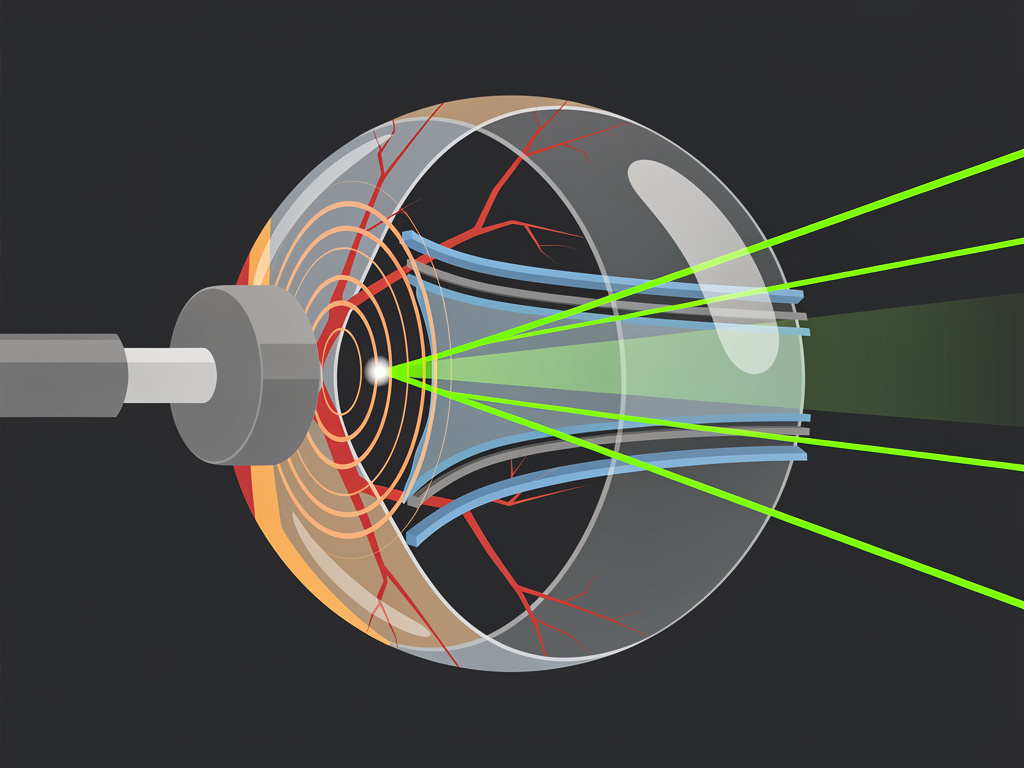
The clinicians asked again. Any blows to the head? Any odd accidents? The patient hesitated. Then he admitted it. For three months he had taken a percussive massage gun – the kind with a small bullet-shaped head – and applied it directly to his eyelids and around both orbits. Several minutes at a time, every week. All to chase away the tired feeling in his eyes.
BMJ Case Reports published the details this month. Authors Niamh O’Connell and Ashraf Khan called it the first documented link between massage gun use and this exact combination of bilateral retinal tears plus dialysis. “High-frequency percussive massage guns can cause dangerous ocular complications if used improperly,” they wrote. The case stands as a stark reminder that consumer devices sold for muscle relief carry real mechanical power.
Percussive guns fire rapid, concentrated pulses. On soft tissue like a calf or shoulder they can ease knots and improve blood flow. Pressed against an eyeball they do something far different. The globe compresses. It deforms. The sudden back-and-forth motion generates shearing forces at the retina’s fragile attachments. In this patient the repeated impacts likely drove the dialysis at an unusual superior temporal location rather than the more common inferotemporal spot seen after a fist to the orbital rim.
O’Connell and Khan noted the anatomy. Retinal dialysis remains attached to the vitreous base at its posterior edge, unlike a standard tear. Left alone it carries an 8 to 15 percent chance of progressing to rhegmatogenous detachment. This young man presented early. That timing mattered.
Doctors treated every identified break and tear with barrier laser photocoagulation. The dialysis received additional sealing. Six months later the retina stayed stable. No progression. No cataract. Vision preserved. “This favourable outcome was likely due to the patient’s prompt presentation soon after noticing symptoms and the immediate initiation of treatment,” the authors observed. Good judgment after a questionable decision.
The case is not entirely isolated. Earlier reports have catalogued other eye injuries from similar devices. A 2022 paper described lens subluxation and acute angle-closure glaucoma after repeated use around the eye. Another documented bilateral traumatic cataract with iris atrophy. A separate instance produced profound vision impairment. Yet the current report marks the first time researchers have tied percussive therapy directly to this pattern of multiple tears and dialysis across both eyes.
Ars Technica covered the story within hours of wider pickup, quoting the original report and underscoring how quickly the eyeballs can squish outward under repeated compression. Beth Mole’s piece captured the blunt reality: the therapy that feels soothing to sore muscles can demonstrably wreck ocular structures.
Consumer popularity of these guns has surged. They sit on nightstands and in gym bags worldwide. Most instructions carry some caution about avoiding the head and neck. Few highlight the eyes with the force this case demands. The Scottish patient told doctors he never saw any explicit ocular warning. He bought the device commercially and used it without guidance.
So what should manufacturers do? The authors urge clearer labeling. Bold warnings against any contact with the eyelids or orbit. They also push clinicians to probe deeper when retinal findings appear without obvious trauma. Patients can be “hesitant historians,” especially when the behavior seems embarrassing. Repeated, specific questions about unusual habits or devices often surface the missing piece.
Eye specialists already counsel against rubbing eyes vigorously or using any high-velocity tool near them. This episode sharpens that advice. The vibrations travel through the globe like shock waves. They stress the vitreous base, the zonules, the retina itself. Even short sessions repeated over weeks accumulate enough force to tear tissue.
Public reaction on social platforms has been equal parts disbelief and dark humor. Recent posts on X mocked the idea of anyone pressing a powered massage head against their own eyeballs. Yet the underlying pattern – people chasing quick relief for digital eye strain or fatigue – feels familiar in an age of constant screens.
MedPage Today ran its own analysis days after the BMJ publication. It walked through the exact findings: superior temporal dialysis explained by direct anterior application, the six horseshoe tears, the commotio retinae visible on wide-field imaging. The outlet stressed that while most users will never experience this, the risk sits higher than previously documented. One expert quoted in related coverage called for better safety data on the entire product category.
MedPage Today also noted the broader literature gap. Only a handful of ocular injury reports exist despite millions of units sold. Rhabdomyolysis after aggressive muscle use appears in one isolated paper. Eye complications remain rarer still. That scarcity may explain why warnings have stayed understated.
Back in the clinic the young man recovered well. His retinas hold. Floaters may linger as a lifelong souvenir. The experience likely cured any temptation to repeat the experiment. For the rest of the population the lesson lands differently. Tired eyes call for rest, proper lighting, the 20-20-20 rule. Not a powered percussive device designed for quadriceps.
Ophthalmologists now face a new question in routine exams. When patients present with unexplained retinal breaks, the differential must expand beyond trauma, high myopia, and lattice degeneration. Add “percussive massage gun” to the list of things worth asking about twice. The answer might arrive reluctantly. But it can prevent misdiagnosis and speed the laser that keeps vision intact.
The devices themselves will not disappear. Their appeal is obvious: instant relief, no appointment needed. What must change is the conversation around safe zones of use. Manufacturers can print clearer contraindications. Retailers can post notices. Doctors can share this case in waiting rooms and on patient portals. A single published report rarely shifts behavior on its own. Yet when the injury is this vivid – retinal dialysis from a consumer toy – the story tends to stick.
Six months out the Scottish student’s eyes remain quiet. No new tears. No detachment. A narrow escape born of quick action after months of risky habit. Others may not be so fortunate. The next patient might wait longer before seeking care. Or the dialysis might sit in a harder-to-reach spot. Or the force might prove just a bit greater.
So the caution stands. Keep the massage gun on muscles. Far from the eyes. The orbit is no place for rapid pulses of pressure. The retina pays too high a price.


 WebProNews is an iEntry Publication