
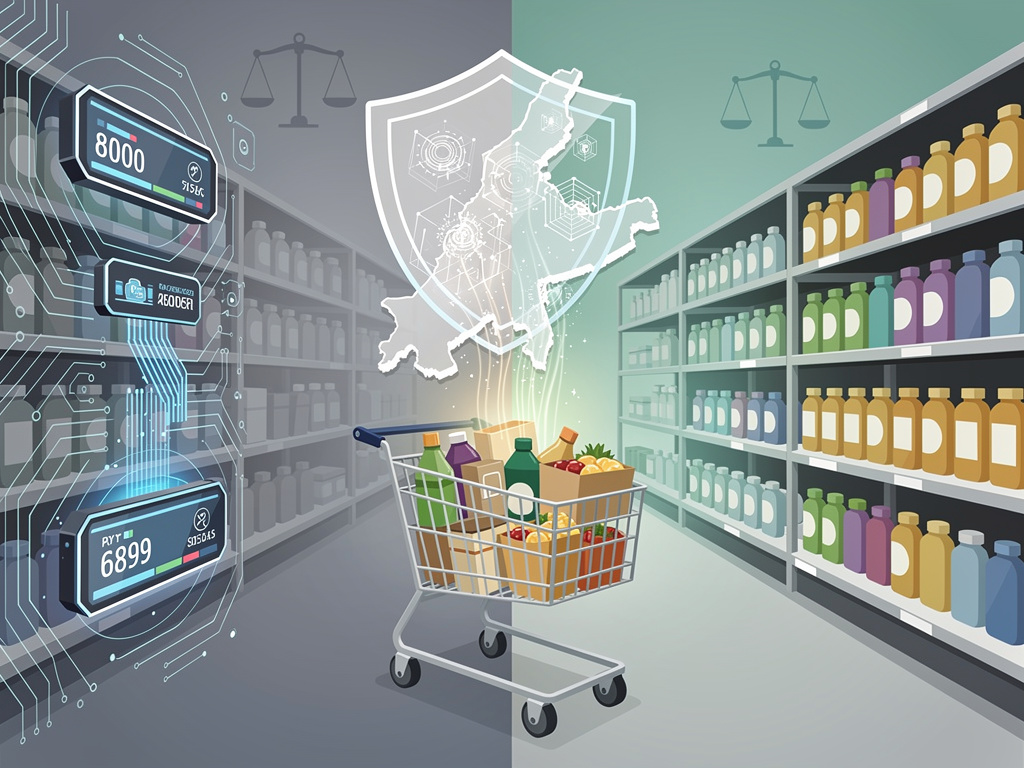
Maryland just became the first state to outlaw a pricing tactic that many shoppers never notice. The Protection From Predatory Pricing Act, signed into law by Governor Wes Moore, bars food retailers and third-party grocery delivery services from using personal consumer data to set individualized higher prices. The measure takes effect October 1, 2026. But industry insiders already question how much it will change daily operations at stores run by Walmart, Kroger and others racing to deploy electronic shelf labels and advanced analytics.
The law targets what critics call surveillance pricing. Retailers gather details on shopping habits, location, income estimates, even time of day or weather. They feed those signals into algorithms. The result can be a price that shifts not just with overall demand but with assumptions about what a specific buyer will tolerate. One bag of rice might cost one household more than the next. All for the same item at the same moment.
Governor Moore framed the issue in stark terms. He said companies use “new technologies to drive up the bill for working families.” A legislative release echoed the point. “The cost of basic household goods could surge based on the time of day, the weather, or granular consumer data, allowing stores to calibrate price increases to extract maximum profits on the backs of consumers.” The message landed with voters squeezed by food inflation long after broader price spikes eased.
Yet the final statute carries compromises that blunt its reach. Exemptions cover loyalty programs, promotional offers, subscription services and even broad customer segments. No baseline price is defined. Anything can be framed as a discount. Enforcement rests solely with the state attorney general. No private right of action exists for consumers. And the ban applies only to food retailers, leaving airlines, apparel sellers and countless other sectors untouched.
Consumer Reports pushed hard for the bill but voiced disappointment once amendments passed. Senior policy analyst Grace Gedye said the final version “has too many industry-friendly loopholes and weak enforcement provisions. It won’t protect Marylanders from surveillance pricing.” The group urged lawmakers to return next year with tighter rules. The Maryland Retail Alliance, which represents grocers, dropped its opposition after those carve-outs appeared. The balance reflects classic tension between consumer protection and operational flexibility.
Walmart has rolled out digital price tags across many locations with plans to finish the national conversion this year. The electronic shelf labels let managers update costs through a mobile app in seconds. No more paper stickers. No more overnight resets. Pair the hardware with predictive software and the potential for rapid adjustment grows. Walmart has stated it will not use the technology for individualized dynamic pricing. Still, the infrastructure raises flags for regulators and unions. Ademola Oyefeso, vice president at the United Food and Commercial Workers International Union, warned about patents Walmart holds on AI-driven systems. He compared the future to an old cartoon. “The computer tells me what to do. I push a button, and then I’ve just raised the price on milk and eggs for the whole nation.”
Data collection adds another layer. A Kroger shopper in Oregon once requested her profile under privacy rules and received 62 pages of inferences. Many were inaccurate. Retailers build these profiles anyway. They guess at family size, dietary needs, price sensitivity. The Maryland law prohibits using such personal data or protected class information to charge some customers more than others for the same goods. But proving intent or effect could prove difficult without stronger tools.
The statute builds on the state’s 2024 Online Data Privacy Act. Violations count as unfair or deceptive trade practices under the Maryland Consumer Protection Act. Civil penalties start at $10,000. That threat might deter the most blatant experiments. Yet retailers already adjust prices by zip code, by store format, by time of day in ways that skirt individual tracking. The line between legitimate demand management and prohibited surveillance remains fuzzy.
Advocates see the measure as a necessary start. They point to broader trends. Airlines have fine-tuned fares for years using personal and behavioral data. Ride-sharing apps surge prices in real time. Now grocery, a category once considered stable, joins the list. Shoppers expect consistent shelf prices. When those numbers flicker based on unseen signals, trust erodes. But so does retailer margin discipline if they cannot respond to competitors or local conditions.
Investors took note. Coverage from Simply Wall St on May 6, 2026 highlighted how the Maryland rules put Walmart’s data practices under fresh scrutiny. The retailer’s heavy investment in digital systems and analytics now carries regulatory risk in at least one key market. Other states may follow. California, New York and Massachusetts have shown interest in similar consumer pricing issues. A patchwork of rules could complicate national rollouts of electronic labels and pricing engines.
Retail executives argue the technology delivers efficiency gains that ultimately help consumers. Automated tags reduce labor spent on manual changes. Real-time data can prevent stockouts or clear slow movers. Loyalty programs, explicitly exempted, often deliver lower prices to frequent buyers. Banning their use in certain contexts might remove incentives that drive volume. The Maryland Retail Alliance made exactly those points during negotiations.
Still, the union perspective cuts differently. Oyefeso described the risk of surge pricing on essentials. “You shouldn’t be allowed to do that. That’s basically surge pricing. Imagine surge pricing on food, on things you need. They charge me more for milk, or it’s going to be sunny tomorrow, they’d start charging me more for ice cream.” The image sticks. Milk and eggs are not concert tickets. Families buy them regardless of momentary price spikes.
Legal experts expect challenges. Retail groups may test the definition of “personal data” or “dynamic pricing” in court. The law defines dynamic pricing as offering a personalized price specific to a consumer based on personal data. Proving a price was set that way, rather than by broader market factors, will require discovery and technical expertise. The attorney general’s office already juggles antitrust, privacy and consumer fraud cases. Resources matter.
Technology vendors stand to gain or lose. Companies selling electronic shelf label systems to grocers now face compliance questions in Maryland. Software firms that specialize in personalization algorithms must adapt their grocery offerings or risk losing customers in the state. The ban could slow adoption of the most aggressive features even as hardware deployment continues.
Shoppers themselves hold some power. They can avoid apps that track too closely, skip loyalty programs if prices seem manipulated, or simply buy less when costs feel unpredictable. But those choices impose their own friction. And many lower-income families lack the time or digital literacy to game the system. The law aims to level that field. Whether it succeeds depends on enforcement vigor and future legislative fixes.
Maryland’s move arrives at a moment of national debate over data, pricing power and corporate technology. The Federal Trade Commission has examined personalized pricing across sectors. Academics debate its net effect on consumer welfare. Some studies suggest overall prices fall when retailers can segment markets efficiently. Others show certain groups, often the less savvy or less affluent, pay more. The data remains contested.
For now, the statute sends a signal. States will not wait for federal action on every consumer technology issue. Grocery, because it touches daily budgets so directly, offered an accessible target. Other categories may prove harder to regulate. But the precedent exists. Retailers that once viewed dynamic pricing as an internal optimization tool must now treat it as a compliance concern in at least one jurisdiction.
The coming months will reveal how aggressively Maryland enforces the new rules and whether other states copy the approach with fewer exemptions. Walmart, Kroger and their suppliers will adjust systems, update policies and likely lobby quietly for consistency. Consumers may notice little immediate difference at checkout. Yet the conversation about what stores can know, and how they can use that knowledge to set prices, has permanently shifted. The technology will keep advancing. The question is whether policy can keep pace without stifling legitimate innovation or burdening the very families it seeks to protect.


 WebProNews is an iEntry Publication