
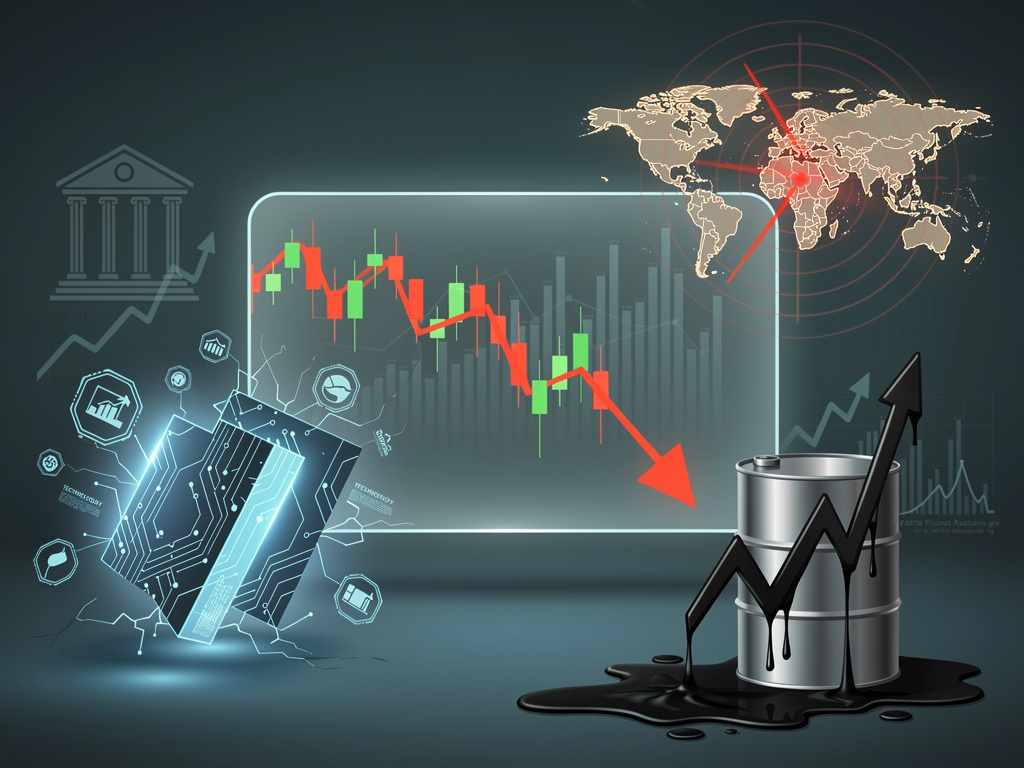
The stock market opened March under pressure from multiple directions — a mixed February jobs report, sliding oil prices, and escalating geopolitical tension with Iran. None of these forces alone would be enough to spook Wall Street. Together, they’re creating a volatile cocktail that has traders recalibrating their positions and reassessing where the economy is actually headed.
The February jobs report, released by the Bureau of Labor Statistics, came in with numbers that satisfied almost nobody. Hiring wasn’t weak enough to guarantee imminent Federal Reserve rate cuts. It wasn’t strong enough to signal a roaring economy either. The result: a market caught between narratives, unsure whether to price in resilience or deterioration. As Business Insider reported, the data landed in a frustrating gray zone for investors who have spent months trying to read the Fed’s next move.
Nonfarm payrolls showed job gains that were roughly in line with expectations, but revisions to prior months told a softer story. The unemployment rate ticked slightly higher. Wage growth, meanwhile, showed signs of cooling — a data point the Fed watches obsessively as it tries to gauge whether inflation is truly on the retreat. For markets, the takeaway was ambiguity. And ambiguity breeds volatility.
Then there’s oil.
Crude prices have been sliding, driven partly by expectations of increased supply and partly by demand concerns tied to a slowing global economy. Brent crude dropped meaningfully, pulling energy stocks lower and raising fresh questions about the health of international trade and manufacturing. Cheaper oil is generally good for consumers and bad for energy companies, but the speed of the decline has some analysts worried it’s signaling something deeper — a broader economic slowdown that hasn’t fully shown up in other indicators yet.
The Iran factor adds a layer of unpredictability that markets can’t model.
Tensions between the United States and Iran have ratcheted up again, with rhetoric sharpening on both sides. The situation introduces a geopolitical risk premium that cuts in the opposite direction of the oil supply story. If conflict escalates, oil prices could snap back violently. If diplomacy holds, the bearish trend in crude could accelerate. Traders are being forced to price in two contradictory scenarios simultaneously. That’s not easy. It’s not fun either.
According to Business Insider’s coverage, the combination of these factors sent major indices lower in early trading, with the S&P 500 and Nasdaq both giving back recent gains. Tech stocks, which had been carrying the market through much of the year, showed particular vulnerability. Growth names tend to suffer most when uncertainty rises because their valuations depend heavily on future earnings projections — projections that become harder to trust when the macro picture is this murky.
The bond market offered its own commentary. Treasury yields dipped as investors moved into safer assets, a classic flight-to-quality response. The 10-year yield fell, suggesting bond traders are more worried about economic weakness than inflation at this point. That’s a meaningful signal. For months, the dominant concern on Wall Street was sticky inflation keeping rates elevated. Now the pendulum is swinging toward growth fears.
So where does the Fed land? That’s the trillion-dollar question. Chair Jerome Powell and his colleagues have been adamant about needing more data before committing to rate cuts. The February jobs report doesn’t give them a clear reason to act in either direction. Markets are still pricing in cuts later this year, but the timing keeps getting pushed around. Fed funds futures show shifting probabilities almost daily, a reflection of just how uncertain the path forward really is.
Energy sector losses were among the steepest on the day. ExxonMobil, Chevron, and other major producers fell alongside crude prices. But the damage wasn’t confined to energy. Financial stocks also slipped, weighed down by the flattening yield curve and concerns that a weaker economy could mean more loan defaults. Industrials took a hit too, sensitive as they are to global demand signals.
Not everything was red. Defensive sectors like utilities and consumer staples held up relatively well, which is exactly what you’d expect when fear starts creeping in. Gold ticked higher. The VIX — Wall Street’s so-called fear gauge — rose, though it didn’t spike to crisis levels.
For industry professionals watching these moves, the key question isn’t whether any single data point is catastrophic. None of them are. The question is whether the accumulation of negative signals — softening jobs data, falling oil, geopolitical risk — starts to feed on itself. Confidence is fragile. Consumer spending, which has been the backbone of the US economy, depends on people feeling secure about their employment and financial prospects. If that confidence erodes, the soft-landing scenario the Fed has been engineering gets a lot harder to pull off.
There’s also the matter of corporate earnings. First-quarter earnings season is approaching, and analysts will be watching guidance closely. Companies that flag weakening demand or margin pressure could amplify the current anxiety. Conversely, strong results from major players could stabilize sentiment. But that’s weeks away, and markets have to get through March with the data they have now.
The broader context matters too. This market has been on a remarkable run, powered by AI enthusiasm and expectations of monetary easing. Valuations are stretched by historical standards, particularly in tech. That doesn’t mean a crash is coming — stretched valuations can persist for a long time. But it does mean there’s less margin for error. Bad news hits harder when stocks are priced for perfection.
What professionals should be tracking in the coming days: any escalation in US-Iran tensions, weekly jobless claims data for signs the labor market is deteriorating faster than the monthly report suggested, and Fed commentary. Several FOMC members are scheduled to speak, and their tone will matter. If they lean dovish, markets could stabilize. If they maintain the “higher for longer” stance, expect more selling pressure.
One more thing. Oil’s direction will be telling. If crude stabilizes or bounces on geopolitical fears, energy stocks recover and the broader market might find a floor. If oil keeps falling despite Middle East tensions, that’s a genuinely bearish signal about global demand — and one the market won’t be able to ignore for long.
March is shaping up to be a test. Not a crisis. A test.


 WebProNews is an iEntry Publication