
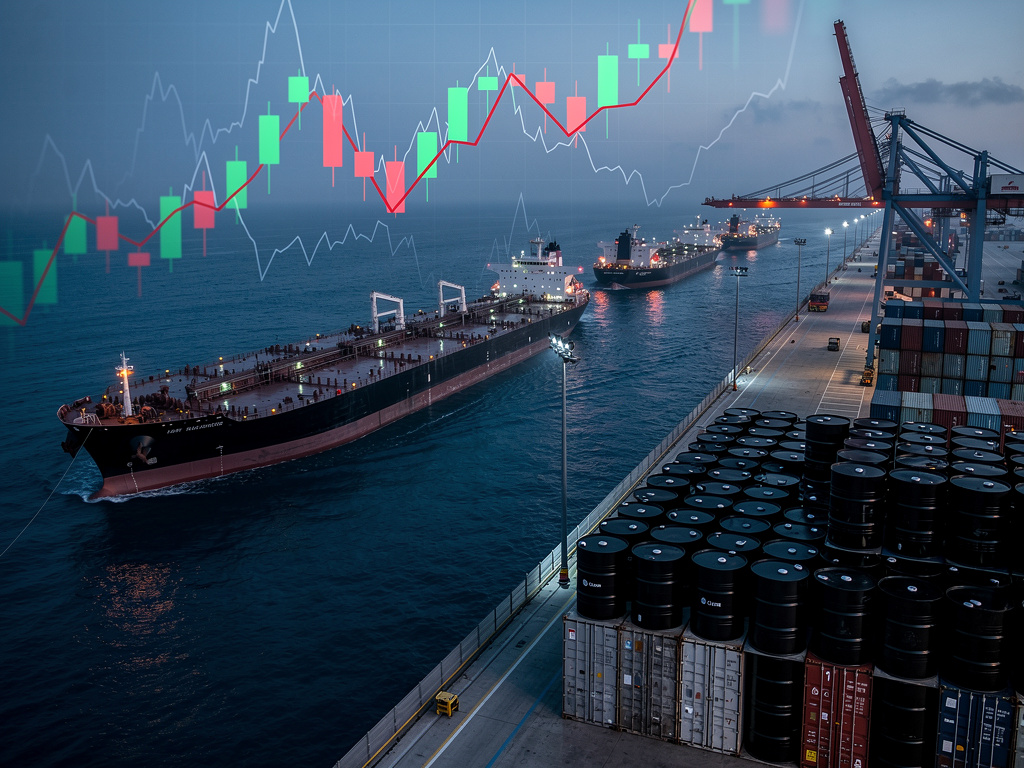
Oil prices hover near $104 a barrel. Stocks set fresh records one day. They pause the next. This pattern has defined trading for weeks. The reason traces back to a narrow waterway between Iran and Oman. The Strait of Hormuz remains largely shut. And traders know it.
Eleven weeks into what some called a “six-week war,” the conflict between the U.S., Israel and Iran grinds on without clear resolution. President Trump labeled Iran’s latest response to peace proposals “TOTALLY UNACCEPTABLE.” He accused Tehran of “playing games.” Yet kinetic activity has slowed. That pause creates its own tension. Deutsche Bank analysts captured the mood perfectly.
“The absence of any meaningful kinetic activity for over a month suggests to me a firm U.S. preference for reaching a deal,” Jim Reid of Deutsche Bank wrote. “It remains an unusual conflict with little action now for a month. In simple terms though, as long as the Strait of Hormuz stays closed, markets remain on a knife-edge.” (Fortune)
Polymarket bettors give only a 50% chance the strait fully reopens by June 30. Shipping volumes through the passage have plunged 94% since the fighting began, according to Bank of America Institute data. Nearly 1,500 vessels and 20,000 crew members sit trapped. The backlog exceeds 194 million metric tons of cargo. Even if diplomats strike a deal tomorrow, clearing that mess will take time. Months, perhaps.
But the market doesn’t wait. Brent crude has swung wildly. It touched above $118 in April before easing. Recent readings show prices rebounding above $100 as talks stall. ING strategists raised their forecasts. They now see Brent averaging $104 in the second quarter. The firm warns of higher oil for most of the year if flows stay below pre-war levels. Chris Turner at ING put it plainly: optimism from last week “has been dashed.” Without pressure from China, markets will keep pricing “an impasse, higher oil prices and a wave of global inflation.”
Equity investors feel the pressure too. The S&P 500 hit 7,398.93 on Friday for a record close. Futures traded flat early Monday. European shares showed mixed moves. South Korea’s KOSPI surged to new highs, up more than 81% year-to-date. Yet the relief feels fragile. One headline about stalled negotiations can reverse gains in minutes. Sector dispersion tells the story. Energy names outperform. Airlines, chemicals and consumer discretionary lag.
President Trump is scheduled to meet Xi Jinping soon. Beijing holds cards here. China buys much of the oil that once flowed through Hormuz. Its influence over Tehran could prove decisive. But so far, progress remains elusive. Iran demands compensation for war damage and seeks continued sway over the strait. Israeli Prime Minister Benjamin Netanyahu offered a blunt assessment in a CBS interview. “It’s not over, because there’s still nuclear material, enriched uranium that has to be taken out of Iran. There are still enrichment sites that have to be dismantled.”
Paul Donovan, chief economist at UBS, highlighted the core uncertainty. “The basic problem for markets remains—reopening the Strait of Hormuz depends on Iran, there is little information about the Iranian government’s position, and information from other sources (including the U.S.) cannot be considered reliable.”
Aramco’s CEO added fresh warning over the weekend. He suggested full oil market recovery might not arrive until 2027 if the disruption drags on. That timeline surprised some. It underscores how deeply the shock has embedded itself into supply chains.
Asian economies face particular strain. Higher fuel costs feed inflation. Currencies weaken. Debt servicing grows harder. Some governments ration fuel or revive subsidies. Remittances drop. Import bills swell. The longer the strait stays blocked, the greater the damage to vulnerable balance sheets. Europe feels secondary effects through higher energy and chemical prices. The U.S. appears relatively insulated thanks to domestic production. Even so, consumers see elevated gasoline costs. Broader inflation risks loom if the impasse persists.
Traders have turned to alternative venues during market closures. Tokenized assets in gold and oil traded around the clock when traditional exchanges went dark on weekends. One executive called it a “structural necessity” born from the Hormuz crisis. (Euronews)
Recent reports show tentative signs of limited ship movements. Seven dry bulk vessels crossed in a recent 24-hour period. Activity remains muted. Iran has hit ships and targeted infrastructure. A UAE oil port caught fire in one escalation. Such incidents keep risk premiums elevated.
The conflict began with swift military action. It settled into an uneasy stalemate. U.S. officials released strategic reserves on a massive scale. Sanctions were temporarily eased on some Russian and Iranian barrels to ease pressure. Those steps bought time. They haven’t solved the fundamental choke point.
So markets trade on hope and fear in equal measure. A credible framework for reopening the strait could send oil lower and stocks higher. Continued deadlock does the opposite. Trump has signaled willingness to end the campaign. Iran offered to transfer some enriched uranium to a third country. Gaps remain wide. Netanyahu insists on total elimination of threats.
History shows geopolitical shocks eventually fade. The S&P 500 has tended to bottom within weeks of past flare-ups. This episode already exceeded average drawdowns. Systematic investors cut equity exposure. Discretionary accounts sit underweight. The setup leaves room for relief rallies once clarity arrives. Clarity, however, feels distant.
Watch the diplomacy this week. Trump’s meeting with Xi. Any signals from Tehran. Progress on uranium transfers. Each piece moves the probability needle on Polymarket. Each shift ripples through asset prices. The knife-edge remains. Traders know it. So do central bankers watching inflation data. And executives revising earnings guidance.
The strait may reopen. Flows could resume slowly. Yet the memory of this disruption will shape policy and investment decisions for years. Higher baseline energy prices. Greater focus on supply route diversification. Renewed interest in strategic reserves. Accelerated adoption of around-the-clock trading platforms.
For now, the tension holds. Markets climb. They hesitate. They price in the risk that this unusual conflict stays unresolved just a little longer.


 WebProNews is an iEntry Publication