
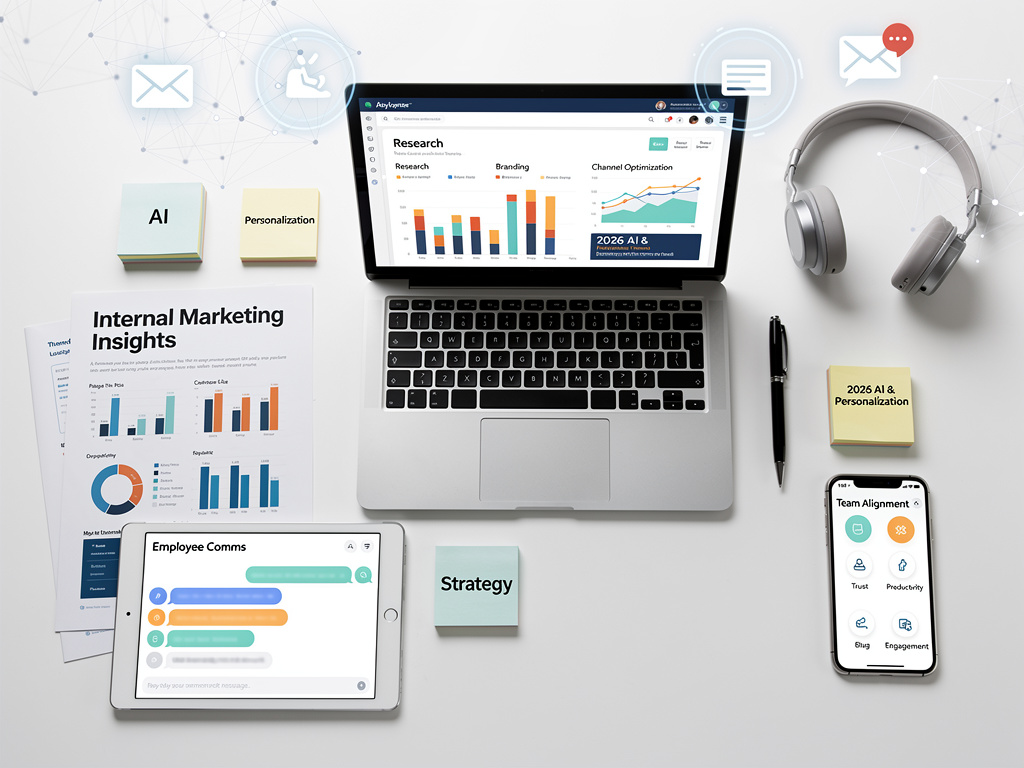
Internal communicators have long borrowed from marketing playbooks, but as employee expectations evolve amid hybrid work and AI-driven shifts, adopting an explicit internal marketing mindset has become imperative. Michael DesRochers, in a PR Daily analysis dated Dec. 16, 2025, argues that ‘every professional internal communicator is already practicing internal marketing—even if they don’t think of it that way.’ Tactics like prompting colleagues to read announcements or attend training mirror external campaigns designed to drive consumer action.
Unlike external marketing, which targets customers for revenue through TV ads and sponsorships, internal efforts focus on employees to foster information flow, transparency and trust. Responsibilities often span HR, marketing or dedicated teams, demanding tailored strategies. DesRochers highlights four core tactics: researching employee challenges, consistent branding via color palettes and signature charts, uniform tone of voice, and audience-matched channels like podcasts for younger workers.
These approaches yield measurable gains. Informed employees pivot faster, grasp missions deeply, boost productivity and cut turnover. As DesRochers notes, ‘Adopting an internal marketing mindset doesn’t just make internal communications more engaging, it transforms the way employees experience and interact with the company.’
Bridging External Promises and Internal Realities
Chief marketing officers increasingly champion internal comms as a brand alignment tool. In a December 2025 Forbes piece, one executive states, ‘The most powerful brand story isn’t the one a company broadcasts externally. It’s the one that employees experience every single day.’ Silos between marketing, HR and IT fragment culture, eroding trust when innovation campaigns clash with outdated tools.
Solutions include cross-functional councils meeting quarterly to sync priorities and monthly for campaigns. Shared metrics track advocacy, adoption and trust, turning employees into authentic storytellers. ‘Internal alignment is what makes external storytelling credible,’ the article emphasizes, positioning comms as a strategic CMO lever.
This synergy ensures consistent tone, values and messaging ecosystem-wide, enhancing employee connection and external credibility.
Research and Audience Insights Drive Resonance
Knowing the audience remains foundational, as DesRochers echoes: ‘As the saying goes, know your audience.’ Tailor messages to employee pains like vacation policies, mirroring external consumer research. Prezentium’s 2026 trends forecast, detailed at Prezentium, elevates employees as ‘core audience’ shaping reputation and success, urging audience-first planning, storytelling and influencer programs.
Benefits include alignment and robust employer branding. Personalization surges, using data for role-specific content, boosting engagement up to 200% per Firstup insights. AI aids sentiment analysis and timing, but demands ethical oversight.
Channel audits, linked via PoliteMail in the PR Daily piece, evaluate demographics—podcasts or newsletters over relics—to maximize reach.
Branding and Tone Forge Recognition
Internal branding signals professionalism without logos. Recurring visuals build familiarity, much like consumer ads. Consistent tone avoids jarring shifts, fostering trust over time. ‘Rather than shifting from formal one week to casual the next, it’s best to settle on a manner of writing that remains consistent,’ DesRochers advises.
Forbes contributors advocate treating employees as internal customers, applying open rates and engagement metrics. Influencer tactics internally mean engagement committees from dispersed offices, amplifying campaigns akin to external programs.
These elements ensure messages stand out amid inbox overload, driving action like feedback responses.
2026 Trends Amplify Marketing Fusion
PR Daily’s January 2026 trends, based on PoliteMail/Ragan surveys, reveal 75% using AI for content, 47% for notes, evolving to analytics and segmentation. ‘By automating analysis and decision support, AI frees communicators to focus on strategy,’ it states. Sentiment tracking shifts from annual surveys—used by 50%—to pulse tools, with 63% seeking better methods.
ContactMonkey’s top 2026 trends at ContactMonkey stress comms in change management: ‘No change initiative should begin without the active involvement of internal communications.’ Video-first, hyper-personalization and DE&I storytelling borrow marketing flair.
Trust-building via empathetic, consistent messaging positions comms as uncertainty antidote.
Real-World Tactics and Outcomes
Executives echo these in Forbes audits: evaluate channels rigorously, revealing untapped segments or access barriers. Podcasts suit complex topics; videos humanize leaders. Prezentium notes younger workers demand short, direct formats, reinforcing internal marketing’s rise.
Quantifiable ties to business—error reduction, compliance—elevate comms advisors. As DesRochers concludes in PR Daily, ‘thinking like a marketer internally isn’t just a communications strategy, it’s a strategy for organizational success.’
Organizations embracing these tactics witness productivity surges, retention gains and culture fortification, proving internal marketing’s edge in today’s volatile operations.


 WebProNews is an iEntry Publication