
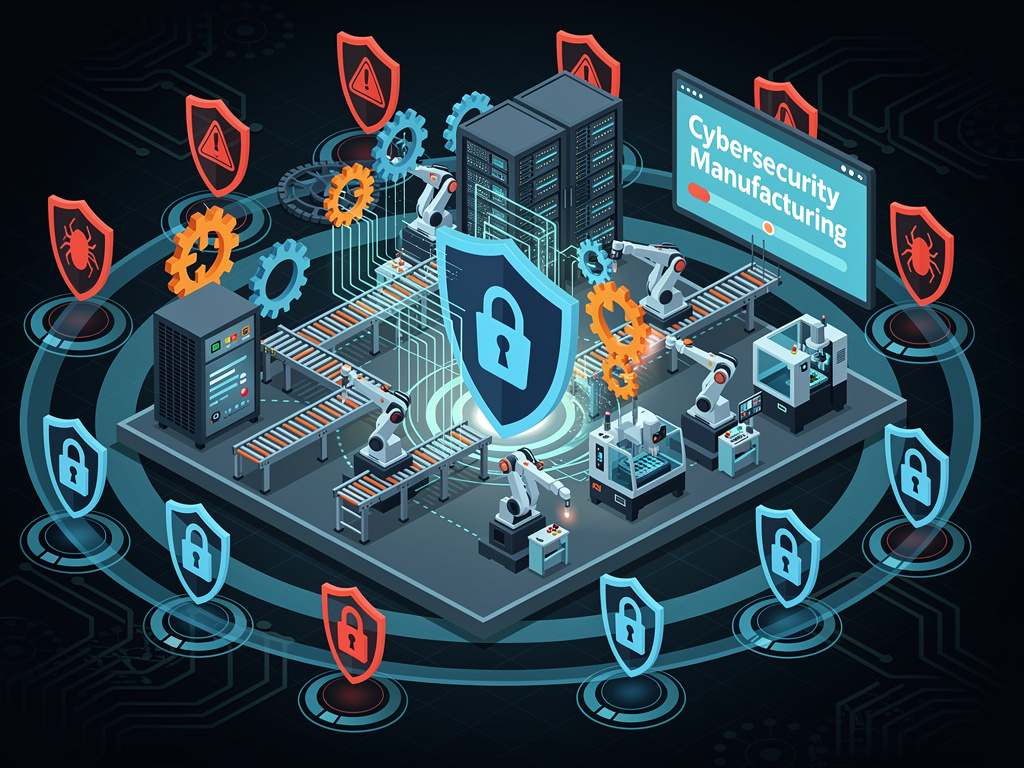
The manufacturing sector is experiencing an unprecedented escalation in cyberattacks, forcing industry leaders to fundamentally reimagine their security infrastructure as operational technology and information technology systems converge. What was once a relatively insulated industrial environment has become one of the most targeted sectors in the cybersecurity threat matrix, with ransomware groups, nation-state actors, and sophisticated criminal enterprises exploiting vulnerabilities created by digital transformation initiatives that promised efficiency but delivered exposure.
According to Cybersecurity Dive, the manufacturing industry has become the most targeted sector for cyberattacks, surpassing even financial services and healthcare in frequency of incidents. The convergence of IT and OT systems—once deliberately separated for security purposes—has created new attack surfaces that threat actors are exploiting with increasing sophistication. Manufacturing facilities that once operated air-gapped systems now find their production lines connected to enterprise networks, cloud platforms, and supply chain partners, each connection representing a potential entry point for adversaries.
The financial implications are staggering. IBM’s Cost of a Data Breach Report found that manufacturing companies face an average breach cost of $4.47 million, with recovery times extending production downtime from days to weeks. These figures don’t account for the cascading effects on supply chains, customer relationships, and market position that can take years to rebuild. The sector’s vulnerability stems not just from technological integration but from the critical nature of manufacturing operations—attackers know that production stoppages create immense pressure to pay ransoms quickly.
The Perfect Storm: Legacy Systems Meet Modern Threats
Manufacturing environments present unique challenges that distinguish them from typical enterprise IT security scenarios. Production facilities often run on operational technology systems designed decades ago, with equipment expected to operate for 20 to 30 years. These legacy systems were engineered in an era when cybersecurity meant physical access control, not digital threat mitigation. Programmable logic controllers, supervisory control and data acquisition systems, and industrial control systems frequently run outdated operating systems that cannot be easily patched without risking production disruptions.
The situation is compounded by the sector’s embrace of Industry 4.0 initiatives. Smart factories, predictive maintenance systems, and real-time supply chain visibility all require connectivity that traditional manufacturing environments never contemplated. Manufacturing.net reports that 70% of manufacturers have accelerated their digital transformation efforts since 2020, inadvertently expanding their attack surface before adequate security controls could be implemented. This rush to modernize has created what security experts describe as a “security debt”—the accumulated risk of deploying connected systems without comprehensive threat modeling and defense strategies.
Ransomware groups have recognized this vulnerability and adapted their tactics accordingly. Unlike opportunistic attacks that cast wide nets, threat actors now conduct extensive reconnaissance on manufacturing targets, identifying critical production systems, understanding maintenance windows, and timing attacks for maximum impact. The notorious Lockbit, BlackCat, and Royal ransomware groups have all demonstrated specific capabilities targeting industrial control systems, with some variants designed to spread laterally through OT networks once initial access is achieved through IT infrastructure.
Industry Leaders Chart New Security Paradigms
Forward-thinking manufacturers are responding with comprehensive security transformations that go beyond traditional perimeter defenses. The concept of “zero trust architecture” is gaining traction in industrial settings, though implementation requires careful consideration of operational requirements. Unlike office environments where users can tolerate authentication delays, production systems demand millisecond response times and cannot afford security measures that introduce latency into critical processes.
Major manufacturers are investing in security operations centers specifically designed for OT environments. These facilities employ analysts trained in both cybersecurity and industrial processes, capable of distinguishing between legitimate operational anomalies and potential security incidents. Dark Reading notes that leading companies are deploying specialized OT security platforms that provide visibility into industrial networks without requiring agents on legacy equipment, using passive monitoring and network traffic analysis to detect threats.
Collaboration has emerged as a critical component of the sector’s defense strategy. The Manufacturing Information Sharing and Analysis Center has seen membership grow by 40% over the past two years, with companies recognizing that threat intelligence sharing provides collective benefits that outweigh competitive concerns. When one manufacturer identifies a new attack technique or malware variant, rapid information sharing allows others to implement defenses before becoming victims themselves. This collaborative approach represents a significant cultural shift in an industry traditionally protective of operational details.
Regulatory Pressure Accelerates Security Investments
Government agencies worldwide are implementing regulations that mandate minimum cybersecurity standards for manufacturing operations, particularly those supporting critical infrastructure. The Cybersecurity and Infrastructure Security Agency has designated the manufacturing sector as critical infrastructure, subjecting major facilities to reporting requirements and security assessments. The European Union’s Network and Information Security Directive 2 imposes strict cybersecurity obligations on manufacturers, with significant penalties for non-compliance.
These regulatory frameworks are driving security investments that many manufacturers might have otherwise deferred. Companies are conducting comprehensive asset inventories—often discovering connected devices and systems that IT departments didn’t know existed. Network segmentation projects are separating OT environments from IT networks, implementing industrial demilitarized zones with strict access controls. Incident response plans specifically addressing OT scenarios are being developed and tested through tabletop exercises and simulations.
The insurance industry is also influencing security practices through increasingly stringent underwriting requirements. Cyber insurance carriers now require detailed questionnaires about OT security controls, network segmentation, backup procedures, and incident response capabilities before providing coverage. Insurance Journal reports that premiums for manufacturing operations have increased by an average of 30% year-over-year, with some high-risk facilities facing even steeper increases or coverage denials if they cannot demonstrate adequate security measures.
Supply Chain Security Becomes a Board-Level Concern
The interconnected nature of modern manufacturing means that a security breach at a supplier can cascade through entire production networks. The 2021 attack on Colonial Pipeline demonstrated how a single compromised vendor credential could shut down critical infrastructure. Manufacturing executives now recognize that their security posture is only as strong as their weakest supply chain partner, driving new requirements for vendor security assessments and contractual obligations.
Major manufacturers are implementing supplier cybersecurity programs that require partners to meet minimum security standards, submit to audits, and maintain cyber insurance. These programs extend beyond first-tier suppliers to include logistics providers, maintenance contractors, and software vendors. The challenge is particularly acute for small and medium-sized suppliers that may lack the resources to implement sophisticated security controls, creating potential weak links in the supply chain that attackers can exploit.
Some industry leaders are taking proactive approaches to strengthen supply chain security. Large manufacturers are offering cybersecurity training and resources to their supplier networks, recognizing that improving collective security benefits all participants. Shared security services, where manufacturers pool resources to provide monitoring and incident response capabilities to smaller partners, are emerging as a practical solution to the supplier security challenge.
The Human Element Remains Critical
Technology solutions alone cannot address the manufacturing sector’s cybersecurity challenges. Human factors—from social engineering vulnerabilities to insufficient training—continue to be exploited in the majority of successful attacks. Phishing campaigns targeting manufacturing employees have grown increasingly sophisticated, with attackers researching organizational structures and using convincing pretexts related to supply chain issues, equipment maintenance, or customer orders.
Leading manufacturers are implementing comprehensive security awareness programs tailored to industrial environments. Unlike generic cybersecurity training, these programs address scenarios specific to manufacturing operations—recognizing suspicious maintenance requests, verifying unusual production changes, and understanding the potential consequences of clicking malicious links in an OT environment. Some companies are conducting simulated attacks to test employee responses and identify areas requiring additional training.
The workforce challenge extends to hiring and retaining cybersecurity professionals with OT expertise. The specialized knowledge required to secure industrial environments—understanding both networking protocols and production processes—is in short supply. CSO Online reports that manufacturing companies are competing with other critical infrastructure sectors for a limited pool of qualified candidates, driving salary increases and prompting some organizations to develop internal training programs that transition existing OT engineers into security roles.
Emerging Technologies Offer New Defensive Capabilities
Artificial intelligence and machine learning are being deployed to enhance threat detection in manufacturing environments. These technologies can establish baselines of normal operational behavior and identify anomalies that might indicate compromise, even in complex industrial processes where legitimate operations vary significantly. However, implementation requires careful tuning to avoid false positives that could trigger unnecessary production interruptions or alarm fatigue among security teams.
Blockchain technology is being explored for supply chain security applications, providing immutable records of component provenance and software updates. Some manufacturers are implementing blockchain-based systems to verify that firmware updates and software patches come from legitimate sources, addressing supply chain attacks where adversaries compromise software before it reaches end users. While still emerging, these applications show promise for addressing specific security challenges unique to manufacturing operations.
The sector is also investing in quantum-resistant cryptography, anticipating future threats from quantum computing capabilities that could break current encryption standards. Forward-thinking manufacturers recognize that equipment deployed today may still be operating when quantum computers become capable of compromising today’s cryptographic protections, making quantum-resistant algorithms essential for long-term security.
Building Resilience Beyond Prevention
Security leaders increasingly recognize that perfect prevention is impossible, shifting focus toward resilience and rapid recovery capabilities. Manufacturers are implementing robust backup systems specifically designed for OT environments, with offline copies of critical configurations, control logic, and historical data. These backups enable faster recovery from ransomware attacks without paying extortion demands, though restoring complex production systems remains a time-intensive process requiring specialized expertise.
Incident response capabilities are being enhanced through regular testing and refinement. Manufacturers are conducting cyber crisis simulations that involve not just IT and security teams but production managers, supply chain coordinators, and executive leadership. These exercises reveal communication gaps, decision-making bottlenecks, and resource constraints that can be addressed before an actual incident occurs. Some companies are establishing relationships with specialized OT incident response firms before they’re needed, ensuring rapid access to expertise during a crisis.
The manufacturing sector’s response to escalating cyber threats represents a fundamental transformation in how industrial operations approach security. While challenges remain significant—from legacy system vulnerabilities to workforce shortages—the combination of technological solutions, collaborative defense strategies, and organizational commitment is strengthening the sector’s security posture. As digital transformation continues reshaping manufacturing, the integration of security into every aspect of operations is no longer optional but essential for survival in an increasingly hostile threat environment. The manufacturers that successfully navigate this transition will not only protect their operations but gain competitive advantages through enhanced reliability, customer confidence, and operational resilience.


 WebProNews is an iEntry Publication