
Somewhere between the promise of personalized medicine and the brutal reality of clinical trial failure rates, a startup called Mantis Biotech is placing an ambitious bet: that synthetic patients — digital twins modeled on real human biology — can fill the enormous data gaps that have plagued drug development for decades.
The San Francisco-based company, which emerged from stealth in late March 2026, isn’t proposing a marginal improvement to an existing process. It’s proposing an entirely new layer of pharmaceutical intelligence. One built on generative AI, trained on multimodal biological data, and designed to simulate how individual human bodies respond to therapeutic interventions before those interventions ever reach a living person.
If it works, the implications are staggering. Not just for the pharmaceutical industry’s bottom line — where the average cost of bringing a single drug to market now exceeds $2.6 billion — but for the millions of patients who belong to demographic groups historically underrepresented in clinical research.
The Data Desert at the Heart of Drug Development
The core problem Mantis is attacking isn’t new. It’s old. Painfully old.
Clinical trials, the gold standard for proving whether a drug is safe and effective, are notoriously expensive, slow, and narrow. They typically enroll populations that skew white, male, and relatively young. Women, elderly patients, children, and people from minority ethnic backgrounds are routinely underrepresented. The result: drugs approved on the basis of data that may not reflect how they’ll perform across the full spectrum of human biology.
As TechCrunch reported, Mantis founder and CEO Dr. Priya Narayanan described this as medicine’s “data availability problem” — a structural deficit that no amount of incremental trial reform has managed to fix. “We don’t have enough data on enough kinds of people,” Narayanan told TechCrunch. “And the traditional way of getting that data — enrolling more patients in bigger trials — is hitting physical and economic limits.”
She’s right. The numbers bear it out. According to the Tufts Center for the Study of Drug Development, the median Phase III clinical trial now takes over four years to complete. Patient recruitment alone accounts for roughly a third of that timeline. And despite regulatory pressure from the FDA — which issued updated diversity guidance in 2024 — enrollment demographics have shifted only modestly.
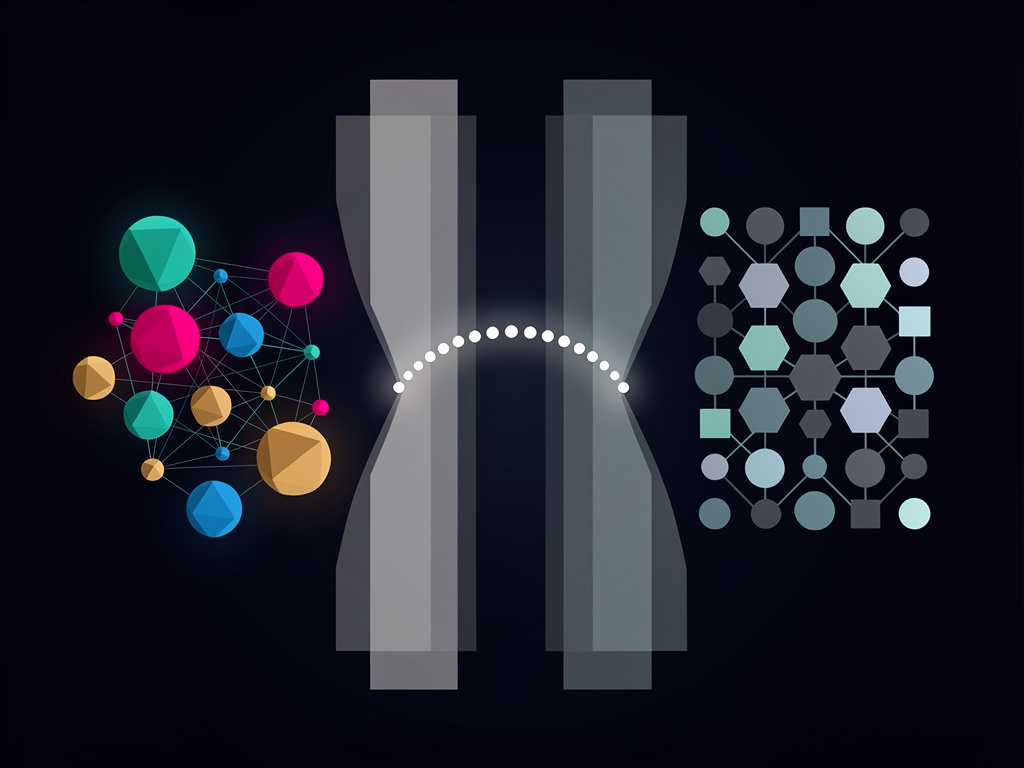
Mantis proposes to supplement real patient data with synthetic data generated by AI models that learn from existing biological datasets. The company’s platform ingests genomic, proteomic, metabolomic, and clinical data from consented patients and public biobanks, then constructs digital representations — what the company calls “biologically plausible synthetic individuals” — that can be used to model drug responses in silico.
Not replacement patients. Augmentation patients. The distinction matters, legally and scientifically.
The company has been careful to frame its technology not as a substitute for clinical trials but as a complement. A way to expand the effective diversity of a trial cohort. A way to stress-test a drug candidate against biological profiles that might not show up in the enrolled population. A way to catch safety signals earlier.
And a way, potentially, to reduce the catastrophic late-stage failure rate that has haunted pharma for years. Roughly 90% of drugs that enter Phase I clinical trials never make it to approval. Many fail in Phase III, after hundreds of millions of dollars have already been spent.
“If you can simulate a broader population before you commit to a Phase III design, you can make smarter decisions about which compounds to advance,” Narayanan said, per TechCrunch. “That’s not replacing human data. That’s making better use of the human data we already have.”
How the Technology Actually Works — and Where the Skeptics Push Back
Mantis’s approach rests on a class of generative models trained specifically on multimodal biological data. Think of it as a large language model, but instead of predicting the next word in a sentence, it predicts the next likely biological state given a set of patient characteristics and a therapeutic input.
The architecture, according to the company’s published technical overview, combines variational autoencoders with transformer-based attention mechanisms. It’s trained on anonymized datasets drawn from sources including the UK Biobank, the All of Us Research Program, and proprietary data partnerships with two unnamed academic medical centers. The model learns correlations across data types — how a particular genetic variant, combined with a specific metabolic profile and age, might influence response to a given drug mechanism.
From there, Mantis can generate synthetic patient profiles that are statistically consistent with real biological distributions but don’t correspond to any actual individual. These profiles can then be run through pharmacokinetic and pharmacodynamic simulations to predict drug response, adverse events, and dosing requirements.
It sounds elegant. But the scientific community has questions.
Dr. Marcus Chen, a computational biologist at Stanford who is not affiliated with Mantis, told reporters at a recent AI-in-healthcare conference that synthetic data approaches carry inherent risks. “The danger is that your model learns the biases in the training data and reproduces them in the synthetic outputs,” Chen said. “If the original datasets underrepresent certain populations, your synthetic patients will too — and you might not even realize it because the outputs look diverse on the surface.”
This is a genuine concern. Garbage in, garbage out — but with a veneer of statistical sophistication that could make the garbage harder to detect.
Mantis has acknowledged this risk publicly. In a March 2026 blog post on the company’s website, CTO Dr. Amir Hosseini outlined the team’s approach to bias detection, which includes adversarial testing against known population distributions and external audits by academic collaborators. “We don’t claim our synthetic data is perfect,” Hosseini wrote. “We claim it’s measurably better than the alternative, which is making decisions based on trial cohorts that are 80% white males aged 30 to 55.”
That framing — imperfect but better than the status quo — is likely to be the company’s most effective argument as it courts both pharma partners and regulators.
And the regulatory question looms large. The FDA has shown increasing openness to real-world evidence and computational modeling in drug evaluation. The agency’s 2023 guidance on digital health technologies and its growing acceptance of model-informed drug development (MIDD) suggest a regulatory environment that is at least willing to entertain the kind of approach Mantis is proposing. But there’s a wide gap between regulatory curiosity and regulatory acceptance. No synthetic data platform has yet been formally validated as a basis for approval decisions.
Mantis says it isn’t seeking that validation — yet. The company’s near-term business model, according to TechCrunch, focuses on selling its platform to pharmaceutical companies for use in preclinical and early clinical decision-making. Think of it as a tool for internal go/no-go decisions rather than a submission to the FDA.
That’s a smart starting point. It sidesteps the regulatory gauntlet while building a track record of predictive accuracy that could eventually support a more ambitious regulatory play.
The company raised a $48 million Series A round led by Andreessen Horowitz’s bio fund, with participation from GV (formerly Google Ventures) and several strategic angels from the pharmaceutical industry. The round closed in February 2026, giving Mantis roughly 24 months of runway to sign its first major pharma partnerships and demonstrate that its synthetic patients behave like real ones — at least within measurable error bounds.
Mantis isn’t operating in a vacuum. The broader application of AI to drug discovery and development has attracted enormous capital over the past five years. Companies like Recursion Pharmaceuticals, Insilico Medicine, and Isomorphic Labs (a subsidiary of Google DeepMind) have all staked out positions in the AI-driven drug development space. But most of those companies focus on target identification, molecular design, or protein structure prediction. Mantis’s focus on patient-level simulation — on the human response side of the equation rather than the molecular side — puts it in a relatively uncrowded niche.
There are competitors, though. Unlearn.AI, a San Francisco company founded in 2017, has been developing what it calls “digital twins” for clinical trials, using them to create synthetic control arms that could reduce the number of patients needed in a trial’s placebo group. The company has published peer-reviewed work and has partnerships with several pharma companies. Its approach is narrower than Mantis’s — focused specifically on control arm augmentation rather than full synthetic cohort generation — but it demonstrates that the broader concept of synthetic patients is gaining traction.
And in Europe, the EU-funded EDITH initiative (European Digital Twins in Healthcare) has been funding academic research into patient-level digital twins since 2023, with a focus on cardiovascular disease and oncology.
So the intellectual groundwork is being laid from multiple directions. What Mantis brings to the table is a specific technical architecture, a specific commercial strategy, and a specific bet that the time is now.
Whether that bet pays off will depend on three things. First, can the synthetic data actually predict real outcomes with enough accuracy to be useful? Mantis claims early validation studies show its models can predict adverse drug reactions in held-out patient cohorts with an area under the curve (AUC) of 0.87 — a strong but not extraordinary result. Independent replication will be essential.
Second, will pharmaceutical companies trust synthetic data enough to act on it? The industry is conservative by nature and for good reason. Lives are on the line. Even if Mantis’s technology performs well in retrospective analyses, convincing a pharma executive to alter a billion-dollar clinical development plan based on simulated patients will require extraordinary evidence.
Third, will regulators eventually accept synthetic data as a formal input to approval decisions? This is the long game. And it’s the one that would truly transform the economics of drug development. But it’s probably a decade away, at minimum.
The Human Stakes Behind the Technical Ambition
It’s easy to get lost in the technical details — the model architectures, the AUC scores, the regulatory pathways. But the underlying problem Mantis is trying to solve is fundamentally a human one.
People die because drugs fail late. People die because drugs that work for one population don’t work for another, and no one found out until after approval. People die because they belong to demographic groups that were never adequately studied.
The FDA’s own data shows that between 1997 and 2020, nearly a third of post-market drug safety issues involved adverse effects that disproportionately affected populations underrepresented in the original trials. Women metabolize certain drugs differently than men. Elderly patients have different renal function. Genetic variations common in specific ethnic groups can dramatically alter drug metabolism.
None of this is controversial. It’s textbook pharmacology. But the clinical trial system, as currently constructed, doesn’t adequately account for it.
If Mantis — or a company like it — can build synthetic patient models that genuinely capture this biological diversity, the downstream effects could be profound. Not just in drug safety, but in health equity. Not just in cost savings, but in lives extended and suffering prevented.
That’s a big if. But it’s one worth watching.
Narayanan, who previously led computational biology efforts at Genentech before founding Mantis in 2024, seems to understand the weight of the ambition. “We’re not building a toy,” she told TechCrunch. “We’re building something that has to be right. Because if it’s wrong, the consequences aren’t a bad product recommendation. They’re a bad drug getting to patients who shouldn’t take it.”
For now, Mantis remains a startup with a compelling thesis, a well-funded balance sheet, and a lot left to prove. The pharmaceutical industry has seen no shortage of AI companies promising transformation. Most have delivered incremental value at best. But the specific problem Mantis is targeting — the chronic shortage of diverse, high-quality patient data — is real, urgent, and getting worse as drug pipelines grow more complex and patient populations grow more heterogeneous.
If synthetic biology meets synthetic data in the right way, this could be one of the most consequential applications of generative AI outside of language and image generation. But the proof won’t come from pitch decks or press releases. It’ll come from clinical outcomes. And those take time.
The industry will be watching.


 WebProNews is an iEntry Publication