
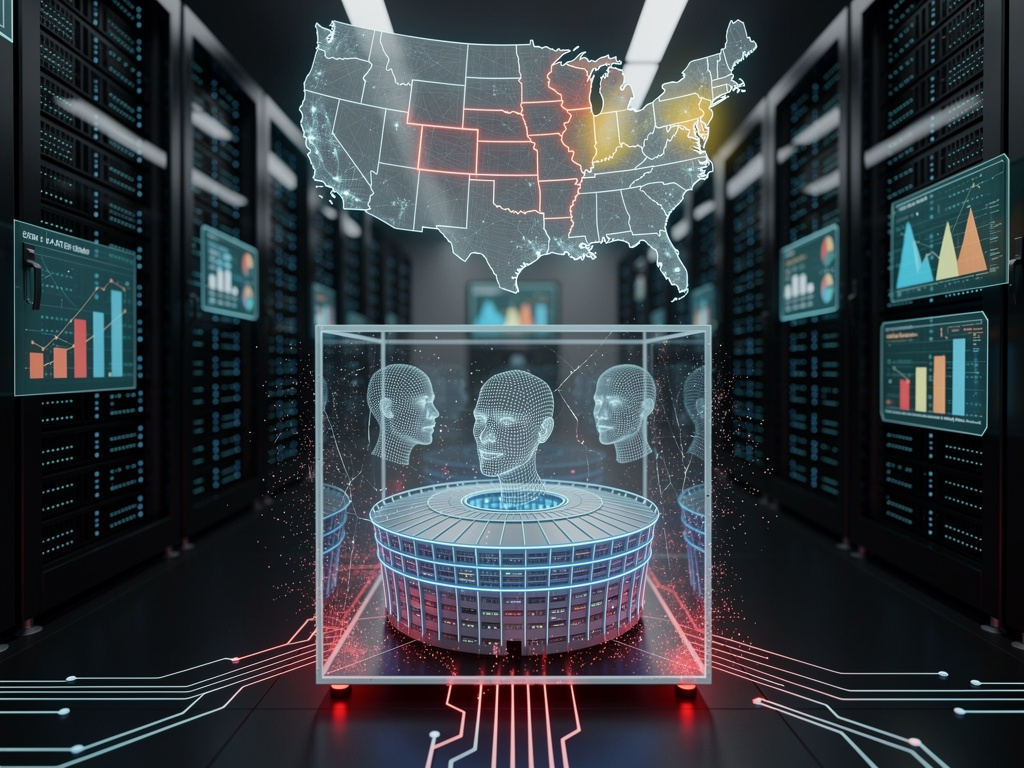
The recent breach at a major facial recognition vendor has exposed records tied to millions of visitors at Madison Square Garden, revealing names, dates of birth, and images linked to a system many venues now treat as standard security infrastructure. Hackers accessed and published this sensitive material, demonstrating once again how centralized biometric databases create irresistible targets for data thieves. This incident arrives at a moment when lawmakers across multiple states push hard for mandatory age verification systems that would rely on the same underlying technology, raising fresh alarms about the wisdom of embedding facial recognition into the everyday fabric of internet access and public life.
The leaked dataset, first reported by Digital Trends, contains information harvested from people attending concerts, sports events, and other gatherings at the iconic New York arena. Many of those scanned likely had no idea their biometric signatures were being stored, processed, or shared with third-party vendors. The breach highlights a pattern that privacy advocates have warned about for years: once facial recognition infrastructure scales up, the data it generates rarely stays confined to its original stated purpose. What begins as a tool for keeping weapons out of stadiums can quickly morph into a permanent record of personal movement, associations, and identities.
This reality connects directly to the growing wave of age verification legislation making its way through statehouses. In articles examining these bills, WebProNews has traced how proposals that sound focused on protecting children often open doors to widespread biometric surveillance. Companies that stand to profit from compliance solutions have helped draft language that funnels users toward facial scanning services, ID uploads, or third-party verification networks. The Madison Square Garden breach shows what can happen when those systems grow large enough to attract sophisticated attackers.
Lawmakers in California, Illinois, and Colorado have introduced measures requiring websites to confirm visitor ages before displaying certain content. While framed as child safety initiatives, these laws would effectively compel platforms to collect government-issued identification or submit to live facial analysis for millions of users. WebProNews previously reported on how System76 and other open-source advocates exposed the surveillance implications hidden inside such legislation. The bills create liability shields for large platforms while shifting compliance costs onto smaller developers and even individual maintainers of software repositories.
The technical demands of compliant age verification often lead straight to facial recognition providers. Systems must verify that a live human matches an identity document, a process that requires storing or processing biometric templates. Once those templates exist, they become difficult to delete and tempting to reuse. The Madison Square Garden data leak illustrates how quickly biometric information can escape its original container. Visitors who attended a basketball game or concert did not consent to their faces becoming part of a breached database sold on underground forums. Internet users asked to verify their age for a news site or forum would face similar risks on a much larger scale.
California’s AB 1043 stands out as particularly aggressive in this regard. As covered in WebProNews, the bill would force every software developer distributing applications in the state to implement age gates capable of distinguishing between adults and minors. Smaller teams and open-source projects lack the resources to build or license sophisticated biometric systems, creating an uneven playing field that favors companies already embedded in the surveillance economy. A follow-up analysis in WebProNews examined how Linux distributions could find themselves legally required to block access to repositories or add intrusive verification layers, fundamentally changing how software reaches users.
The 2027 compliance deadline mentioned in WebProNews coverage gives technology companies and government contractors plenty of time to build out massive facial recognition databases under the banner of legal necessity. Each verification creates a data point that could be retained, cross-referenced, or sold. The Madison Square Garden breach demonstrates that no operator can guarantee perfect security. When millions of facial records can be exfiltrated in a single incident, the notion that age verification systems will remain isolated and temporary becomes difficult to accept.
Illinois SB 3977 takes a slightly different approach but arrives at similar risks. WebProNews described the legislation as a quiet effort to construct an age verification apparatus with sweeping technical requirements. The bill’s language leaves open the possibility that open-source projects could face demands to integrate commercial verification services, effectively outsourcing identity checks to firms with poor track records on data protection. Once those connections exist, the flow of biometric information becomes hard to control.
Colorado lawmakers have shown some recognition of these problems. WebProNews reported on discussions around carving out protections for open-source developers, acknowledging that forcing small projects to implement expensive compliance systems could stifle innovation and drive projects away from certain jurisdictions. Yet even with exemptions, the broader trend toward government-mandated identity checks continues. Each new law adds another justification for collecting facial data from ordinary citizens going about their digital lives.
The dangers extend beyond simple data theft. Biometric information cannot be changed like a password. If someone’s face is compromised in a breach like the one affecting Madison Square Garden visitors, that individual carries the risk for life. Future systems could match the leaked images against public CCTV feeds, social media photographs, or other databases to track movements without consent. Age verification mandates would multiply the number of people whose faces enter these permanent records. What starts as verification for adult websites could expand to news platforms, forums, video services, and eventually most online activity.
Large technology companies have incentives to support these mandates. As outlined in the earlier WebProNews investigation, firms that provide verification infrastructure gain both new revenue streams and legal protections. They can argue they have fulfilled their obligations under state law while building detailed profiles of internet users. The Madison Square Garden incident reveals the fragility of such systems. When a single vendor’s database falls, it can expose people who never interacted with that company directly.
Security experts have long argued that facial recognition works best in narrow, controlled environments with clear consent and limited retention periods. Mandating its use for age checks across the internet violates those conditions on every level. The technology carries high error rates for certain demographic groups, creates false positives and negatives, and performs poorly under varying lighting or with changes in appearance. Yet legislative momentum continues despite these technical shortcomings because the political appeal of being seen to protect children outweighs detailed discussions about implementation risks.
The leaked Madison Square Garden records should serve as a cautionary example for every policymaker considering biometric mandates. Millions of faces stored by a venue operator proved impossible to protect completely. Scaling that model to every website, app, and online service would create databases orders of magnitude larger and even more attractive to attackers. The breach also demonstrates how data collected for one purpose finds new applications. Security footage from a concert venue became part of a commercial facial recognition service that was later compromised.
Open-source communities have particular reason for concern. Projects that distribute software freely across borders cannot easily implement state-by-state age verification without fundamentally altering their development and distribution models. As detailed in multiple WebProNews reports, the technical burden falls heaviest on those least equipped to handle it. Forcing Linux distributions or independent developers to integrate facial scanning gateways would likely result in some projects simply refusing to serve users in affected states, reducing access to privacy-enhancing tools precisely when biometric surveillance expands.
The pattern emerging from these bills and the accompanying breaches suggests a future where digital anonymity erodes under layers of required identity checks. Each verification adds another node to a growing surveillance network. The Madison Square Garden hack shows that those nodes remain vulnerable no matter how many times vendors promise improved security. Names, birthdates, and facial geometry from ordinary people attending public events now circulate beyond their control. Expanding the same technology to verify age for every click on the internet would repeat that mistake at national scale.
Lawmakers would do well to examine whether less invasive methods could achieve child protection goals without creating permanent biometric dossiers. Alternatives exist, from device-level controls to parental tools that do not require centralized databases of faces. The current rush toward facial recognition mandates ignores both the technical failures exposed in real-world deployments and the irreversible nature of biometric data once it escapes. The latest breach at the vendor serving Madison Square Garden offers a stark reminder that promises of secure, contained systems rarely survive contact with determined adversaries.
As states continue debating these measures, the human cost of compromised facial records deserves more attention. People whose data appeared in the leak face identity theft risks, stalking potential, and permanent loss of control over their digital image. Those same risks would multiply under nationwide age verification schemes built on the same foundation. The incident provides concrete evidence that biometric systems scale poorly when it comes to protecting the privacy of millions. Before embedding facial recognition deeper into daily life through legislation, policymakers should consider whether the security theater is worth the very real danger of creating millions more victims of data breaches that can never be undone.


 WebProNews is an iEntry Publication