
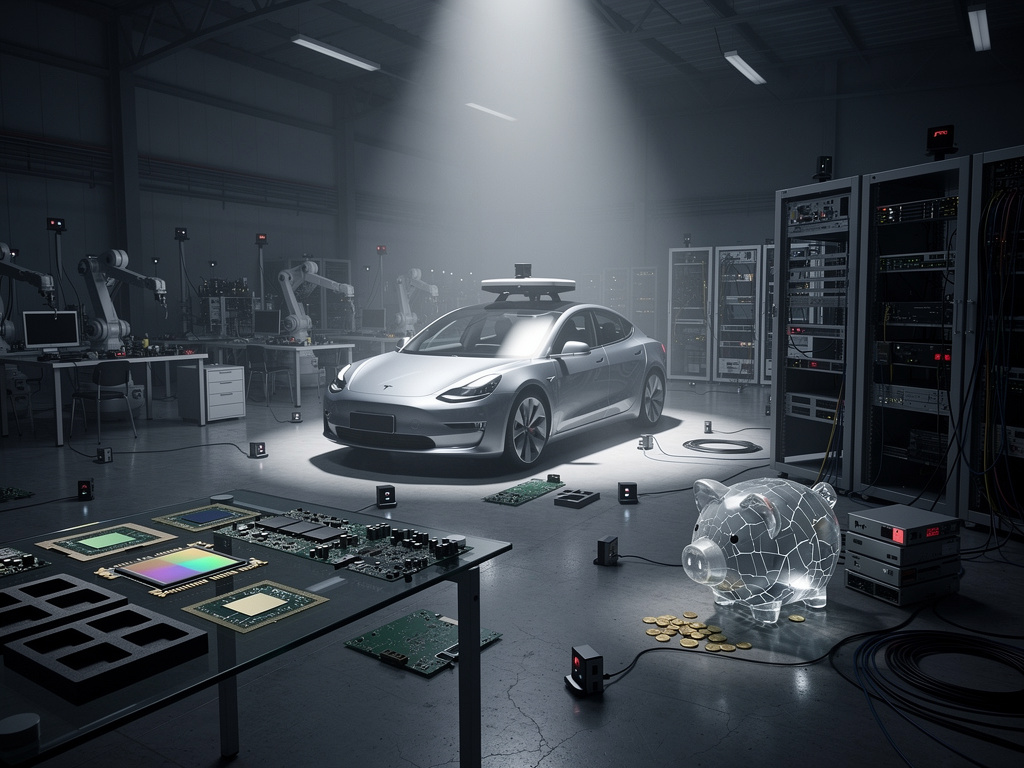
The Twilight of a LiDAR Trailblazer: Luminar’s Descent into Chapter 11
In the fast-evolving world of autonomous vehicle technology, few stories capture the volatility of innovation quite like the rise and fall of Luminar Technologies. Once hailed as a prodigy in the realm of light detection and ranging (LiDAR) systems, the company has now filed for Chapter 11 bankruptcy protection, marking a dramatic turn for a firm that promised to revolutionize self-driving cars. This move, announced on December 15, 2025, comes amid a storm of financial woes, executive upheavals, and market shifts that have left investors and industry observers reeling. Luminar’s journey from a high-flying startup to a distressed entity underscores the precarious balance between cutting-edge ambition and fiscal reality in the automotive tech sector.
Founded in 2012 by wunderkind Austin Russell, Luminar burst onto the scene with its advanced LiDAR sensors, designed to provide vehicles with a detailed 3D map of their surroundings. The technology was pitched as essential for safer, more reliable autonomous driving, attracting partnerships with major automakers like Volvo and Mercedes-Benz. However, the company’s path has been anything but smooth. Recent reports detail a series of setbacks, including multiple rounds of layoffs that slashed its workforce significantly over the past year. These cuts were part of desperate cost-saving measures as revenue failed to keep pace with mounting debts.
The bankruptcy filing, detailed in a press release from Luminar itself, reveals a strategic pivot toward a “value-maximizing sale process.” The company has secured support from a majority of its first-lien noteholders and plans to fund the proceedings with existing cash reserves. Notably, Luminar has already inked a deal to sell its Luminar Semiconductor Inc. (LSI) unit to Quantum Computing Inc. for $110 million, a transaction aimed at injecting liquidity while the firm explores buyers for its core LiDAR business. This restructuring is being overseen by the U.S. Bankruptcy Court for the Southern District of Texas, with the company emphasizing that operations will continue uninterrupted during the process.
A Cascade of Corporate Turmoil
The roots of Luminar’s troubles trace back to internal strife and external pressures. Earlier in 2025, the company ousted its founder and former CEO Austin Russell following an internal investigation into violations of its code of business conduct and ethics. This shake-up, as reported by posts on X, sent shockwaves through the organization and contributed to a revolving door of executive leadership. Russell’s departure was compounded by legal battles, including a high-profile dispute with Volvo over contract terms, which culminated in the loss of a key supply agreement.
Financially, Luminar has been hemorrhaging value. Its stock, traded under the ticker LAZR on NASDAQ, plummeted over 60% in a single day following the bankruptcy announcement, erasing billions in market capitalization since its peak. According to coverage from TechCrunch, the firm defaulted on loans earlier in the year, triggering warnings to investors about potential insolvency. These defaults were exacerbated by a broader slowdown in the autonomous vehicle market, where hype has given way to pragmatic assessments of scalability and cost.
Industry insiders point to Luminar’s heavy reliance on LiDAR as a vulnerability. While the technology excels in certain conditions, critics— including Tesla CEO Elon Musk—have long argued that it’s an unnecessary crutch compared to camera-based systems. Posts circulating on X, such as those from users highlighting Luminar’s 90% market value drop over the past year, echo this sentiment, often framing the company’s struggles as validation of alternative approaches to autonomy. One such post noted the irony of Luminar’s decline coinciding with Tesla’s advancements in driverless tech without LiDAR.
Market Forces and Competitive Pressures
The broader context of Luminar’s downfall reveals a sector grappling with consolidation and realism. Autonomous driving promised a gold rush, but regulatory hurdles, safety concerns, and economic headwinds have tempered enthusiasm. Luminar’s partnerships, once a strength, became liabilities as automakers like Volvo scaled back commitments amid their own cost-cutting drives. A report from Seeking Alpha details how the termination of the Volvo contract was a tipping point, stripping away a vital revenue stream and accelerating the path to Chapter 11.
Compounding these issues are the company’s aggressive expansion efforts. Luminar went public via a special purpose acquisition company (SPAC) in 2020, a move that fueled rapid growth but also saddled it with substantial debt. By mid-2025, the firm had accumulated at least $500 million in liabilities, as outlined in court filings reported by Law360. Efforts to diversify, such as developing semiconductor capabilities through LSI, offered some hope, but the unit’s sale to Quantum Computing underscores a fire-sale mentality rather than long-term strategy.
Sentiment on social platforms like X reflects a mix of schadenfreude and concern. Users have drawn parallels between Luminar’s fate and the broader LiDAR industry’s challenges, with some posts attributing the company’s woes to overhyping technology that hasn’t delivered on mass-market promises. For instance, discussions highlight how Luminar’s involvement in controversial demonstrations, like a misleading video collaboration with YouTuber Mark Rober critiqued in older X threads, damaged credibility and investor trust.
Strategic Maneuvers in Bankruptcy
Under Chapter 11, Luminar aims to restructure while preserving value for stakeholders. The agreement with noteholders provides $25 million in immediate funding, allowing the company to market its assets through January 2026. This timeline, as per details in StockTitan, is critical for attracting bidders interested in its intellectual property and manufacturing capabilities. Potential suitors could include rivals in the sensor space or larger tech firms eyeing autonomous tech integrations.
The sale of LSI to Quantum Computing, valued at $110 million in cash, is a cornerstone of this plan. Quantum, a player in emerging computing technologies, sees synergies in combining photonics with its quantum efforts, potentially opening new applications beyond automotive. Luminar’s press release, accessible via their investor site, frames this as a step toward maximizing returns, though skeptics question whether the core LiDAR business will fetch a premium in a crowded market.
Legal and operational continuity is emphasized in the filing. Luminar assures suppliers and customers that business will proceed as usual, a common tactic in Chapter 11 to prevent further erosion of value. However, the involvement of financial advisors and the court’s oversight introduces uncertainty, with possible outcomes ranging from a full acquisition to piecemeal asset sales.
Implications for Autonomous Innovation
Luminar’s bankruptcy resonates beyond its own walls, signaling cautionary tales for the autonomous vehicle ecosystem. Competitors like Velodyne (now part of Ouster) and Innoviz have faced similar valuation slumps, prompting a wave of mergers and pivots. The sector’s shift toward software-centric solutions, exemplified by Tesla’s vision-only approach, challenges hardware-heavy models like Luminar’s. As noted in analysis from GuruFocus, this filing could accelerate consolidation, with stronger players absorbing distressed assets.
For employees and partners, the human cost is palpable. Layoffs have already displaced hundreds, and the bankruptcy process may lead to more restructuring. X posts from industry watchers express sympathy for the workforce while critiquing leadership decisions that prioritized growth over sustainability.
Looking ahead, Luminar’s fate could influence investment trends. Venture capital in autonomous tech has cooled, with funders demanding clearer paths to profitability. The company’s story serves as a reminder that technological prowess alone doesn’t guarantee success; robust business models and adaptive strategies are essential in this high-stakes arena.
Reflections on a Pivotal Moment
As Luminar navigates Chapter 11, the episode invites reflection on the lifecycle of tech disruptors. From Russell’s visionary founding to the current restructuring, the narrative encapsulates the highs of innovation and the pitfalls of overextension. Coverage in The Verge captures the immediacy of the filing, noting ongoing legal fights with the ex-CEO as an additional layer of complexity.
Industry experts, drawing from sources like Yahoo Finance, speculate on potential buyers, including Chinese firms or established automakers seeking to bolster their sensor portfolios. The $110 million LSI deal, while a lifeline, highlights the fragmented value of Luminar’s assets.
Ultimately, this bankruptcy may not spell the end for LiDAR but rather a recalibration. As autonomous driving evolves, survivors will likely be those integrating diverse technologies efficiently. Luminar’s challenges illuminate the need for resilience in an industry where yesterday’s breakthroughs can quickly become today’s burdens, pushing innovators to balance ambition with prudent fiscal stewardship.


 WebProNews is an iEntry Publication