
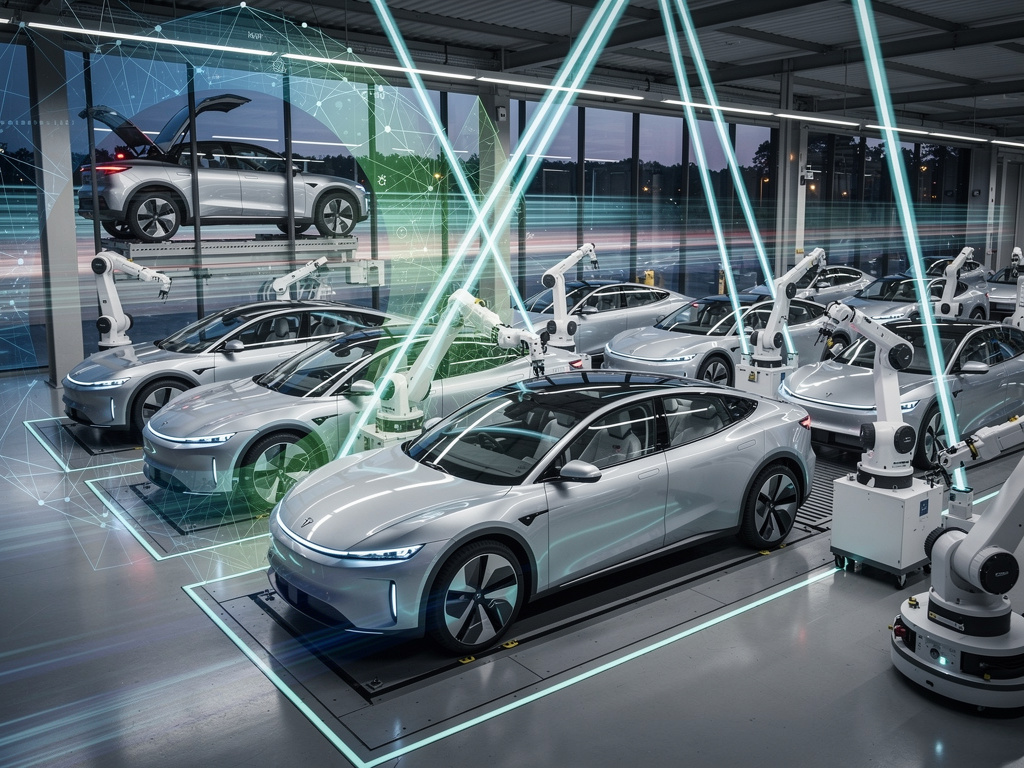
Lucid’s Resilient Surge: Overcoming Gravity’s Hurdles to Double EV Output in 2025
In the competitive arena of electric vehicle manufacturing, Lucid Motors has emerged as a determined player, navigating production pitfalls to achieve a remarkable turnaround. The company, known for its high-end Air sedan, doubled its EV output in 2025, producing more than 18,000 vehicles and delivering over 15,000, despite initial setbacks with its ambitious Gravity SUV. This growth story unfolds against a backdrop of industry-wide pressures, including supply chain disruptions and shifting consumer demands, yet Lucid’s strategic pivots highlight a path forward for premium EV makers.
The Gravity SUV, launched as Lucid’s second major model, was positioned as a game-changer with its promise of up to 450 miles of range, luxurious interiors, and performance that rivals sports cars. However, the rollout was far from smooth. Early production hiccups, including software glitches and component shortages, delayed deliveries and tempered investor enthusiasm. According to reports, these challenges led to a slower-than-expected ramp-up, forcing Lucid to revise its annual targets downward multiple times.
Despite these obstacles, Lucid’s leadership remained steadfast. CEO Peter Rawlinson, a veteran engineer from Tesla, emphasized efficiency and innovation as core to the company’s recovery. By mid-2025, production lines at the Arizona factory began to hum with increased vigor, incorporating lessons from the Air sedan’s earlier manufacturing runs. This resilience paid off, as the company not only met but exceeded its adjusted goals, signaling a potential shift in its operational maturity.
Early Struggles and Strategic Adjustments
The Gravity’s debut was highly anticipated, with pre-orders surging after its unveiling. Publications like Car and Driver praised its upscale cabin and impressive range, estimating a maximum of 450 miles per charge. Yet, the transition from prototype to mass production exposed vulnerabilities. Supply chain issues, exacerbated by global semiconductor shortages, hampered assembly, leading to a production bottleneck in the first half of the year.
Lucid’s response involved aggressive investments in its manufacturing infrastructure. The company expanded its Arizona facility and forged new supplier partnerships to mitigate delays. Financially, this meant burning through cash reserves, with losses mounting as reported in quarterly filings. Still, these moves allowed Lucid to produce 8,412 vehicles in the fourth quarter alone, a 104% year-over-year increase, showcasing a dramatic operational rebound.
Industry analysts noted that while the Gravity’s starting price of $79,900 for the Touring model—detailed in Lucid’s own press release—broadened its appeal, pricing remained a double-edged sword. It positioned the SUV as a luxury item, competing with established brands like Rivian and Tesla, but also limited accessibility in a market sensitive to economic fluctuations. Deliveries picked up pace as software updates resolved early issues, contributing to a 55% rise in sales compared to 2024.
Market Reception and Competitive Pressures
Consumer feedback on the Gravity has been largely positive, with reviews highlighting its blend of space, performance, and efficiency. A test drive review from Car and Driver described it as a “successful second act,” noting how it defies physics by handling like a sports car while accommodating seven passengers comfortably. This acclaim helped boost demand, particularly among affluent buyers seeking sustainable alternatives to traditional luxury SUVs.
However, Lucid faced stiff competition. Tesla’s Model X and Rivian’s R1S offered similar features at varying price points, while broader EV market slowdowns—due to expiring tax credits and rising interest rates—dampened overall sales growth. Lucid countered by emphasizing its superior battery technology, which provides more miles per kilowatt-hour than rivals, a point underscored in comparisons by industry watchers.
Social media sentiment, gleaned from posts on X, reflected a mix of excitement and skepticism. Enthusiasts celebrated production milestones, with Lucid’s official accounts sharing behind-the-scenes glimpses of the Gravity’s assembly, garnering thousands of views and likes. Yet, some users voiced frustrations over delivery delays, mirroring broader discussions on EV adoption challenges. These online conversations underscored the importance of transparency in building brand loyalty.
Financial Implications and Investor Sentiment
Lucid’s production doubling came at a cost, with the company reporting significant quarterly losses. A CNBC analysis highlighted the high expectations and risks, noting that while the Gravity is expected to outsell the Air sedan, ongoing financial strains could pressure stock performance. Investors, initially wary after the early struggles, showed renewed optimism as delivery numbers climbed, pushing shares upward in late 2025.
To sustain this momentum, Lucid announced plans for a new mid-size model, as mentioned in reports from Mezha. This expansion aims to diversify the lineup and capture a broader market segment, potentially alleviating reliance on high-end vehicles. Leadership changes, including the departure of Chief Engineer Eric Bach, added another layer of intrigue, signaling internal shifts amid the push toward mass production.
From a financial standpoint, the 104% production increase—detailed in Investing.com—positions Lucid for better economies of scale. Yet, with deliveries lagging slightly behind output at 15,000 for the year, inventory management becomes crucial. Analysts project that resolving these imbalances could lead to profitability by 2027, provided the Gravity maintains its sales trajectory.
Innovation and Technological Edge
At the heart of Lucid’s recovery is its proprietary technology. The Gravity incorporates advanced battery systems and fast-charging capabilities, enabling it to stand out in efficiency metrics. As per Lucid Motors’ official site, the SUV reimagines sustainable mobility with features like bidirectional charging and over-the-air updates, which have been pivotal in addressing early software woes.
Comparisons with peers reveal Lucid’s strengths in range and performance. While Tesla boasts a vast charging network, Lucid’s focus on luxury and refinement appeals to a niche audience. Industry insiders point to the company’s Saudi backing—through the Public Investment Fund—as a financial lifeline, enabling investments that smaller startups might forgo.
Looking ahead, Lucid’s integration of AI-driven features, such as adaptive cruise control and autonomous driving aids, could further differentiate its offerings. Posts on X from Lucid’s account have teased these enhancements, building hype around future updates that promise to elevate the driving experience.
Global Expansion and Supply Chain Resilience
Lucid’s growth isn’t confined to the U.S. market. The company has eyed international expansion, with plans to enter Europe and the Middle East, leveraging its Saudi connections. This strategy could offset domestic slowdowns, especially as EV incentives vary by region. Reports from InsideEVs note that record fourth-quarter sales in 2025 bucked broader industry trends, thanks in part to the Gravity’s strong reception.
Supply chain resilience has been a key lesson from the Gravity’s challenges. By localizing more production and diversifying suppliers, Lucid reduced vulnerabilities that plagued the early rollout. This approach not only stabilized output but also improved quality control, as evidenced by fewer reported issues in later batches.
Moreover, partnerships with tech firms for component sourcing have accelerated innovation. For instance, collaborations on battery tech have enhanced energy density, allowing the Gravity to achieve its touted 450-mile range without compromising on power.
Sustainability Commitments and Future Outlook
Sustainability remains a cornerstone of Lucid’s brand. The Gravity’s design emphasizes eco-friendly materials and energy efficiency, aligning with global pushes toward greener transportation. This focus resonates with environmentally conscious consumers, bolstering the company’s image amid increasing scrutiny on EV manufacturers’ carbon footprints.
As Lucid scales up, workforce dynamics come into play. The Arizona factory’s expansion created jobs, contributing to local economies, but also required upskilling programs to handle advanced EV assembly. Industry observers suggest that maintaining a skilled labor pool will be essential for sustained growth.
Peering into 2026, Lucid’s trajectory hinges on capitalizing on its 2025 gains. With the Gravity now in full swing and new models on the horizon, the company is poised to challenge incumbents more aggressively. While challenges like market saturation persist, Lucid’s ability to double production amid adversity demonstrates a tenacity that could redefine its role in the EV sector.
Leadership Vision and Long-Term Strategy
Peter Rawlinson’s vision has been instrumental, drawing from his Tesla experience to prioritize engineering excellence. His emphasis on “no-compromise” design, as seen in the Gravity’s development, has fostered a culture of innovation within Lucid.
Strategic funding rounds have provided the necessary capital to weather storms. Backed by substantial investments, Lucid has avoided the pitfalls that felled other startups, allowing it to invest in R&D for next-generation vehicles.
Ultimately, Lucid’s 2025 performance underscores a broader narrative of adaptation in the EV industry. By overcoming the Gravity’s initial hurdles, the company not only doubled its output but also laid groundwork for future expansions, potentially setting new standards for luxury electric mobility.


 WebProNews is an iEntry Publication