
Breathing Innovation: How L&T’s AI Digital Twin is Reshaping Respiratory Care
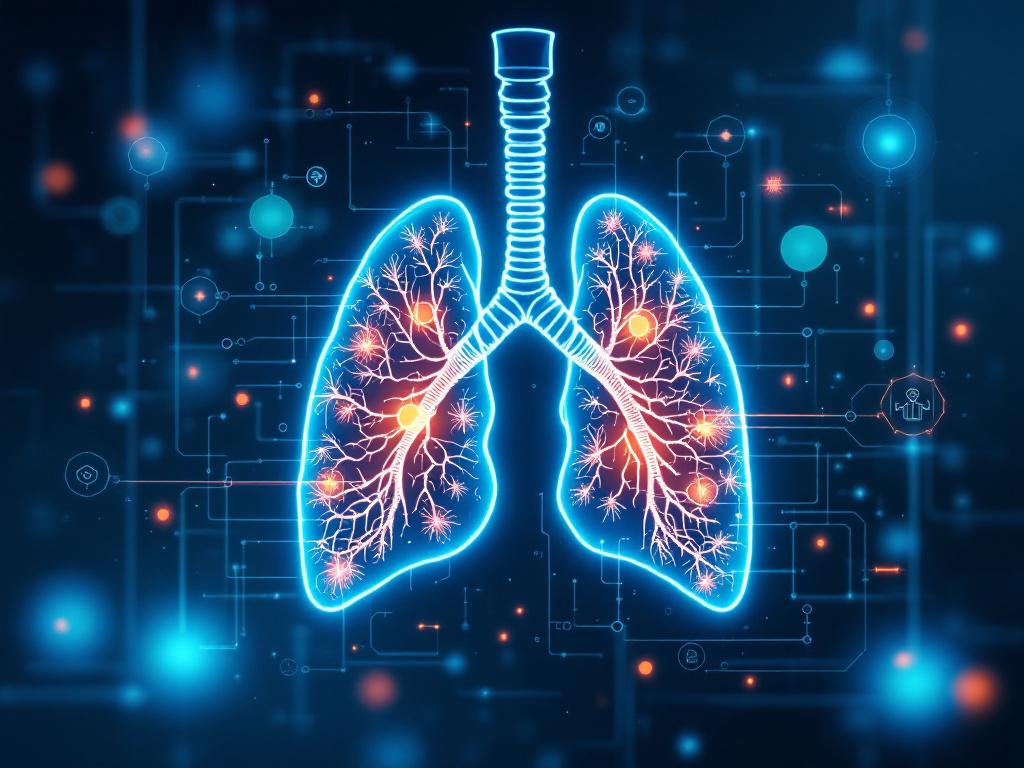
In a move that could redefine precision medicine, L&T Technology Services has unveiled a groundbreaking AI-powered digital twin platform designed specifically for respiratory diagnostics and lung navigation. Announced just ahead of the Radiological Society of North America’s annual event, this technology integrates advanced AI with CT imaging to create detailed 3D models of patients’ lungs, promising faster and more accurate diagnoses. The platform, developed in collaboration with chip giant Nvidia, leverages the company’s robust AI infrastructure to analyze lung anatomy in real-time, marking a significant step forward in medical technology.
This innovation comes at a time when respiratory diseases continue to burden global healthcare systems, from chronic conditions like COPD to acute threats such as post-pandemic complications. By generating a virtual replica—or digital twin—of a patient’s respiratory system, doctors can simulate scenarios, predict outcomes, and plan interventions with unprecedented precision. L&T Technology Services, known for its expertise in digital engineering and R&D consulting, positions this tool as a game-changer for enhancing patient care through data-driven insights.
The announcement has already stirred interest in financial markets, with shares of L&T Technology Services drawing attention due to the high-profile partnership. As detailed in a report from BusinessToday, the platform’s unveiling has put the company’s stock in the spotlight, reflecting investor optimism about AI’s role in healthcare advancements. This isn’t just about stock movements; it’s a testament to how tech integrations are driving real-world medical progress.
Unpacking the Technology Behind the Twin
At its core, the digital twin technology creates a virtual model that mirrors the physical lung structure, updated dynamically with patient data. Using Nvidia’s AI capabilities, the system processes CT scans to build these 3D representations, allowing for detailed visualization of lung tissues, airways, and potential abnormalities. This goes beyond traditional imaging by incorporating predictive analytics, where AI algorithms can forecast disease progression or treatment responses.
L&T’s platform stands out for its focus on respiratory-specific applications, such as detecting early signs of lung cancer or monitoring fibrosis. According to insights from a publication in The Tribune, the collaboration combines L&T’s MedTech prowess with Nvidia’s infrastructure, enabling features like automated lesion detection and navigation guidance during procedures. This synergy aims to reduce diagnostic times from days to hours, a critical factor in time-sensitive respiratory cases.
Industry insiders note that while digital twins have been used in manufacturing and aviation for years, their adaptation to healthcare—particularly respiratory care—represents a novel application. The system’s ability to integrate with existing hospital workflows ensures minimal disruption, making it feasible for widespread adoption. Early tests suggest improvements in diagnostic accuracy, potentially lowering misdiagnosis rates that plague conventional methods.
Collaborative Edges and Market Impact
The partnership with Nvidia isn’t L&T’s first foray into AI-driven solutions, but it amplifies their capabilities in the medical domain. Nvidia’s AI tools, renowned for handling complex computations, provide the computational backbone needed for real-time twin simulations. As reported in Social News XYZ, this joint effort focuses on precision diagnostics, with the platform capable of generating personalized treatment plans based on individual lung models.
From a market perspective, this development aligns with broader trends in AI healthcare investments. L&T Technology Services, listed on BSE and NSE, has seen its valuation influenced by such innovations, as highlighted in coverage from BusinessToday. The emphasis on connected health systems means the digital twin can interface with wearable devices or IoT sensors, collecting ongoing data to refine the virtual model over time.
Experts in the field, including those referenced in a study from PMC, discuss how AI in respiratory care is evolving, with tools like this potentially transforming routine checkups into proactive health management. The narrative review in PMC explores AI’s current state, noting its promise in early detection and personalized medicine, which echoes L&T’s approach.
Real-World Applications and Case Studies
Imagine a scenario where a patient with suspected pneumonia undergoes a CT scan, and within minutes, an AI-generated digital twin highlights affected areas, predicts spread, and suggests optimal biopsy sites. This isn’t science fiction; it’s the practical outcome of L&T’s platform. In clinical settings, such technology could streamline bronchoscopies, reducing risks by providing virtual navigation maps.
Posts on X (formerly Twitter) reflect growing excitement, with users discussing AI’s role in lung health monitoring. For instance, accounts like Research Outreach have highlighted digital twins’ potential in equipment efficiency, a concept now extending to human anatomy. Similarly, Varun Jhaveri’s post on AI tools for COVID detection via X-rays underscores the foundation for advanced diagnostics like L&T’s.
A deeper look at implementations, as per EquityBulls, shows the platform’s integration with advanced imaging for lung navigation, aiding surgeons in minimally invasive procedures. This could be particularly beneficial in regions with high respiratory disease prevalence, offering scalable solutions to overburdened healthcare systems.
Challenges and Ethical Considerations
Despite the promise, deploying AI digital twins in medicine isn’t without hurdles. Data privacy remains a paramount concern, as these systems rely on vast amounts of personal health information. Ensuring compliance with regulations like HIPAA or GDPR is essential, and L&T has emphasized secure data handling in their announcements.
Accuracy validation is another key area. While initial results are promising, as seen in a framework like Lung-DT described in MDPI, which achieved high precision in classifying lung diseases, real-world variability demands rigorous testing. The MDPI study reports an average accuracy of 96.8% for categorizing conditions from X-rays, setting a benchmark that L&T’s CT-based twin aims to surpass.
Moreover, accessibility issues could limit impact in underserved areas. Training healthcare professionals to use such advanced tools requires investment, and L&T’s partnership strategies, including with Autodesk for broader digital transformations as noted in Machine Maker, suggest a commitment to expanding reach.
Broader Implications for Healthcare Evolution
Looking ahead, L&T’s digital twin could pave the way for integrated AI ecosystems in hospitals, where respiratory diagnostics link seamlessly with other specialties. This holistic approach might extend to monitoring chronic conditions, using twins to simulate long-term effects of therapies.
Sentiment on X, from users like Dr. Khulood Almani, highlights generative AI’s role in detecting comorbidities, aligning with the twin’s predictive capabilities. Posts emphasize how AI uncovers hidden conditions through comprehensive analysis, a feature central to L&T’s innovation.
Financially, as covered in The Tribune, this positions L&T as a leader in AI consulting for healthcare, potentially boosting revenues through licensing and partnerships. The collaboration with Nvidia not only enhances technical prowess but also opens doors to global markets hungry for cutting-edge MedTech.
Innovators at the Forefront
L&T Technology Services isn’t operating in isolation; their work builds on prior AI advancements in respiratory care. For example, initiatives like India’s first AI-aided lung screening, mentioned in posts by Dr. T R B Rajaa on X, demonstrate grassroots applications that complement high-tech twins.
The company’s recent tie-up with Autodesk, detailed in The Hindu BusinessLine, extends AI-driven transformations beyond healthcare into manufacturing, showcasing a versatile expertise that bolsters their respiratory platform.
Industry observers, drawing from sources like Business Standard’s coverage of the Autodesk partnership, see this as part of a larger push towards AI-led efficiencies across sectors. In healthcare, it means more personalized, efficient care, reducing the strain on resources while improving outcomes.
Patient-Centric Outcomes and Future Horizons
Ultimately, the true measure of success lies in patient benefits. By enabling earlier interventions, L&T’s digital twin could lower mortality rates from respiratory ailments. Simulations allow for testing multiple treatment paths virtually, minimizing trial-and-error in real scenarios.
X posts from accounts like Learn & Grow Together echo this, praising the breakthrough for faster analysis and improved care. Such public discourse underscores the technology’s potential to democratize advanced diagnostics.
As L&T continues to refine this platform, integrations with emerging tech like augmented reality for surgical guidance could further enhance its utility. The MSN article, accessible via MSN, elaborates on the unveiling, noting its alignment with RSNA 2025 themes of innovative imaging.
Pushing Boundaries in MedTech
The evolution of AI in medicine, as explored in PMC’s narrative review, points to a future where tools like digital twins become standard. L&T’s contribution accelerates this shift, particularly in respiratory fields often overlooked in tech investments.
Collaborations, such as the one with Nvidia reported across sources like Social News XYZ, ensure the platform remains at the cutting edge, incorporating the latest in AI hardware.
For industry insiders, this signals a maturation of digital twins from conceptual to clinical, with L&T leading the charge. As adoption grows, expect ripple effects in policy, funding, and education, reshaping how we approach lung health globally.
In wrapping up this exploration, it’s clear that L&T Technology Services’ AI-powered digital twin isn’t just a tool—it’s a catalyst for a new era in respiratory diagnostics, blending technology with human-centric care to breathe easier futures into existence.


 WebProNews is an iEntry Publication