
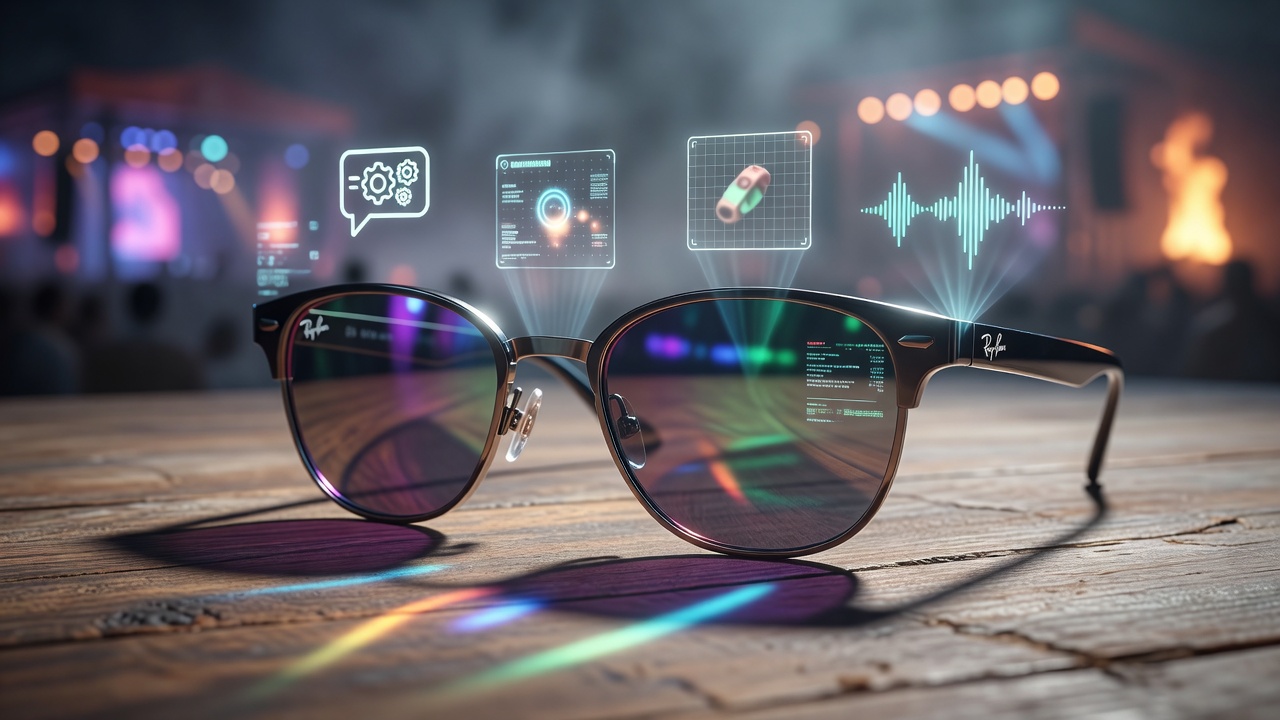
The recent appearance of singer Lorde at a music festival has sparked fresh conversations about the growing presence of smart glasses equipped with artificial intelligence. In footage shared across social media, the New Zealand artist could be seen wearing a pair of Meta Ray-Ban smart glasses while interacting with fans and enjoying the event. Her casual comment that the device felt “mad cool” captured attention not simply for its slang appeal but for what it suggests about how these wearable gadgets are entering everyday cultural moments.
Meta has steadily expanded its lineup of AI-powered eyewear since teaming up with EssilorLuxottica, the parent company of Ray-Ban. The latest versions pack upgraded cameras, improved audio, and an on-device AI assistant capable of answering questions, identifying objects, and even translating languages in real time. Unlike earlier experiments that felt clunky or overly experimental, these glasses aim for a balance between familiar fashion and useful technology. Lorde’s public endorsement, even if offhand, highlights how celebrities can shape perceptions around new hardware that many people still view with suspicion.
Observers noted the singer using the glasses to capture moments from the festival without pulling out a phone. The built-in camera allows hands-free recording and live streaming, functions that align naturally with the demands of live events where pulling out a device can break immersion. Meta has positioned the glasses as companions for exactly these kinds of situations, letting users document experiences while staying present. The fact that someone of Lorde’s stature chose to wear them openly rather than hide the technology speaks to shifting attitudes about when and where such devices belong.
Beyond simple recording, the AI features inside the current Meta Ray-Ban models demonstrate how far the platform has come. Users can ask the glasses to describe their surroundings, suggest nearby restaurants based on visual cues, or translate conversations happening around them. During a crowded festival, these capabilities could prove genuinely practical. Imagine asking the glasses to identify a band playing on a distant stage or to remind you of a lyric from a song drifting through the crowd. Lorde’s brief interaction seemed to hint at exactly that kind of effortless assistance.
The broader context matters. Meta has poured resources into making these glasses feel less like computers strapped to your face and more like an extension of personal style. The Ray-Ban partnership helps because the frames retain the classic look that has defined the brand for decades. Different lens options, including transitions that darken in sunlight, make them suitable for outdoor festivals where glare and changing light conditions create challenges for other wearables. Lorde’s choice of model appeared to match her aesthetic, avoiding the bulky or overly tech-forward designs that defined earlier attempts at smart glasses.
Privacy concerns remain at the forefront of discussions whenever these devices appear in public. The glasses feature a small LED indicator that lights up when the camera is recording, a design choice intended to signal to those nearby that they are being filmed. Still, many people worry about constant passive recording in social settings. At a music festival filled with thousands of attendees, the presence of even a few pairs of AI glasses raises questions about consent and data collection. Meta maintains that all processing happens with strong privacy safeguards and that users must actively choose to record or share content. Yet the conversation continues, especially as more high-profile figures like Lorde normalize their use.
The AI component adds another layer. The assistant built into the glasses relies on a combination of on-device processing and cloud support. This hybrid approach allows quick responses for simple tasks while tapping into more powerful models for complex queries. During Lorde’s festival appearance, she reportedly used the device to interact with fans in ways that felt natural rather than staged. One clip showed her asking the glasses a question about a nearby food vendor, receiving an answer within seconds. Such moments illustrate how the technology moves from concept to practical tool when placed in real-world environments.
Meta’s ambitions extend well beyond festival selfies. The company has signaled plans to integrate these glasses more deeply with its social platforms, allowing users to share what they see directly to Instagram or Facebook without taking out their phones. For artists like Lorde, whose work already blends technology with personal expression, the glasses could become creative instruments. She has spoken in past interviews about her interest in how digital tools shape human connection. Wearing the Meta Ray-Ban pair at a public event might represent an extension of that thinking.
Competition in the smart glasses space continues to heat up. Google made an early attempt with its Glass product years ago, only to face significant backlash over privacy and social acceptance. More recently, companies like Snapchat with its Spectacles and various Chinese manufacturers have released their own versions. What sets Meta’s approach apart is the combination of fashion credibility through the Ray-Ban brand, solid audio performance for music and calls, and an increasingly capable AI that learns from user interactions. Lorde’s positive reaction suggests that at least some cultural gatekeepers now view the technology as approachable rather than intrusive.
The festival setting itself provided an ideal testing ground. Music events bring together diverse crowds, unpredictable lighting, loud soundscapes, and spontaneous moments. Smart glasses that can handle noise cancellation for calls, offer clear audio playback, and provide contextual information without requiring users to stop and stare at a screen demonstrate clear advantages. Attendees wearing the devices can capture high-quality video while dancing or moving through crowds, something traditional phones struggle to achieve gracefully.
Of course, limitations still exist. Battery life remains a consideration for all-day wear at multi-stage festivals. The current Meta Ray-Ban models offer several hours of mixed use before needing a charge, which usually means carrying a portable case that doubles as a charger. Processing complex visual queries can sometimes introduce slight delays, though Meta continues to improve the underlying models. Lorde’s comment appeared genuine rather than promotional, which may explain why it resonated. She simply seemed to be enjoying a piece of technology that worked well in the moment.
Looking ahead, analysts expect further integration between AI assistants and wearable cameras. Future versions may include more advanced health sensors, better low-light performance, and even tighter connections to augmented reality overlays. For now, the focus stays on practical utility and social acceptability. Lorde’s appearance helps move the conversation from speculative futurism toward everyday adoption. When a respected artist finds the glasses “mad cool” in an authentic setting, it carries more weight than any marketing campaign.
The cultural impact stretches beyond technology enthusiasts. Music festivals have long served as spaces where fashion, art, and innovation intersect. From LED clothing to experimental stage designs, these events embrace the new. Smart glasses fit naturally into that tradition, especially when worn by someone like Lorde whose work often explores themes of technology, identity, and human connection. Her comfort with the device may encourage others to try them without feeling self-conscious about looking like early adopters.
Meta continues refining the user experience based on feedback from real-world testing. The company has released regular software updates that improve the AI’s ability to understand context and provide relevant answers. Translation features work across dozens of languages, which could prove valuable at international festivals where attendees speak many different tongues. Object recognition helps identify everything from band merchandise to specific food items, adding layers of convenience that compound over time.
Critics argue that normalizing always-on cameras risks further eroding personal privacy in public spaces. They point out that even with indicator lights, not everyone notices or understands what the small LED means. Others worry about data being stored or analyzed in ways that extend beyond the immediate user experience. Meta insists that recordings remain under user control and that the AI processes most visual information without permanently storing raw footage. The debate will likely intensify as more people adopt the technology in social settings.
Despite these valid concerns, practical benefits continue to drive interest. For performers, the glasses could eventually provide real-time information about set lists, audience reactions, or even lyric prompts if needed. For fans, they offer new ways to engage with live music through instant information and high-quality personal recordings. Lorde’s festival appearance bridged these perspectives, showing an artist interacting with technology in the same spaces where her audience experiences it.
The partnership between Meta and EssilorLuxottica has proven important for design credibility. Ray-Ban frames carry decades of cultural cachet, from Hollywood films to street style. By preserving that heritage while embedding modern capabilities, the companies created a product that doesn’t immediately scream “gadget.” This matters enormously for adoption. People who might reject obvious tech wearables often feel comfortable with something that looks like regular sunglasses.
As development continues, expect to see these devices appear at more public events. Celebrities, influencers, and everyday attendees will test their capabilities in environments ranging from music festivals to sports matches to casual street gatherings. Each new high-profile moment like Lorde’s adds data points about what works and what needs improvement. The AI inside grows smarter with each interaction, learning to better anticipate needs in dynamic social situations.
The conversation around AI glasses has shifted from whether they will catch on to how society will adapt to their presence. Lorde’s simple endorsement captures that transition. Rather than positioning the technology as futuristic or intimidating, she presented it as something fun and functional that enhanced her experience. That perspective may prove more persuasive than any technical specification sheet.
Meta has indicated that additional features and model refreshes are already in development. Improved battery technology, lighter frames, and more powerful AI models could address current limitations. For festival-goers, better audio for enjoying music between sets or taking calls without removing the glasses would represent meaningful progress. The ability to overlay simple information directly onto the wearer’s view without blocking vision could arrive in future iterations.
In many ways, Lorde’s festival sighting represents a small but telling moment in the gradual integration of artificial intelligence into personal accessories. The glasses no longer feel like science fiction props. They look like something an artist might wear while moving through a crowd, capturing memories, answering questions, and staying connected. Whether this particular pair becomes a lasting fashion statement or simply marks another step in wearable evolution remains to be seen. What feels clear is that moments like these help demystify the technology and invite broader participation in shaping how it develops.
The coming years will test how comfortably these devices fit into social norms. Festivals offer relatively forgiving environments where experimentation is encouraged. If AI glasses can succeed there, translating that acceptance to offices, restaurants, and family gatherings presents the next challenge. Lorde’s positive experience suggests that when the hardware disappears into familiar forms and the software provides genuine help without demanding attention, people respond favorably. That balance between invisibility and usefulness may determine which companies thrive in this emerging category.
As more artists and public figures try the technology in authentic settings, the feedback loop between creators, users, and developers should accelerate improvements. Meta has already shown willingness to iterate quickly based on real-world usage. The combination of fashionable design, practical AI assistance, and cultural moments like Lorde’s festival appearance creates conditions where smart glasses could move from niche interest to common sight. The conversation has clearly begun, and it will be fascinating to watch how it unfolds across different communities and creative spaces.


 WebProNews is an iEntry Publication