
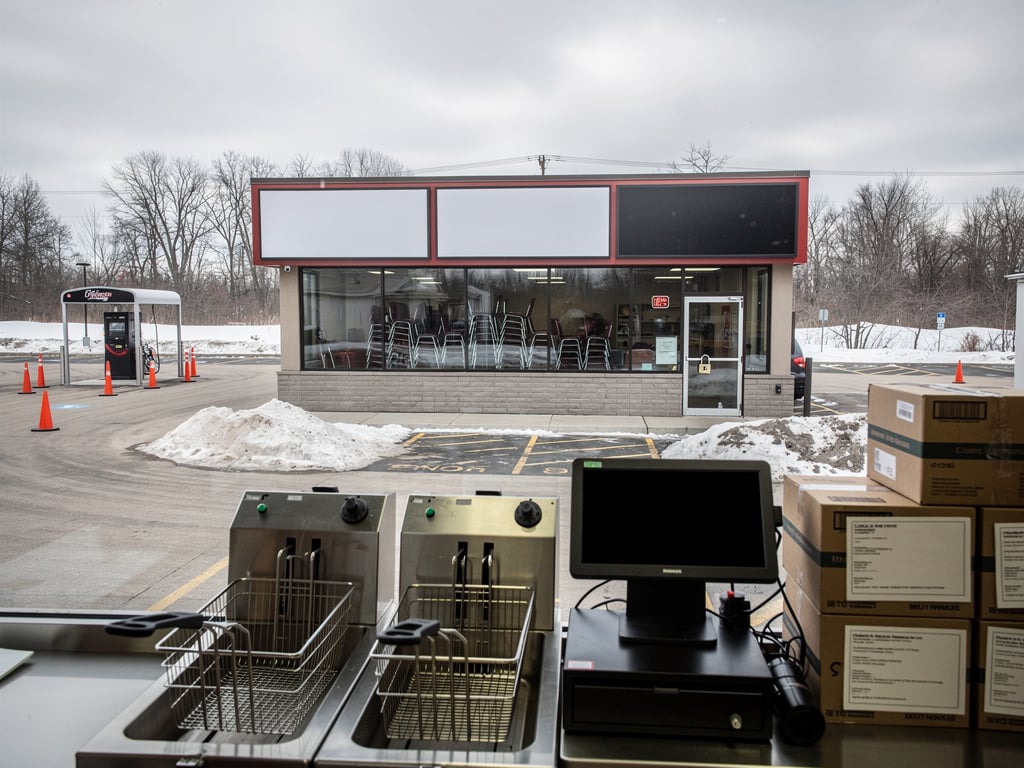
The last Long John Silver’s in Minnesota shut its doors on April 30. Weeks later its operator filed for Chapter 7 bankruptcy. The move erased the final trace of the fried-fish brand from the state. It also underscored a broader struggle gripping fast-casual seafood operators and their franchisees.
Uplifted Foods LLC, based in Eagan, Minn., listed up to $100,000 in assets and between $100,000 and $1 million in liabilities when it petitioned the U.S. Bankruptcy Court for the District of Minnesota on May 29. Court records showed more than $157,000 owed to creditors, including roughly $111,000 to the owners of the Mall of America. The company offered no explanation in its filing. It disclosed no headcount for workers affected by the closure. Just like that. Gone.
The episode arrives at a difficult moment for the entire restaurant sector. Sales for the 500 largest U.S. chains grew only 3 percent in 2025. That marked the weakest pace since the Great Recession, outside the pandemic years. The figure fell short of 2024’s 3.5 percent gain and trailed the 3.8 percent rise in menu prices. On an inflation-adjusted basis the median chain saw sales contract 1.3 percent. Technomic captured the data in its 2026 Top 500 Chain Restaurant Report, published via Restaurant Business.
Long John Silver’s has endured years of shrinkage. The chain peaked near 1,081 locations in 2007. By 2024 it operated 485 stores. Today the count stands at 375 across 25 states. Franchisees bought the brand from Yum Brands in 2011. They have watched the footprint steadily contract ever since. The Minneapolis closure completed the brand’s exit from Minnesota.
Rising costs tell part of the story. Labor and food expenses climbed 35 percent between 2019 and 2025, according to Bureau of Labor Statistics figures cited across multiple reports. Operators passed those increases to customers through higher prices. Many diners pushed back. Traffic suffered. Same-store sales stagnated or declined. And the pressure hit smaller franchisees especially hard.
Uplifted Foods was no outlier. Recent months have brought similar filings from other operators. A major Popeyes franchisee, Sailormen Inc., sought Chapter 11 protection in January 2026 and later moved to shed additional leases. Carl’s Jr. franchisee Sun Gir also filed for bankruptcy this spring. Even larger seafood names have restructured. Red Lobster filed Chapter 11 in 2024, closed more than 130 locations, emerged under new ownership by RL Investor Holdings, and continued trimming stores into 2026. Its CEO, Damola Adamolekun, told Fox Business in February that the chain still reviews leases for further savings.
A separate The Street article from late May detailed Red Lobster’s decision to shutter its Times Square flagship on June 14. The move ends more than two decades in Manhattan. The company had accumulated nearly $300 million in debt before its earlier bankruptcy. An ill-timed endless-shrimp promotion at $20 contributed an $11 million quarterly loss on its own. Consumer traffic never fully recovered.
Industry observers point to several converging forces. High interest rates raised borrowing costs for operators already stretched thin. Landlords demanded full rent even as foot traffic lagged. Menu-price fatigue set in after years of inflation-driven hikes. Younger consumers in particular shifted spending toward experiences or cheaper alternatives. Fast-food seafood concepts, long dependent on value pricing and drive-thru convenience, found their formula under strain.
Long John Silver’s once boasted more than 1,000 units at its height in the late 1970s. The brand opened its first store in Lexington, Ky., in 1969. Expansion proved rapid. Yet changing tastes, competition from broader quick-service menus, and inconsistent execution eroded its position. A 2025 rebrand that added chicken imagery to marketing materials signaled an attempt to broaden appeal. Some analysts viewed the shift as an admission that pure seafood no longer sufficed.
But the franchisee bankruptcies reveal problems deeper than brand strategy. Many operators carry heavy debt loads from earlier expansions or pandemic-era loans. When sales miss expectations, fixed costs become crushing. Chapter 7 liquidation, as chosen by Uplifted Foods, offers the cleanest exit. Assets are sold, creditors paid what they can, and the business ends. Chapter 11, used by Red Lobster and several franchisees, aims to reorganize and preserve some operations. Both paths reflect the same reality. Many locations no longer generate enough cash.
Data from the American Bankruptcy Institute shows commercial filings rose 14 percent in the first quarter of 2026 compared with a year earlier. Chapter 11 cases jumped 37 percent. Franchisee distress appears prominently in those numbers. One analysis in JD Supra highlighted the Hardee’s franchisee ARC Burger, which closed all 77 locations after its own Chapter 7 filing in April. The pattern repeats across concepts.
SeafoodSource reported in early June that two additional chains with seafood offerings filed for protection. World of Beer, which includes seafood dishes on its menu, sought Chapter 11 in August 2025 after closing 14 sites. Macroeconomic pressure, landlord debts, and franchisee litigation contributed to its cash-flow collapse, according to Restaurant Dive.
Franchisors face difficult choices. They can support struggling operators with royalty relief or marketing funds. They can terminate agreements and reclaim territories. Or they can watch units disappear one by one. Long John Silver’s parent company has already accepted a much smaller national presence. The chain’s website lists only 375 locations. Further attrition seems likely.
Consumers notice. Mall of America visitors lost their last easy access to battered fish and hush puppies. Minnesota becomes the latest state to lose the brand entirely. Similar exits have occurred quietly in other markets. The chain that once promised affordable seafood for families now serves a narrower audience in fewer places.
Yet not every operator collapses. Some franchisees adapt by tightening operations, renegotiating leases, or adding delivery. Others diversify menus or invest in digital ordering. The strongest concepts survive by protecting unit economics above all. For many in the seafood segment, that threshold has grown harder to clear.
The Uplifted Foods case, first reported by the Minneapolis/St. Paul Business Journal and later covered by Yahoo Finance, offers a concise but telling snapshot. One small operator. One final location. One bankruptcy. The details are modest. The implications are not. When even a single-unit closure in a high-traffic mall triggers liquidation, the margin for error across the sector has clearly narrowed.
Broader economic signals remain mixed. Wage growth continues in many regions. Unemployment stays low. Still, diners allocate discretionary dollars with greater caution. Value menus have returned at several quick-service brands. Seafood operators, with their higher commodity costs, struggle to match those prices without sacrificing quality or margins. The math grows unforgiving.
So the contraction continues. Long John Silver’s shrinks. Red Lobster trims further. Franchisees large and small test the limits of reorganization or choose outright closure. The industry that fed millions of affordable seafood meals now recalibrates to a leaner footprint. Whether that new shape proves sustainable remains the central question. For Uplifted Foods and its creditors, the answer has already arrived.


 WebProNews is an iEntry Publication