
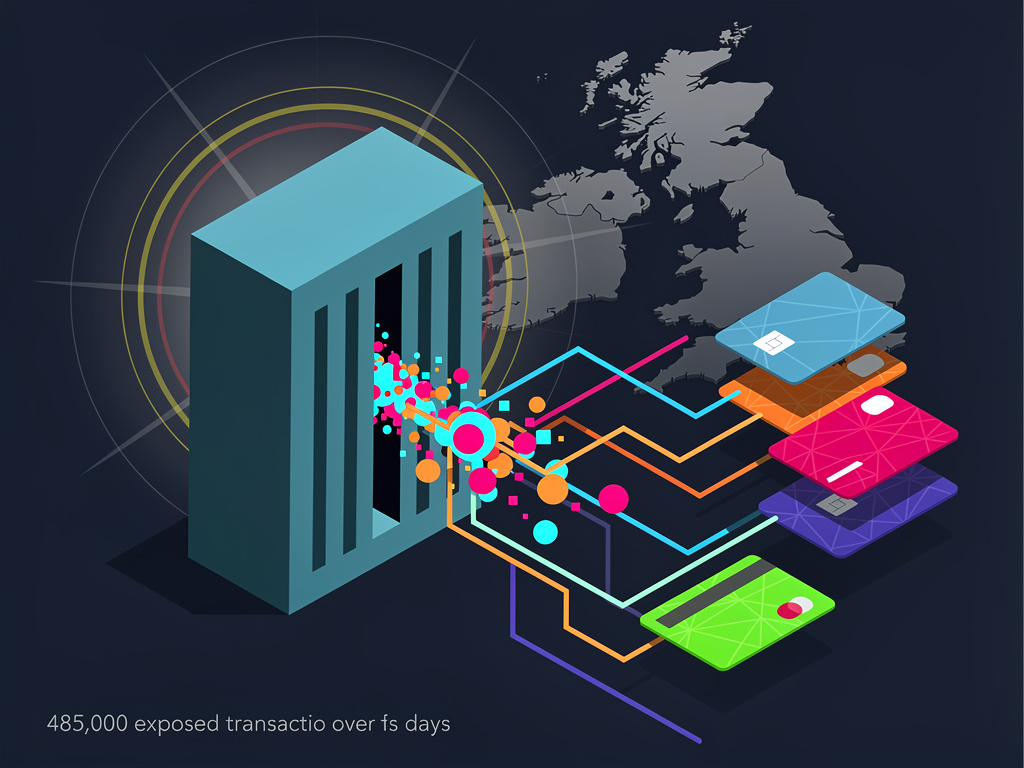
For roughly five days in late May, a glitch inside Lloyds Banking Group’s digital infrastructure allowed customers to see transaction data belonging to other account holders. Not their own transactions. Someone else’s.
The bank has now confirmed that approximately 485,000 customers were affected by the incident, which ran from May 23 to May 28 before being resolved. The exposed data included transaction details — merchant names, payment amounts, and dates — visible to users who were logged into their own accounts but served fragments of other people’s financial activity, according to TechRadar.
No passwords were compromised. No funds were moved. But the breach — or “glitch,” as Lloyds prefers to characterize it — raises uncomfortable questions about the reliability of the UK’s largest mortgage lender and the broader fragility of digital banking systems that serve tens of millions of people daily.
A Technical Failure With Regulatory Teeth
Lloyds Banking Group, which also operates Halifax and Bank of Scotland, disclosed the issue to the Information Commissioner’s Office, Britain’s data protection authority. Under UK GDPR rules, organizations must report personal data breaches within 72 hours of becoming aware of them. The ICO confirmed it had received a report and was assessing the information provided.
The nature of the exposed data matters. Transaction histories are a window into a person’s life — where they shop, what they spend, how frequently they use certain services. In isolation, a single transaction line might seem innocuous. In aggregate, it’s a detailed behavioral profile. And 485,000 of them were potentially visible to the wrong eyes.
Lloyds told affected customers that the issue was caused by an internal technical problem rather than a cyberattack. That distinction is important for the bank’s messaging. It’s less important for the customers whose data was exposed regardless of the cause.
“We resolved a technical issue that temporarily resulted in some customers seeing incorrect transaction information in their accounts,” a Lloyds spokesperson said, as reported by TechRadar. The bank added that it had contacted affected customers directly.
But the timeline raises questions. Five days is a long window for a data exposure event at a bank of this size. Lloyds serves over 26 million customers across its brands. The fact that nearly half a million accounts were affected before the issue was caught and patched suggests either a detection gap or a remediation challenge — neither of which inspires confidence.
Security researchers have noted that this type of failure — where authenticated users are shown data belonging to other authenticated users — often points to flaws in session management, caching logic, or API response handling. These aren’t exotic attack vectors. They’re architecture problems. And they’re the kind of problems that comprehensive testing should catch before production deployment.
The UK banking sector has been under increasing scrutiny for IT resilience. The Financial Conduct Authority and the Prudential Regulation Authority have both tightened expectations around operational resilience, with new rules that took full effect in March 2025 requiring firms to demonstrate they can withstand severe disruptions without compromising important business services. A data-leaking glitch running for five days doesn’t sit comfortably within that framework.
The Broader Pattern of UK Banking Outages
This isn’t Lloyds’ first brush with service disruption. The bank has experienced multiple outages in recent years, including incidents affecting mobile banking access and payment processing. And it isn’t alone. Barclays suffered a major outage during the UK’s self-assessment tax deadline in January 2025, leaving customers unable to make payments for hours. NatWest, HSBC, and Nationwide have all experienced their own system failures in the past 18 months.
The pattern points to a structural tension within British banking. Legacy infrastructure — some of it decades old — is being layered with modern digital interfaces, mobile applications, and real-time payment systems. The seams between old and new are where failures tend to emerge. And when they do, the consequences are felt immediately by millions of people who have no alternative but to wait.
Consumer trust in digital banking remains high in aggregate, but each incident chips away at it. A 2024 survey by the consumer group Which? found that one in five UK banking customers had experienced an outage or technical issue in the prior 12 months. The same survey found that confidence in banks’ ability to protect personal data was declining, particularly among customers aged 35 to 54 — the demographic most reliant on mobile and online banking.
For Lloyds specifically, the timing is awkward. The group has been investing heavily in digital transformation, touting its technology spending as evidence of its commitment to modernizing services. In its 2024 annual report, Lloyds said it had invested £3 billion in strategic initiatives, with a significant portion directed at technology platforms. A data exposure incident affecting nearly half a million customers undercuts that narrative.
There’s also the competitive dimension. UK challenger banks like Monzo, Starling, and Revolut have built their brands on technology-first infrastructure. They don’t carry the same legacy baggage. And while they’ve had their own issues — Revolut’s licensing challenges, Monzo’s anti-money-laundering growing pains — they haven’t experienced the same kind of systemic data exposure events that plague the traditional high street banks.
So what happens next? The ICO investigation will determine whether Lloyds took appropriate measures to protect customer data and whether the bank’s response was adequate. Fines under UK GDPR can reach up to £17.5 million or 4% of annual global turnover, whichever is higher. For a group with Lloyds’ revenue, that ceiling is substantial. But regulators have historically been measured in their enforcement against banks, preferring corrective action over punitive fines in cases where no malicious actor was involved.
The more consequential fallout may be reputational. Half a million customers now know that their banking data was potentially visible to strangers. That’s not something a reassuring email can fully address. And in a market where switching bank accounts has become easier than ever — thanks to the Current Account Switch Service — customer patience has a finite shelf life.
For the industry at large, the Lloyds incident is a reminder that data security isn’t only about keeping hackers out. Sometimes the threat comes from within — not from malicious insiders, but from systems that simply don’t work as intended. A misconfigured cache. A broken access control rule. A deployment that wasn’t tested under the right conditions.
These are mundane failures. But their consequences aren’t.


 WebProNews is an iEntry Publication