
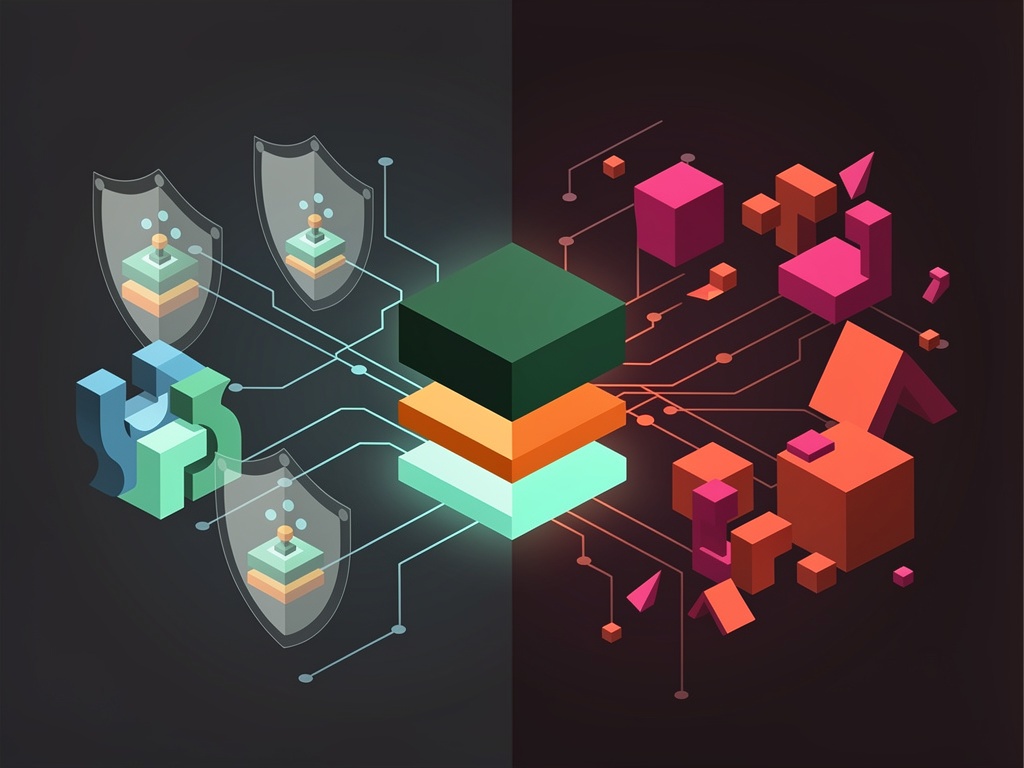
Canonical just laid out its blueprint for weaving artificial intelligence into Ubuntu. No flashy chatbots shoved in your face. No telemetry phoning home to distant servers. Instead, subtle upgrades running locally on your hardware. The company promises features that enhance what Linux already does well, without turning the operating system into an AI gimmick.
Jon Seager, Canonical’s VP of engineering, spelled it out in a Discourse post on April 26. ‘Throughout 2026 we’ll be working on enabling access to frontier AI for Ubuntu users in a way that is deliberate, secure, and aligned with our open source values,’ he wrote. Expect two tracks: implicit AI that bolsters existing tools in the background, like better speech-to-text for accessibility, and explicit ones for those who opt in, such as agentic workflows to automate troubleshooting or draft documents. All with a hard lean toward local inference. Seager stresses, ‘Ubuntu is not becoming an AI product, but it can become stronger with thoughtful AI integration.’
This stands apart from the aggressive push seen elsewhere. Microsoft Copilot peppers Windows with suggestions users can’t always dodge. Canonical opts for snaps—those confined, sandboxed packages—that deliver optimized models for your specific chip. Type snap install nemotron-3-nano, and it grabs the right quantization without you juggling Ollama or Hugging Face. Partnerships with silicon makers like Intel and AMD ensure native NPU and GPU acceleration, keeping everything on-device. Privacy stays intact. No cloud scraping your data.
Phoronix broke the news on April 27, quoting Seager on building a ‘context-aware OS’ through efficient local inference and silicon ties (Phoronix). XDA Developers called it a relief for skeptics, nothing like the ‘AI slop’ haunting other platforms (XDA). ‘AI tools on Ubuntu will be added with utmost caution,’ they noted, prioritizing maturity and open-source roots.
And Ubuntu isn’t alone. GNOME users already have Newelle, a virtual assistant hitting version 1.2 in January. It hooks into Google Gemini, OpenAI, Groq, or local LLMs via Llama.cpp, now with Vulkan and CPU backends. Developers added command execution tools, hybrid file search, and MCP server support for broader app ties. Phoronix highlighted its semantic memory and chat export features (Phoronix). Run it offline. Keep control.
KDE Plasma takes a more cautious stance. Forums buzz with debates over AI policy—no formal ban yet, but Krita imposed a moratorium on AI-assisted development until October 2026, awaiting community consensus and KDE-wide guidance (KDE Discuss). Concerns swirl around plagiarism risks from LLMs trained on open-source code, ethical clashes with free software ideals, and environmental costs of massive training runs. One poster warned of ‘erasing the humanity’ in creative work. Others argue for trust in reviewers, rejecting blanket prohibitions as unenforceable gatekeeping.
Digital Trends captured the sentiment first, praising Canonical’s restraint back on April 28. Unlike ‘obnoxious’ integrations that ‘grind your gear,’ Linux AI stays optional, user-driven (Digital Trends). No forced updates. No ads masquerading as helpers.
But questions linger. Will local models match cloud giants? Smaller open-weights like Gemma 4 or Qwen close the gap, especially with hardware advancing—think Intel’s latest NPUs in Ubuntu 26.04 LTS. Canonical eyes agentic tools for servers too: log parsing, Wi-Fi fixes, even standing up dev environments. Guardrails include audit trails and scoped permissions. Users control the scope.
Community reactions split. On X, some hail local-first as the future. @cmd_alt_ecs noted Canonical’s bet on OS-level LLMs with auto-optimized snaps. Others worry about bloat. ‘Waste of dev resources,’ tweeted @HoshinoSaikyo, assuming opt-in but doubting uptake. Reddit echoes caution; one user fled Ubuntu fearing ‘enshittification’ (Reddit r/linux).
Yet momentum builds. Distros like Gnoppix AI Linux 26 bundle AI frameworks with GNOME, KDE, Xfce (DistroWatch). Third-party apps follow: Calibre adds local AI summaries via LM Studio; Kdenlive cuts backgrounds with models. ItsFoss predicts more in 2026 (ItsFoss).
Hardware matters. Ubuntu 26.04 packs Linux 7.0 kernel, NVIDIA CUDA, AMD ROCm 7.1, Intel NPU drivers—AI-ready out of the box. Plasma 6.6 shines for customization, drawing switchers from GNOME, as XDA reports (XDA). Fedora elevated KDE to equal footing with GNOME.
Challenges ahead. Power-hungry inference demands efficient silicon. Ethical debates rage—does AI undermine FOSS by regurgitating scraped code? KDE’s talks highlight the tension. Canonical pushes education for engineers, skepticism over blind faith, and audits for vendors.
Local AI levels the field. No subscriptions. No data leaks. Run Gemma 4 via Ollama on modest laptops, as X users share. Thuki overlays a floating assistant; privacy-first extensions hit GNOME shelves.
This path defines Linux’s edge. Choice reigns. Power users tweak models; newbies get accessibility boosts. No one-size-fits-all mandate. As Seager puts it, thoughtful integration. Not takeover.
Watch 2026 unfold. Ubuntu rolls features gradually. GNOME iterates Newelle. KDE debates policy. The desktop evolves—smarter, private, yours.


 WebProNews is an iEntry Publication