
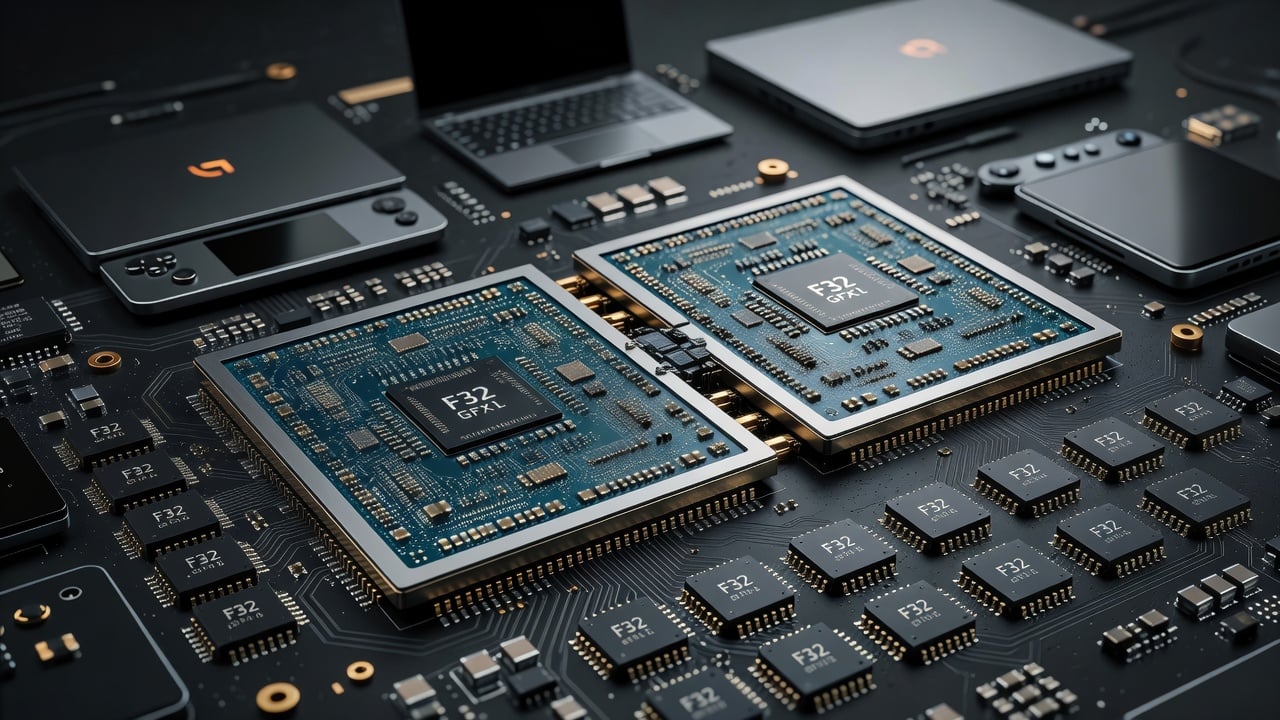
AMD engineers have quietly pushed forward a change that stands to tighten graphics scheduling on the company’s latest integrated processors. With patches queued for the Linux 7.3 kernel, the AMDGPU driver now activates a second graphics pipe on GFX11-based APUs. The move targets modern chips built on RDNA 3 and RDNA 3.5 architectures. It promises more work queues and smoother hardware-level priority handling.
The update comes from Alex Deucher, a longtime AMD Linux engineer. In the patch submitted to the amd-gfx mailing list, he laid out the constraints in clear terms. “Enable gfx pipe1 hardware support,” Deucher wrote. “This is only available on gfx11 chips using the F32 microcontroller. Chips using the RS64 microcontroller are not able to use the second gfx pipe. In practice this means the second pipe is only available on APUs. This explains the stability issues Pierre-Eric saw previously with this on Navi33.”
That earlier instability on discrete Navi 33 parts had held back broader adoption. Now the code limits the feature to APUs where it belongs. The kernel sets GFX11_NUM_GFX_RINGS to two by default but drops back to one when RS64 is detected. Early initialization routines adjust the number of rings and load the right microcode accordingly. Simple. Targeted. And apparently overdue.
Why does any of this matter? A single graphics pipe per MicroEngine has long forced the driver to juggle competing workloads in tighter quarters. Adding the second pipe spreads tasks across more hardware queues. The result should appear in better task prioritization at the hardware level. Stability improves. Spurious stalls decrease. For users of Ryzen AI 300 series laptops or hand-held gaming devices running Linux, the difference could feel tangible once distributions pick up the kernel.
Phoronix first highlighted the patch series on July 10, 2026, noting its place among other AMDGPU and AMDKFD updates headed to DRM-Next. Those updates also refresh PSP 15.0.9 and SMU 15.0.9 IP blocks, fix assorted bugs, and advance the project’s effort to remove BUG() calls from the driver. The full pull request sits in the amd-gfx archives for review.
But the pipe change draws particular attention. It builds on years of incremental GFX11 enablement that began when RDNA 3 first reached market. Earlier kernels brought basic support. Later ones refined power management and compute features. This step refines the graphics front end itself. And it does so without touching discrete GPUs that rely on the RS64 microcontroller, avoiding the very crashes that once blocked progress.
Industry observers on X reacted quickly. Chris Mizo noted that the change “will help better graphics scheduling, more work queues, stability, and overall driver behavior on supported AMD APUs.” His summary, posted hours after the Phoronix article, reached Linux enthusiasts following SteamOS and Bazzite development for handheld PCs. Similar chatter appeared in Spanish-language tech accounts, underscoring how quickly driver news travels across communities that rely on AMD silicon.
The timing aligns with growing adoption of AMD-powered mini PCs, thin laptops, and gaming handhelds. Devices based on Strix Point and its successors already ship with strong open-source driver support. Yet small inefficiencies in command submission or queue management can still surface under heavy mixed workloads — think simultaneous gaming, video encoding, and background AI tasks. A second pipe gives the scheduler more breathing room.
Deucher’s explanation also clarifies why the feature stayed dormant so long on certain parts. Navi 33, a discrete RDNA 3 GPU, apparently triggered the same code paths during early testing. Stability suffered. Once the microcontroller distinction was identified, the path forward became straightforward: gate the extra pipe behind the F32 check and expose it only where hardware guarantees success. The patch does exactly that.
Kernel developers have grown accustomed to AMD’s steady drumbeat of improvements. Each merge window brings another batch of fixes and feature work. This one feels different because it touches a fundamental piece of the graphics engine that users can indirectly feel through frame timing and responsiveness. No flashy new hardware. Just better use of what already exists in millions of shipped APUs.
That pragmatic focus defines much of the AMD Linux effort. Rather than chase headline features alone, the team closes long-standing gaps. Earlier this year similar patches expanded support for newer IP blocks in Strix Halo and prepared for future RDNA variants. The pipe1 work fits the same pattern: identify a hardware capability, confirm its limitations, expose it safely.
Distributions will need time to integrate Linux 7.3 once it stabilizes. Early testers can already pull the DRM-Next tree and experiment. For most users the change will arrive quietly with their next major update. Yet its presence signals continued investment in squeezing more from integrated graphics at a time when hybrid computing workloads grow more demanding.
Hardware priority scheduling now gains a real second lane on these APUs. More queues mean less contention. Stability issues that once haunted early experiments have an explanation and a fix. The result is a driver that aligns more closely with the silicon’s actual design. And that alignment tends to pay dividends over years of kernel releases to come.
Other recent coverage adds context to AMD’s Linux momentum. A June 2026 report from Wccftech detailed expanded kernel support for upcoming RDNA 4 elements, including compute driver readiness that ensures launch-day compatibility. While distinct from the pipe1 work, it shows the same methodical preparation across GPU generations.
Meanwhile, discussions around Strix Halo Linux stability have intensified in 2026. A video update from early in the year highlighted maturing ROCm support on those high-end APUs, though it predates this week’s kernel patches. The new pipe enablement could complement such efforts by smoothing graphics command flow in mixed CPU-GPU-AI scenarios.
Deucher and his colleagues rarely seek spotlight. Their patches speak through merged code and eventual real-world gains. This one speaks clearly. Two pipes instead of one. Better scheduling. Fewer surprises. For Linux users on modern AMD APUs, that’s meaningful progress arriving in the next kernel cycle.


 WebProNews is an iEntry Publication